

Prevent Black Spot On Your Roses By Following One Rule
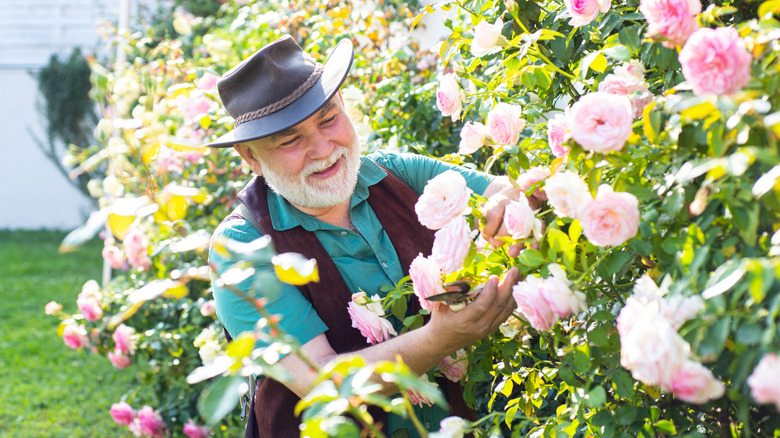
Roses are a worthwhile addition to a yard because, under proper care, they'll offer up showy blooms for years. Some rose varieties even last for generations, so they're a visual gift that keeps on giving. The downside: Roses aren't maintenance-free. Ironically, one common fungal issue — black spot or diplocarbon rosae — could even be caused by how you're caring for your roses. Watering roses from overhead could exacerbate the issue, especially in spring. The most important rule for watering roses is to water them at the base of the plant, ideally in the early morning. This gives the roots the water they need, with no risk of soaking the leaves. Even if a few leaves get wet, with morning watering, they'll have ample time to dry off before the sun's heat encourages fungal growth.
Whether you grow roses in containers or in the ground, black spot is caused by overly humid, damp conditions that last a while. It shows up first as dark splotches atop the leaves of your roses, followed by a yellowing around the spots. The leaves may even fall off as the infection worsens. It can also spread to immature canes, resulting in fewer, less vibrant blooms and stunted plant growth.
How to keep your roses healthy through proper watering
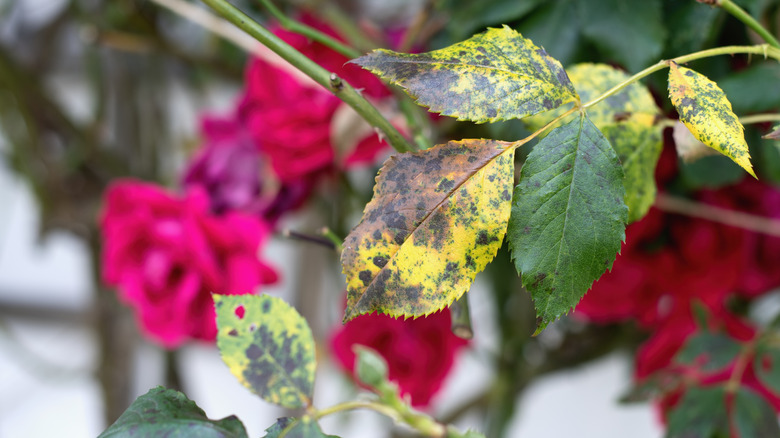
To greatly reduce the chances of your roses getting black spot, be extra careful when watering them. Position the end of your garden hose below the lowest leaves so water goes directly to the base of the plant, soaking the soil for the roots. A soaker hose works well here. Either way, your effort to keep the leaves dry significantly cuts down on the potential for black spot. Watering your roses in the morning is best, as it allows time for water to reach the roots before the heat of the day. If you've been watering from above, then identifying and controlling black spot as soon as possible is key. Look for yellowing leaves or leaves with spots on them, and focus on getting those plants back into good health again.
Roses prefer a deep, soaking drink rather than lots of light watering. This is especially important with freshly planted roses, as it helps the roots grow deep. Roses also need more frequent watering when they're getting established and may need one to two gallons of water each time you water them. The soil should be moist every day, but avoid overwatering, as this can be problematic, too. Once they're settled in, they may only need water when the leaves look droopy or curled up in the morning. Adding a few inches of a natural mulch around the plant helps the soil retain water. When adding mulch, leave space around the base of the plant, which gives it the airflow it needs to dry off.