

Why Your Peonies Aren't Blooming (And What To Do)
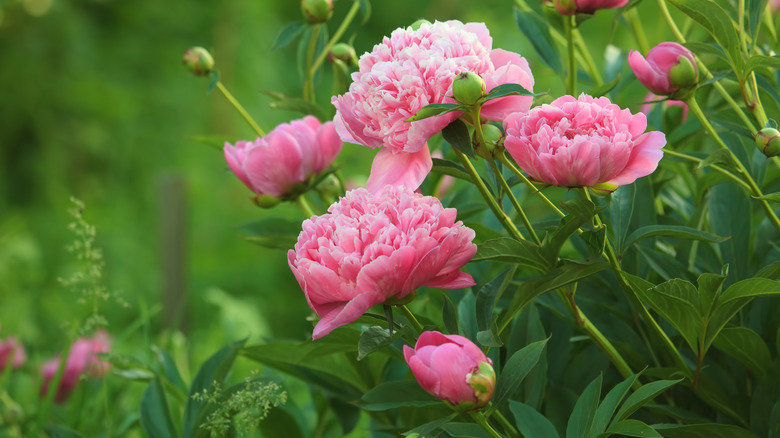
Peonies (Peonia sp.) are among some of the sweetest-smelling flower in your garden — if they bloom, that is. The problem is, if they don't bloom, you will be deprived not only of the flowers' sweet scent, but also the vivid colors they add to borders and gardens. If you find yourself in that predicament and wonder what's going on, there are actually several possibilities ranging from too much shade to not enough foliage. Luckily, in most instances there are things you can do to correct the issue and coax your peonies into producing lovely flowers.
Among the most common reasons your peonies are not blooming is they aren't getting enough sun. Although these plants are resilient and can grow in a variety of conditions, they require at least 6 hours of sunlight each day in order to bloom. It's a situation that's easy to overlook and should not be dismissed just because your plants have bloomed in that location in the past. If they were recently planted, it may be they aren't in an ideal location. However, even plants that have been established in a spot may quit blooming if sunlight conditions change, as can happen as trees or bushes grow, fences or sheds are erected, or other factors change.
Obviously, you'll want to get the plant more sunlight. In some instances, trimming tree limbs or moving obstacles blocking light may be enough. If that isn't possible or doesn't provide adequate sun, you may need to consider transplanting to a new location.
Planting depth can help or hinder peony blooms
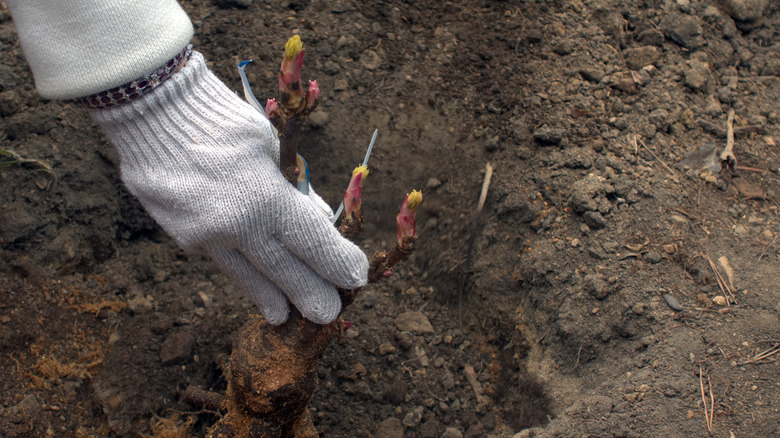
Another reason for no blooms that is equally as common (some would even argue it is more common) has to do with the depth at which peonies are planted. In order for peonies to flower, it is imperative that the red buds or eyes on the crown of the plant (when not in bloom) be no more than a couple inches below the surface. Lower than that, and they'll have fewer or no flowers, or it'll take longer to get to full bloom. New specimens may simply be too deep, but even established plants can find themselves in this predicament, due to heavy mulching or freeze/thaw cycles driving plants deeper into the soil. Again, this is an easy issue to miss, as deeply-planted peonies may still sport lush foliage, appearing healthy, but never bloom.
If the crowns of your peonies are indeed too deep, the plants will need to be lifted or transplanted. Ideally, this should be done as part of your fall care for peonies. Unfortunately, this isn't an immediate fix, but it will help ensure blooms in future seasons.
One reason you shouldn't expect blooms in the same season is that recently planted, divided, or transplanted peonies may not bloom. Essentially, they're just too young (even if the source plant is mature). Generally, peonies need at least a full growing season and often a couple of years to establish themselves well enough to bloom. With that in mind, you may want to reconsider planting peonies in spring if you are hoping to see blooms that season. No matter where and when you plant your peonies, you'll want to be patient, allowing the plant to develop an adequate root system to support blooms.
Watering and nitrogen levels matter when it comes to peonies
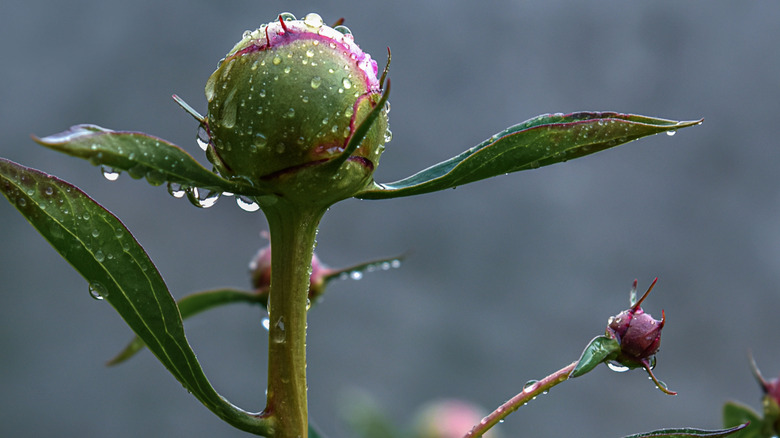
There are a few ongoing maintenance steps which can inhibit peony blooms. One involves sitting water, perhaps due to overwatering, poorly draining soil, or a recent heavy rain. Not only can these situations promote root rot, they can impact future blooms. Excessive retained moisture late in the season can delay or prevent peonies from blooming the following spring. To prevent or correct this, improve the drainage in areas where you have peonies planted and adjust your watering routine to provide plants with about an inch of water per week, adjusting for rainfall.
Soil composition is also a common issue affecting blooms. While peonies can grow in a wide variety of soil conditions, they do best in near-neutral pH conditions. As a result, too much fertilizer can cause issues. This is particularly true if the plants receive too much nitrogen. Since peonies are often planted along borders, there's a risk of nitrogen-rich lawn fertilizer leaching into flowerbeds. In this instance, the plants may grow well and produce excessive foliage, but not bloom. In order to prevent this, fertilize sparingly. You may need to conduct a soil test and amend your soil as necessary.
While nitrogen causes excessive foliage, if your peonies fall into the opposite category — not enough foliage — they many fail to bloom as well. When too many blooms are harvested or too much foliage is removed during pruning, the plants may not bloom the following season. Avoid removing too much foliage in the summer months, and avoid cutting too many flowers off any one plant. Leaving foliage in place allows the plant to continue feeding the buds developing underground to become next spring's flowers. You can, however, remove the lowest foliage in the fall to keep leaves off the moist ground.