

Three Signs That Your Garden Plants Have Root Rot (And How To Fix It)
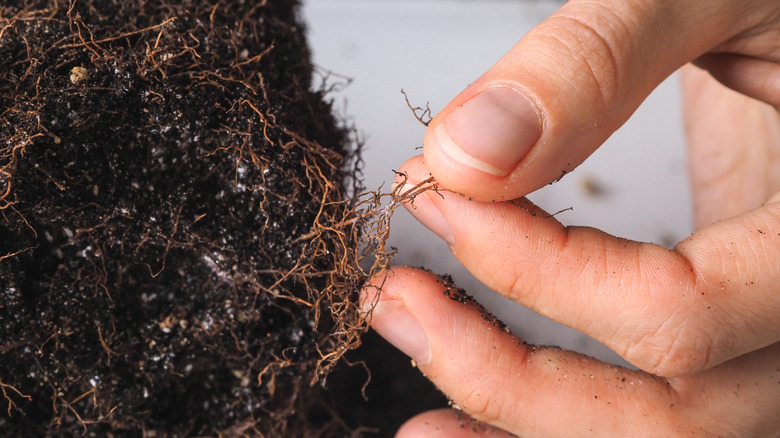
Root rot, as the name suggests, is a condition which causes the root system of plants to rot away. This disease can be caused by a number of different fungi and bacteria, resulting in various specific strains of root rot. However, no matter the root cause (no pun intended), there are common symptoms you'll notice if your garden plants have become afflicted with root rot. Thankfully, the measures you can take to prevent and correct it are pretty consistent, regardless of the symptoms your plants exhibit or the specific type of rot attacking them.
To that end, black, brown, or mushy roots all indicate an unhealthy, dying root system. Unfortunately, it's hard to verify without digging up the plant, as the roots remain buried beneath the soil. However, there are three major signs your garden has root rot that you can notice without putting a spade in the ground. For one, rotting roots give off a very distinctive and unpleasant odor. Most often, this smell is likened to rotten eggs. Another common symptom is foliage that is yellowing, wilting, droopy, browned, and/or falling from the plant. A third tell-tale sign is plants that grow too slowly or not enough.
Preventing and fixing root rot in your garden
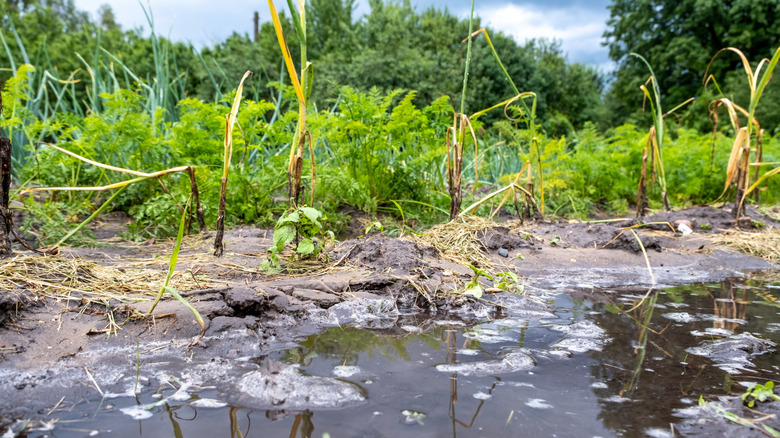
Although root rot is a serious, potentially deadly, condition for plants, the good news is that there are things that can be down to treat it, and, more importantly, to prevent it happening in the first place. The most important step to take is to reduce the moisture in the soil, as root rot thrives in such conditions. To that end, overwatering is a gardening mistake to avoid when trying to either prevent or control root rot. Get to know your plants: Some plants may require continuously moist soil, while others thrive when the top few inches dry out between watering. If you notice signs of rot, stop watering.
Of course, sometimes excessive water comes from heavy rains you can't control, so it's important your garden soils drain well. If you have standing water following a heavy rain event, try to divert the water to low lying areas or drainage ditches with small trenches. Stay off the garden soil itself until it is dry. As a preventative measure before it rains, level low spots, grade your garden, and improve soil conditions by mixing in organic material or horticultural sand, which could save your waterlogged garden. Be judicious with mulch — the purpose of mulching is to retain moisture. In many situations that's a good thing, but if your garden soil stays too saturated, it's not helping.
Finally, there are chemical treatments that can treat root rot. However, before you apply fungicides or other such products, it is important that you determine which specific fungus or bacteria is the issue. The best way to do so accurately is to contact the ag extension agent in your area. Even once the specific fungus is known, chemical treatments should be used sparingly.