

The Unexpected Kitchen Scrap That Makes A Perfect DIY Garden Fertilizer
Many kitchen scraps are more useful than their name suggests. For example, fruit and veggie remnants can be placed into a DIY compost bin to make a nutrient-rich material for your garden. But many of those same scraps can be used to make fertilizer. Garlic peels or skins are the perfect example. While these papery coverings might not seem like much, when soaked in water, their nutrients transform the liquid into a fertilizer tea that's rich in minerals such as potassium, magnesium, and phosphorus.
Potassium helps plants absorb nutrients and water more effectively while making them resistant to drought and pests. Magnesium is needed for plants to regulate phosphorus and help with photosynthesis. Phosphorus does everything from building strong roots to improving a plant's strength and enhancing both flower and seed production. All in all, garlic skins come in handy for creating a nutrient-enhanced soil for your plants, with no added cost to you. The process is similar to making an onion skin fertilizer, so you might be able to save both garlic and onion skins while preparing a single dish.
Making and using garlic-skin fertilizer for your garden
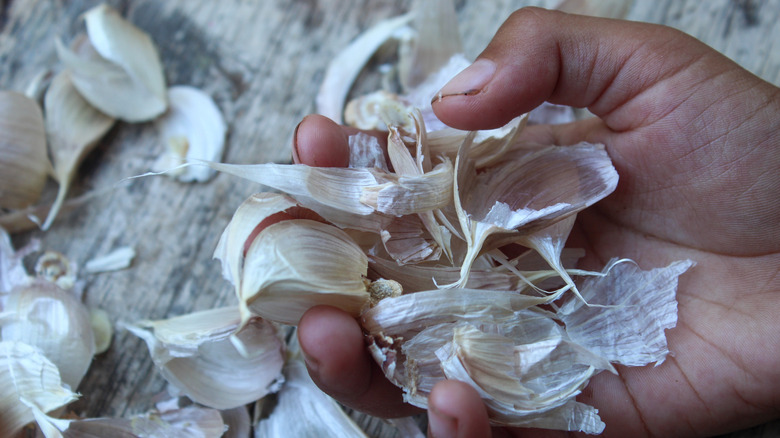
Gather your peels or skins each time you use garlic cloves and set them aside in a container. Once you have enough, place them in a jar and fill with roughly 2 cups water per peel remnants from an entire head of garlic. Place a lid on the jar and let the mixture sit for one to two days. Then strain out the papery skins and put the liquid into a lidded bottle or jar. You can compost the peels, though they won't add much more than decayed matter at this point.
Pour the solution directly around plants every two weeks. The nutritional boost helps protect the plants from fungal and pest problems. In fact, just as planting garlic can help repel pests like aphids and Japanese beetles, so too can garlic fertilizer tea. It also helps with plant growth. Carrots prefer a lot of phosphorus and potassium in their soil, so a garlic peel fertilizer could be especially beneficial to them.
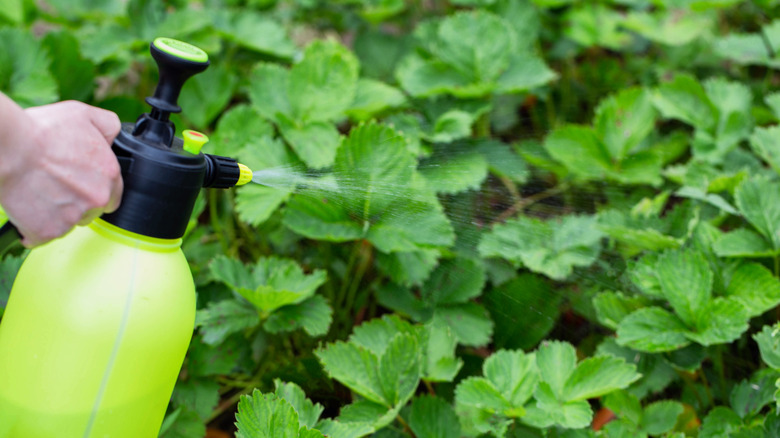
You can also spray the solution directly on plant foliage for an extra boost if you dilute it with an equal amount of water first. If you want to use your garlic tea as a foliar spray, test it on one plant or one part of a plant for a couple weeks before applying it liberally around the garden to ensure the plants don't develop leaf burn. Avoid directly spraying flowers as this may harm them. Keep any unused solution out of direct sunlight, stored in a cool location. Discard it if it seems moldy or has an off odor. You can always make more with a couple days' advance notice.