

A Long-Blooming Perennial Plant That'll Make A Lovely Addition To Any Garden

If you want to keep your garden colorful for as long as possible, you're likely looking for long-lasting perennials that keep returning year after year. Some of these even spend most of the year in bloom. Veronica (Veronica spp.), is a gorgeous perennial that can bloom from early summer into fall, even as early as late spring in some cases. Veronicas — sometimes called speedwell —are known for their blue and purple flowers, which attract many kinds of pollinators. Some species, like spiked speedwell and longleaf speedwell, have tall flower spikes that grow several feet tall. Others are smaller, with individual flowers rather than spikes.
Veronica species are native to a wide range of places, while some are considered invasive in parts of the U.S. For example, corn speedwell is listed as invasive in West Virginia. For native options, consider thymeleaf speedwell, hardy in zones 4 through 8, American brooklime in zones 3 through 8, and purslane speedwell, basically hardy across the continental U.S. You can grow non-native speedwells in containers, and many species can be controlled by removing flower heads before they seed and by monitoring for unwanted spread. When grown in containers, even non-native Veronicas make a great addition to a DIY pollinator pot, as they are highly attractive to bees and butterflies.
How to care for Veronica plants
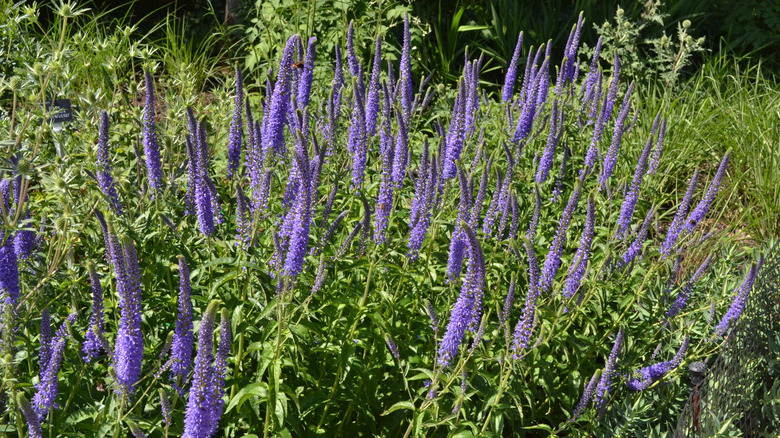
Outdoor Veronica plants should be planted in spring, following the last frost of the year. Get these starts from a nursery then harden them off,a way to successfully move your plants outside. Container plants can be cold-framed indoors in autumn, if you prefer. Whether in a container or transplanted to your garden, your Veronica plant will thrive in well-draining loam, clay, or sand, but generally isn't picky about soil type or pH. Place it in full sun for the best flowers, and water regularly whenever the soil is dry. These plants are generally drought-tolerant once established, but they need water during the first year.
Deadheading your Veronica plant can encourage repeated blooming all the way into fall, and cutting your plant back at the end of the growing season will help it survive the colder temperatures of winter. Add a layer of mulch to protect the roots if you're overwintering. Aside from that, Veronica plants don't require much care and are generally resistant to pests and diseases.
When planning to add Veronica to your garden, there are many options for companions to create a layered garden. Other tall, spiked plants like sage and catmint work well with longleaf or spiked Veronica. If your garden is a mix of sun and shade, you can add colorful coral bells for extra color.