

A Simple DIY Soil Mix That'll Help Your Vegetable Container Garden Thrive
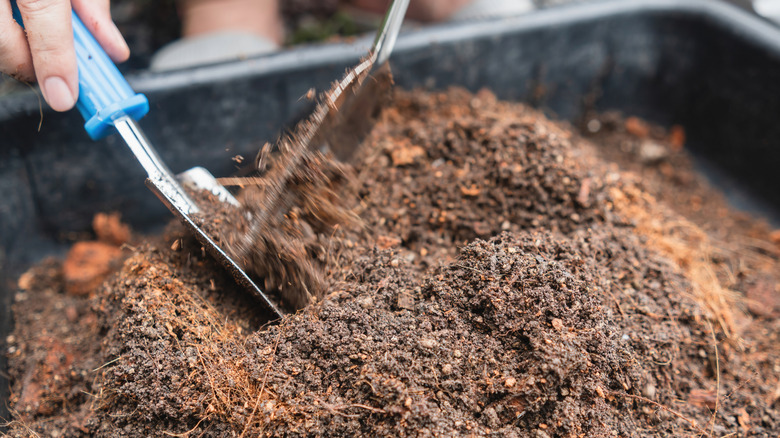
When it comes to container gardening, not all soils are created equal. Random soil taken from your garden or yard might contain too much clay or too much sand, or it could even contain pollutants you really don't want around your homegrown veggies. Buying bagged soil can get expensive, especially if you're working with multiple or deep planters and containers. While reusing potting soil is one of the ways to help your raised garden bed thrive, it only works so well. So what do you do? Simple: Make your own soil mix. For most situations, a blend of peat moss, perlite, and compost are the key ingredients.
A quality potting soil mix is important, especially when growing food in container gardens: Good soil features nutrients and beneficial microorganisms that help plants thrive, plus it has the ability to retain moisture and drain properly. Making your own soil recipe can save money over the store-bought stuff, provides nutrients that regular old fill dirt often can't provide, and allows you to customize the mix and ingredients to suit your garden's needs based on what you're growing.
Your new DIY soil blend is perfect for containers of all sizes and shapes. If you've got containers, incorporating a DIY grow table makes container gardening easier, allowing you to garden without doing so many squats to tend to your plants.
Crafting your own container-gardening mixture involves three key ingredients
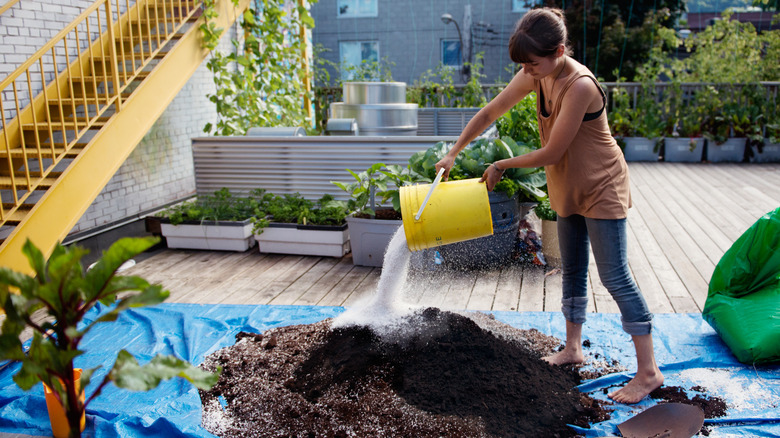
A good DIY vegetable garden mix for containers is virtually identical to a quality potting soil mix. The interesting part is that there's no actual "dirt" involved. Potting mixes are lighter and less dense than soil and allow nutrients, air, and moisture to circulate more easily, making it easier for plant roots to absorb all the nutrients they need.
Make a basic potting mixture for container-based vegetable gardening by combining one part each of peat moss and perlite with two parts compost. To tailor the mixture for seed starting, add one more part peat moss for a finer, less dense soil. For a recipe designed for heavy vegetable gardening, mix in 6 gallons each of coconut coir fiber and compost with 4.5 gallons of perlite, plus 1.5 cups of a complete organic fertilizer. Coir brings more beneficial nutrients into the mixture than peat moss, but it can also be more costly.
Since plants have different preferences when it comes to soil acidity, using highly-rated pH soil testers can help your garden thrive by letting you know whether the soil is too acidic or too alkaline and needs adjustments. Adding lemon juice can help make the soil more acidic, while adding limestone neutralizes acidity. Mix the soil components in a wheelbarrow or a large plastic tub, turning with a shovel to blend them. If you're making large quantities of a container garden soil mix, it may be easier to measure everything into buckets, dump them onto a tarp, then lift the corners to combine the ingredients.