

A Must-Plant Fragrant Flower That'll Fill Your Garden With Hummingbirds
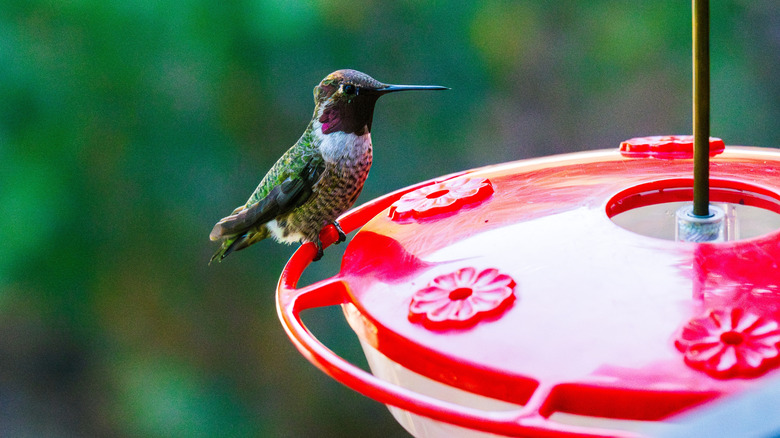
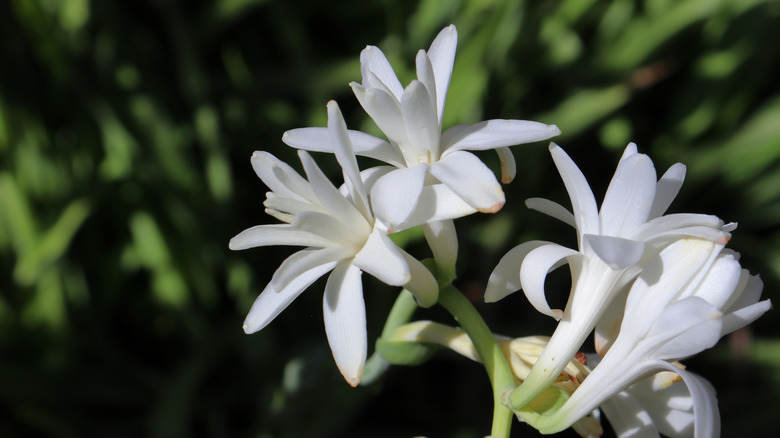
If one of your garden goals is to attract hummingbirds, there are several things you can do to encourage them to visit. One of the most important resources for hummingbirds is reliable food. Hanging hummingbird feeders and crafting the perfect DIY nectar provides energy and food, but the best way to attract them into your garden is to plant a variety of flowering plants they love. One must-plant flower with a wonderful fragrance will fill your garden with hummingbirds, the tuberose (Agave amica). Tuberoses are known for their strong scent that can fill a yard. The odor of the tuberose's pearly white flowers is so strong that this plant is often used in the perfume industry, so it's no wonder it attracts hummingbirds and other pollinators, particularly moths.
For hummingbirds, flower shape is just as important as color, aroma, and nectar, and as the name implies, Tuberose features bright white, tubular blooms perfect for a hummingbird's long beak and tongue. The plant reaches a height of 2 to 3 feet high, making it easy for hummingbirds to access. It's generally low to medium maintenance, making it a nice addition to other fuss-free plants perfect for gardening beginners. Since it thrives in warmer USDA hardiness zones of 8 through 10, tuberoses are mostly stored in containers, close to patios and decks where everyone can enjoy the smell, and in cutting gardens for making bouquets.
Everything you need to know to care for your tuberoses
If you're starting your tuberoses from seed, they are sensitive to frost, so start the seeds indoors and make sure the soil temperature is at least 60 degrees Fahrenheit before you transplant. Once they are ready to move outdoors, or if you are planting them directly into the ground, look for spots that get bright direct sunlight for the best blooms and growth. Full sun in the morning and some afternoon shade is a good scenario. Plant tuberoses in well-draining loamy to sandy soil, and lightly water the plants after you plant them. Once you see leaves sprout, you can start watering regularly. Take care not to overwater, as it can cause root rot. There are a few pests to watch out for that tuberoses are susceptible to, including thrips, spider mites, and aphids. Taking preventative measures, like using this two-ingredient spray that banishes aphids from your garden, can prevent these pests from turning into a full-blown infestation.
Tuberoses don't thrive in cold, windy locations, so make sure they have protection from the wind. If you plant them near your front or back porches or patio, you can enjoy the strong fragrance while you sit outside, and hummingbirds don't mind flitting about close to your activity area. You'll get a front row seat! The plant doesn't bloom a second time with deadheading, but you can remove spent flowers to keep the plant looking pretty. After the flowering season, the plant above ground will die back. You can stop watering once the stems are dead. Overwinter bulbs in a cool, dry spot. You can insulate them in dry compost or sand, or in their pots as long as they are protected from frost.