

Rock Climbing 101: Why You Need To Practice Falling First
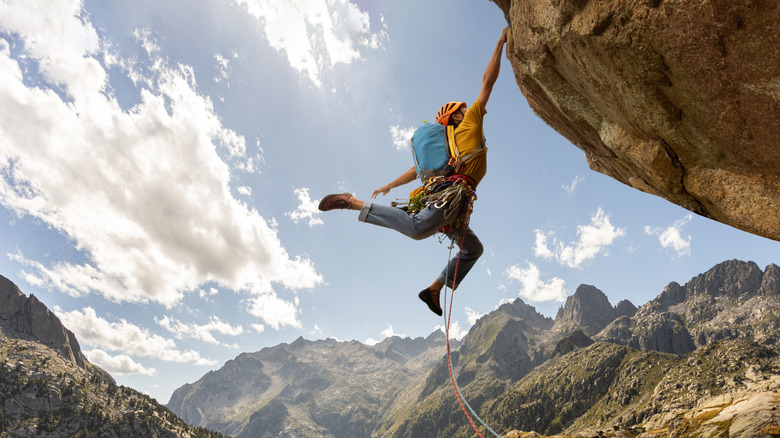
What goes up, must come down. One of the mistakes novice rock climbers make is not learning — and practicing — how to fall. While it may seem easiest to just avoid falls by working on your climbing skills, that really isn't practical: No matter how skilled you become, falls are going to happen. In fact, there are many reasons why you should practice falling, including injury prevention and overcoming fears. Additionally, becoming proficient at falling can actually make you a better climber.
Given that falls are inevitable, routinely practicing your falls is one of the best ways to avoid injury and stay safe while adventuring in the mountains, bouldering, or climbing in a gym. There are some important differences in your responses depending on how and where you're climbing. When it happens in a gym, for example, you may have padded flooring. When bouldering, falls will typically be shorter than when rope climbing, but not falling properly when bouldering almost guarantees an injury. This is because falls while bouldering, even short ones, can be high impact and falling improperly can put an inordinate amount of strain on joints and muscles, particularly knees. In order to help avoid these type of injuries, you should learn how to land and roll to lessen the impact on your body, practicing to the point it becomes second nature.
Better falling leads to better climbing
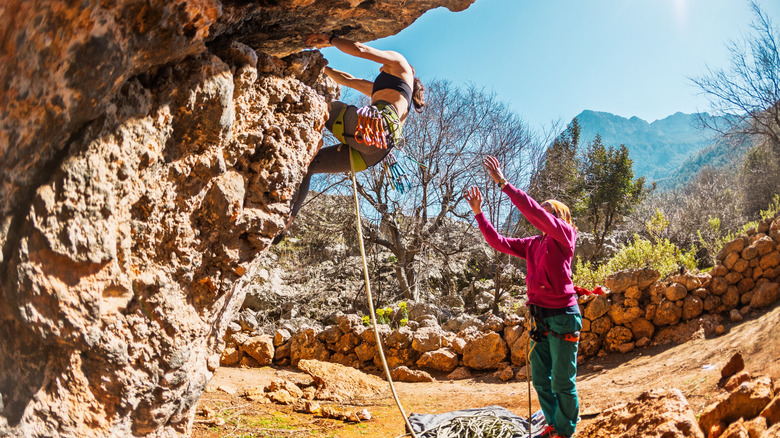
In addition to injury prevention, there are other reasons why rock climbers should practice falling. One is to help overcome fears and build a confident mindset. The fear of falling can actually lead to more mistakes, hence more falls, and falling improperly when the inevitable occurs. As reacting to falls become easier and less scary, you'll find you're more relaxed and more focused on the climb. This is true whether you are bouldering, top-rope, lead, or you're trying sport climbing for the first time.
Additionally, gaining a more confident mindset is necessary in order to progress as a climber. By gaining the confidence to fall safely, you'll begin pushing your physical limits, rather than being confined by the mental limitations that fear often dictates. This, in turn, allows climbers to build a broader skill set and focus on attempting new challenges and moves. After all, new moves are going to come with a temporarily increased risk of falls. As a result, the better you become at falling, the better you will be at climbing, and the sooner you'll move up from top-rope to lead climbing.