

The Alternative To Invasive English Ivy That'll Fill Your Garden With Vibrant Blooms

Many homeowners love the look of vines, especially English ivy, climbing up trellises, on fences, and even on their homes. Unfortunately, as beautiful as it looks, you should reconsider planting English ivy and look for alternatives — it is extremely invasive and can cause serious damage wherever it grows. A beautiful alternative to English ivy is crossvine (Bignonia capreolata), a fast-growing climbing plant that can reach as tall as 50 feet with gorgeous red-orange or yellow flowers that have a distinctive trumpet shape — hence its alternate name, trumpet vine. These blooms are appealing to pollinators, including hummingbirds, butterflies, and bees. And unlike English Ivy, crossvine is native to the Gulf Coast states and southeastern United States.
Although it's considered aggressive in some regions, you can keep it under control by pruning it properly and by pulling up suckers as soon as you see them. If you are in USDA Hardiness zones 5 through 9, crossvine will thrive nicely. It is semi-evergreen in warm climates, while leaves darken to burgundy in cooler climates. It may also lose its leaves in zones 5 and 6 during particularly harsh winters.
How to grow and care for crossvine
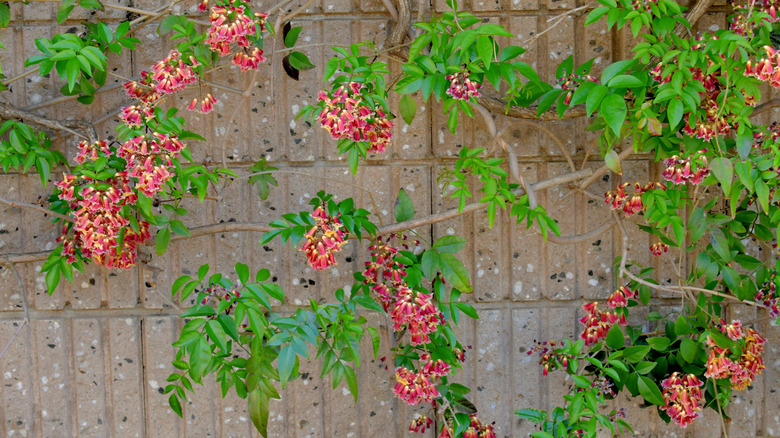
Crossvine is fairly easy to grow and can tolerate a variety of loose soils. It does best in moist, well-draining soil with lots of organic matter mixed. but it can also tolerate both dry and soggy soils for short periods. This hardiness rapid growth makes crossvine a fuss-free plant that is great for gardening beginners. The climbing plant thrives in full and partial sun, and will tolerate some shade. However, keep in mind that the more shade, the fewer flowers you will see. If the vines get at least six hours of sunlight daily you will see a lot of brightly colored flowers and repeat blooms, which pollinators will love. In fact, another advantage crossvine has over invasive English ivy is that it's a native plant that attracts a more diverse variety of birds.
Right after you plant your crossvine, deeply water the soil to at least 6 inches. During the first growing season, water enough to keep the roots and surrounding soil damp to moist. Once they have gotten established, crossvines are drought-tolerant, but if you notice the leaves wilting, give them another deep watering. Pruning and fertilizing needs are minimal and pruning really only need to be done to keep the vines in control. You should stop both activities at least two months before first frost for your region.