

Hummingbirds Will Flock To Your Yard After Planting This Show-Stopping Flower
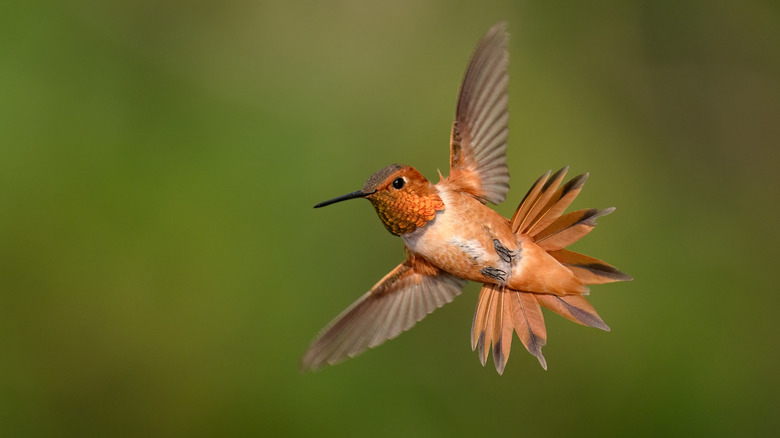
Some flowers are natural performers, offering dramatic displays of color, intriguing shapes, and other details that beg their audiences to take a closer look. Ismene (Hymenocallis) turns gardens into stages with its showy blossoms, each of which features six lengthy protrusions called bracts. The bracts look a bit like legs, earning ismene the nickname spider lily. It goes by several other names as well, including basket flower, Peruvian daffodil, and sea daffodil. When ismene is ready to take on another nickname, hummingbird daffodil would be a fine choice. In addition to belonging to the same family as daffodils, this flower is a bona fide hummer magnet.
Plants that draw hummingbirds usually have brightly colored blossoms, and red is their top choice — which is why adding more of this color to your garden can attract hummingbirds. Still, hummingbirds certainly aren't deterred by ismene's white petals. That's because there's a good chance that the flower's color isn't what's beckoning these tiny creatures at all. Instead, its strong aroma may be part of the appeal. In 2021, researchers at the University of California, Riverside found strong evidence that hummingbirds can smell. Entomology professor Erin Wilson Rankin told UCR News that her research team offered "the first clear demonstration of hummingbirds using their sense of smell alone to make foraging decisions and avoid contact with potentially dangerous insects at a flower or feeder." Plus, since hummingbirds have voracious appetites for nectar, it stands to reason that they love the abundant food they can acquire from these plants.
How to care for your ismenes
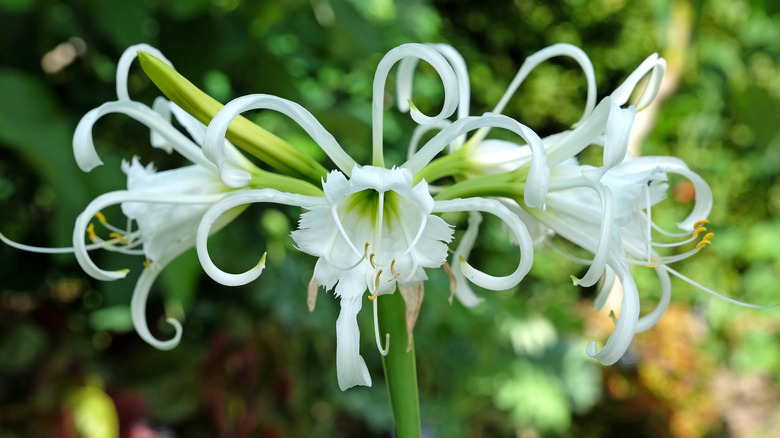
Since ismenes are indigenous to the United States, they're likely to attract hummingbirds, butterflies, and other pollinators that are native to your area. To help this happen, your main objective should be keeping these perennials healthy.
Tailoring their care regimen to your growing zone is crucial. Ismenes can thrive in USDA hardiness zones 2 through 11, but their bulbs should be dug up and stored for the winter in regions that experience deep freezes. If you unearth your ismene bulbs, let them dry and store them in an area that's kept at 60 to 70 degrees Fahrenheit, placing soil around the roots for insulation. Or, make a hummingbird-friendly container garden by growing ismenes in pots. This approach is recommended for gardeners in zones 2 through 6. When frosty weather is approaching, potted ismenes should be moved to a sheltered area that stays between 55 and 65 degrees Fahrenheit. You can even grow ismenes as houseplants throughout the winter. In zones 7 and above, planting the bulbs in the ground is easy as they don't need to be moved very often. Each bulb's pointy tip should sit 1 to 3 inches below the soil's surface.
Since they're not very particular about their soil's texture or pH, ismenes require minimal maintenance. Full sun is ideal, but they'll tolerate partial shade as well. In nature, ismenes are often situated in marshes, so they're unlikely to be bothered if your flower bed gets flooded every now and then. Just don't let their soil get bone dry, which can harm them. Remove the stalks attached to their blossoms once the flowering season is done.