

A Clever Soil Addition That'll Help Your Raised Vegetable Garden Beds Thrive
We may receive a commission on purchases made from links.
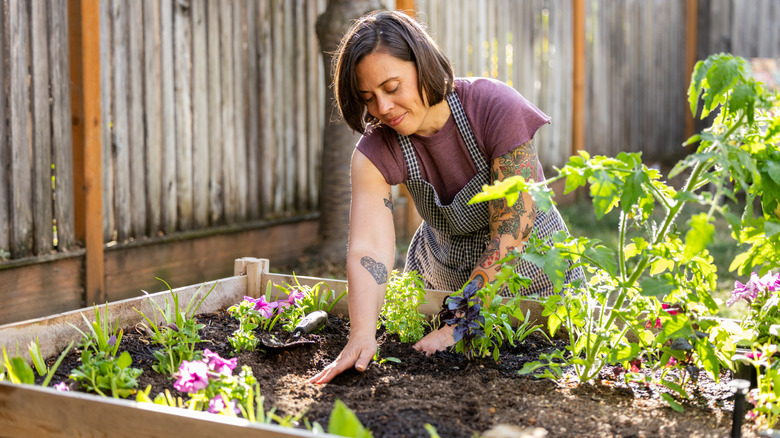
When it comes to raised beds vs. in-ground garden beds, one advantage raised beds offer is the ability to completely control soil quality and content. You can fine-tune the soil using fertilizers, organic mulches, and other amendments. One all-natural amendment that boosts the micronutrients in the soil for your veggies is worm castings. Also known as vermicompost — technically worm droppings — worm castings are the result of worms eating things in the soil, such as decaying plant matter or food scraps left in a compost pile.
Vermicompost is essentially compost with superpowers, as it's packed with microbes and micronutrients, thanks to the worms. It's 100 percent humus (organic material), so it helps your raised garden beds thrive by improving the moisture-retaining ability of the soil and its structure. Really, there's no reason not to try them.
Why worm castings are so beneficial and how to use them
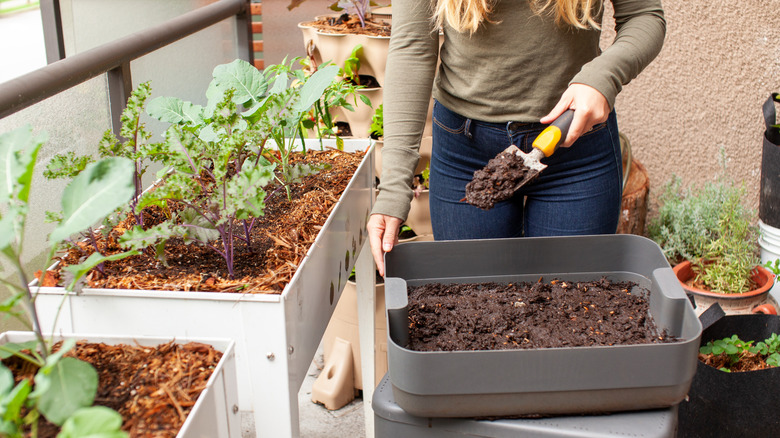
Since it's a natural byproduct consisting completely of soil-like organic matter, worm castings are often regarded as one of the best soil amendments out there. They contain a wide range of microorganisms and micronutrients plants love, including iron, magnesium, copper, calcium, and sulphur. The NPK (sodium, potassium, phosphorous) varies significantly based on the worm's diet (which you can control to some degree), ranging from about 1-0-0 to 5-5-3. The structure of vermicompost also helps retain moisture in container and raised bed soils, which can be important, as they tend to dry out more quickly than deep garden soil.
Using worm castings is easy — simply spread a layer about ½-inch to 1 inch thick over the top of the soil. If you want, you can work them lightly into that top layer of soil. As you water your plants, the beneficial matter in the worm castings breaks down and nourishes the soil. You can also help start plantings by dropping a few castings into each hole before adding plants. You can create a worm casting tea, but castings are very gentle and can be applied directly without dilution, even with sensitive plants.
You can get worm castings for free if you start vermicomposting at home. A worm bin works a lot like traditional composting, but with the addition of live red wiggler worms, such as those sold by Uncle Jim's Worm Farm. It's a clever way to repurpose eggshells and other kitchen scraps, too, letting the worms do their thing with all that leftover food. If vermicomposting is not an option, or you'd like to try castings without the wait, a 5-pound bag of Back to the Roots organic worm castings costs less than $3 per pound.