

Prevent Hiking Disasters With This Lightweight DIY Emergency Kit
We may receive a commission on purchases made from links.
One of the biggest hiking mistakes to avoid is going in unprepared. At the same time, so, too, is overpacking. The challenge for most hikers, then, is carrying everything they need without being overburdened by a heavy pack. This is a challenge, particularly, for day hikers. The minimalist nature of this pursuit often leads hikers to leave behind essential gear, quickly turning a bad situation into a dire one. Day hikers are the group most likely to become lost and the least likely to survive the ordeal, due to often being unprepared for overnighting in the wild. With that in mind, the value of packing a lightweight emergency kit cannot be overstated, no matter how long or short the hike.
Can an emergency kit prevent accidents from happening? No. But, a properly stocked kit can help prevent an accident from becoming a disaster. While there are some very good lightweight emergency kits in stores and online, you can easily DIY one as well. Additionally, even a store-bought kit will eventually turn into something of a DIY project, as you end up restocking and refreshing supplies and adding additional items as needed.
To that end, there are a number of items which could be considered essential to include in your emergency kit, even for relatively short hikes. Given that weight is also a major consideration, you want the most compact, lightest-weight version of each component for your kit, starting with the container. Generally, a resealable plastic bag, or a lightweight Dyneema or nylon pouch fits the bill.
What to add to your lightweight DIY emergency kit
The exact contents of your DIY hiking emergency kit may vary by location or season, but there are some absolutes to throw into every kit at all times. Essentially, these are the items that can save your life if you become lost or have an accident while hiking, addressing medical needs, warmth, navigation, drinking water, and tools. And while "lightweight" is a subjective term, hardcore thru-hikers can get their kits down to an extreme 4 ounces. For the rest of us, a worthy goal is to keep it around 10 to 12 ounces.
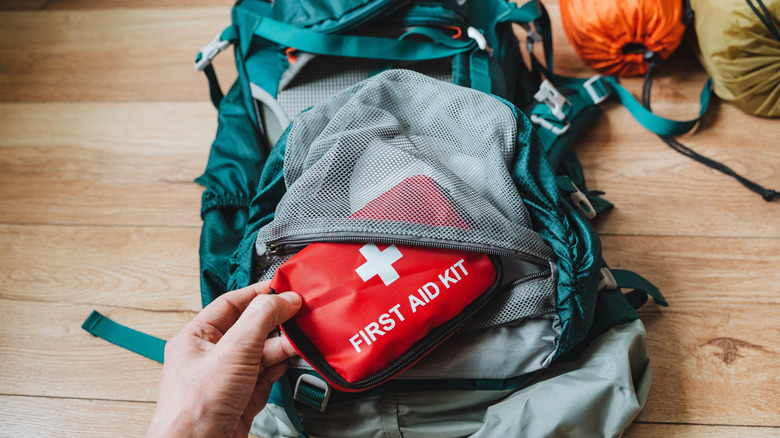
The basis for any DIY emergency pack is a well-stocked first aid kit. One option is the 1.6-ounce Lightning X mini first aid kit which includes most of the basics. Whether bought or stocked from scratch, your first aid kit should include alcohol wipes, antibiotic ointment, bandages, gauze, scissors, and tape. Other useful items include cotton swabs, elastic bandages, safety pins, tweezers, and tablets such as pain relievers, antihistamines, and antacids.
The lightest option for navigation is a compact compass, some of which weigh less than an ounce. To see where you're going, add a small LED clip-on or handheld flashlight. Don't forget waterproof matches or something like the Spark-Lite SL3-OD military version firestarter kit (.192 ounces) to keep you warm. A mylar emergency blanket, which weighs around 2 ounces, will also keep you warm and dry, with or without a fire. It can also be used to signal for help. To rig shelter, add Paracord or duct tape and a small multitool. Finally, consider food and water. Purification tablets or a filter, like the 2-ounce Sawyer mini water filtration system, will provide clean drinking water, while a small survival fishing kit can help you sustain yourself if lost.