

The Easy-To-Grow Hosta Alternative That'll Thrive In Any Garden

Hostas, also called plantain lilies, are beautiful shade-loving plants that hummingbirds love. However, if you're planning a garden that focuses on indigenous plants, it's important to know hostas aren't native to the U.S. Instead look for starry Solomon's plume (Maianthemum stellatum). You might also find it under the names starflower, starry false lily of the valley, or starry false Solomon's seal, as well as the synonymous botanical name Smilacina stellata. Starry Solomon's plume is found across the U.S., making it the perfect native alternative to hostas.
Hostas are also quite particular about their growing conditions. They need moist, shady areas to thrive, which makes them a challenge if your yard is dry and sunny. In contrast, starry Solomon's plume is a highly adaptable plant, and easier to grow in most gardens than hostas. In late spring to early summer, it produces small, white flowers shaped like stars. The foliage may not be as varied as hosta leaves, but their dark green color is still pleasant. After the flowers fade, starry Solomon's plume grows dark berries that songbirds love to snack on. If you're looking for simple methods to attract more songbirds to your yard, adding this plant to your yard or garden should certainly be on your list!
Growing your own starry Solomon's plume plants
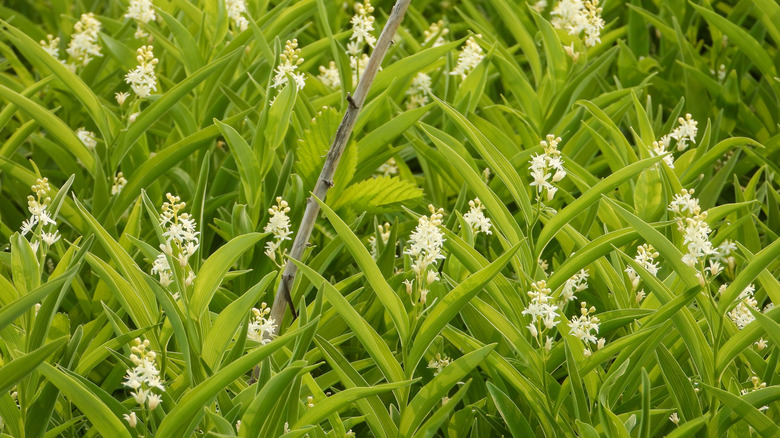
Starry Solomon's plume is a perennial, thriving in USDA hardiness zones 3 through 7. In hotter regions, it can still grow, just be aware it will likely require more shade and water. It flourishes in a wide range of soil types, from sandy soil near the Atlantic coast to the rich meadow soils found in the central U.S. The plant grows in partial sun to full shade, but it also tolerates more sun than the average hosta. In full shade, there will be fewer blooms.
This variety doesn't have any major issues, although if you're trying to grow it in a more narrow space, you should keep an eye on it: Starry Solomon's plume can spread quickly. Since it's native, you don't need to worry much about it escaping into natural spaces, but your neighbors may not want it spreading into their yard. On the other hand, this spreading nature along with their adaptability to full shade make them a great companion for hardy ferns used as a ground cover, which thrive in similar conditions.
Starry Solomon's plume is also especially useful in areas where grass struggles to grow or where it's difficult to mow. Once planted, the low-maintenance plant needs little care other than watering during droughts. You can propagate them by seed in cold frames in late fall, or through root division in late fall or early spring, which is particularly useful if you're growing them in containers or trying to limit their spread.