

How And When To Deadhead The Lavender In Your Garden To Boost Blooms
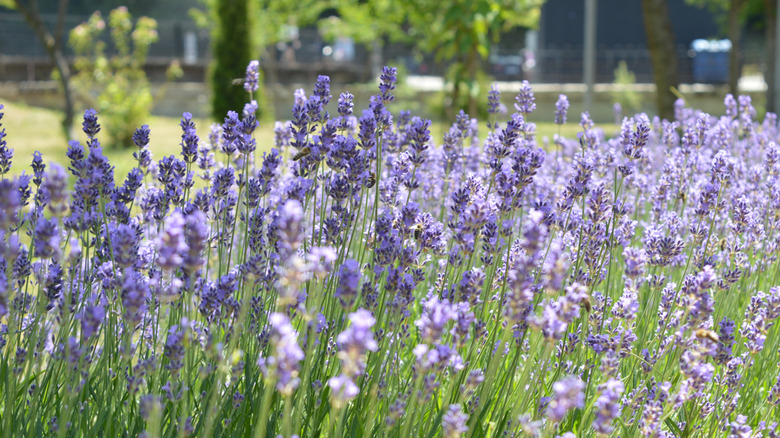
Lavender is a beautiful, fragrant flower with many uses, including keeping mosquitoes away from your patio. But getting the best results from these purple blooms requires care that goes beyond watering and fertilizing. In particular, proper pruning and deadheading will yield multiple, healthy bloom cycles. While pruning is usually done in the off season to reshape a dormant plant or remove diseased or damaged parts, deadheading is the practice of removing spent flowers on a plant to encourage more blooms throughout a single season. By removing dead flowers, you encourage the plant's energy to go toward producing more blooms instead of seeding. When it comes to lavender, many people don't realize that deadheading can offer another round of blooms — or several, depending on what type you're growing.
There are specific times during the flowering stage when deadheading provides the best results for lavender, and part of it depends on whether you're growing cooler-weather or warmer weather species. Deadhead lavender just after the first flowers have bloomed and faded. With English lavender (Lavandula augustofolia) in USDA hardiness zones 5-9, the blooms fade in late summer, so you may get one more shot at flowers, especially with specific cultivars like 'Blue Cushion' and 'Hidcote.' French (Lavandula dentata) which thrives in zones 4-9 and Spanish (Lavandula stoechas), best in zones 8 and 9, have long growing seasons, allowing you to deadhead throughout spring and summer as individual blooms fade. While most varieties can benefit from this practice, Spanish lavender is most responsive to deadheading, producing bloom after bloom all season long.
How to deadhead your lavender properly
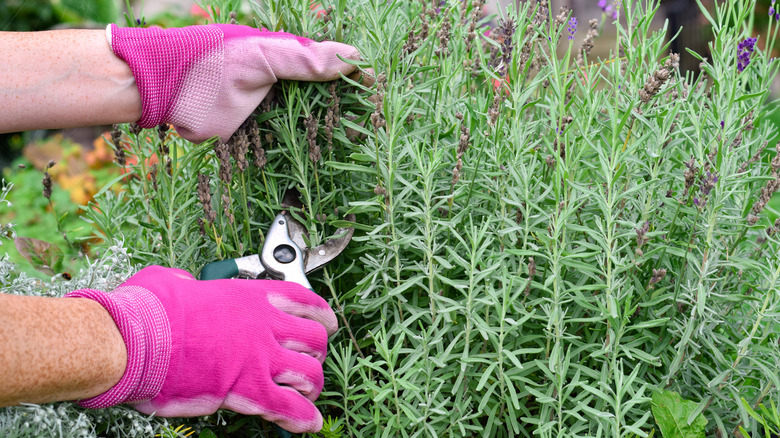
Having a good set of sharp, clean pruning shears makes deadheading lavender a lot easier and more precise. Pruning shears are one of the tools you absolutely need and will use often, but make sure to disinfect your gardening tools often to avoid spreading disease.
Regardless of variety, start with the first spent stalk of flowers and make a clean cut through the stem or peduncle, right above the first set of leaves below the flower clusters. You will soon see new growth starting near where you make cuts — these will turn into more beautiful flowers a little later on. Continue on through your lavender, deadheading until all the spent stalks are removed. With French and Spanish lavender, check your plants throughout the growing season and deadhead individual stems as needed. Often, you'll be rewarded by another full round of blooms, which is a benefit for pollinators too.
Remember you are not pruning, just gently encouraging the lavender to re-bloom during the growing and flowering season. Wait until fall to prune the plant completely, after the last flowers bloom. At that time, cut back the plants by about a third. Take care not to cut woody stems, as nothing will grow back. These simple tips will help you grow a healthy lavender plant year after year.