

How To DIY Your Own Campfire Starter
We may receive a commission on purchases made from links.
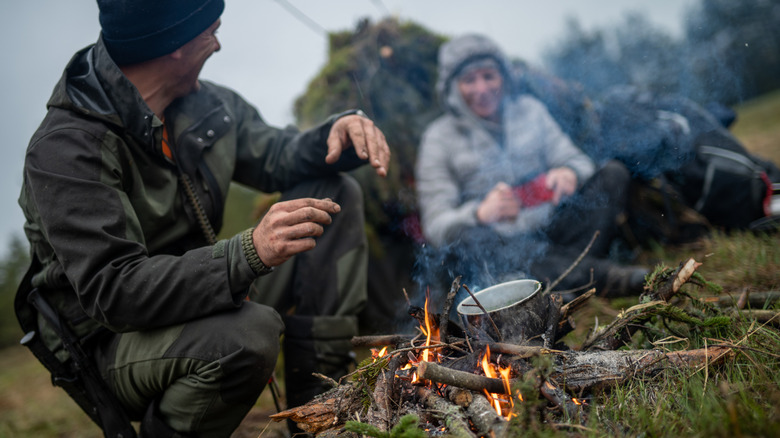
One thing about planning a camping trip is you never know exactly what you might run into, weather-wise. Damp conditions can impact dry firewood or kindling, making it even harder to start a fire. While you may not be able to guarantee a successful fire with damp wood, one genius campfire starting hack is to use a homemade campfire starter, rather than hunting down dry moss or bark. One favorite method among experienced campers is essentially a compact wax-and-sawdust muffin. They're easy to make and put excess sawdust or wood shavings to use, rather than tossing them.
Along with kindling, fire starters are an important component when building a campfire: Trying to ignite huge logs right away is one of those classic campfire mistakes beginners make. This DIY is designed to get a campfire blazing by providing the initial heat source to light kindling. It works because it's a bit like keeping a lit candle going while you lay on the fuel, and it benefits from the fact that it's compact, stable, and easy to carry, but will catch fire quickly when lit.
This fire starter, when made to the size of a typical paper cupcake or muffin liner, burns for about 15 minutes, offering plenty of time to get the initial components of your campfire started. They're best made in bulk, ahead of the camping season, as it can make quite a mess, then stored individually wrapped and ready to go. Remember, these sawdust muffins are flammable, so don't store them near open flames or in high heat (where they'll likely melt). If you don't have a muffin tin, this trick works using paper cups (like Dixie cups) or molded pulp egg cartons.
Making a wax and sawdust fire-starter muffin
While you can make the paraffin and sawdust muffins without using paper liners, the paper helps protect your muffin tin, and contributes flammable material to the finished product. Besides the sawdust, you'll need a muffin tin, 1 pound of something like Gulf Wax household paraffin wax, and a metal pot or pitcher for melting the paraffin. A visit to the thrift store for a dedicated pot is a good idea, so you don't ruin one of your cooking pots. Candle wicks for each fire starter make it even easier to ignite them.
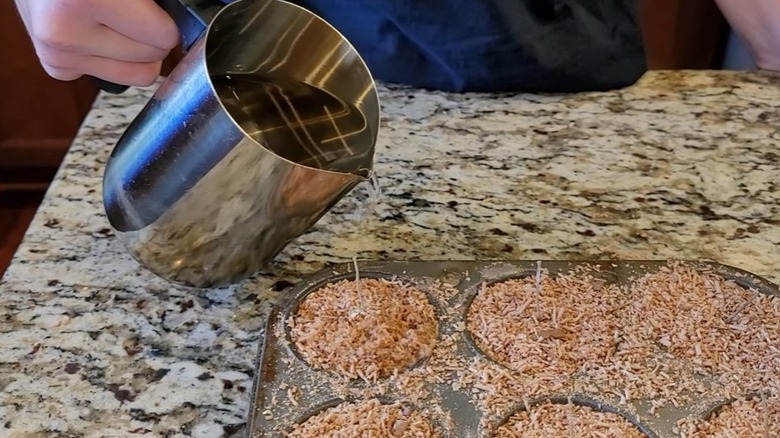
Insert one paper liner into each spot in your muffin tin, then scoop as much sawdust as you can into each one. Pack the sawdust down with a small can or the back of a measuring cup to compact it. Cut wicks, if you're using them, into 2- to 3-inch-long segments, making a small loop at one end to create a base to help the wick stand up. Place one wick on each compressed sawdust muffin, then sprinkle more loose sawdust on top to cover the wick.
Melt paraffin wax on the stove, carefully, in a double boiler, then let it cool a few minutes. Pour molten wax into each sawdust-packed cup, working your way from the outside in. Each cup should be nearly full of sawdust and liquid wax. Sprinkle more sawdust on top of each, then place the muffin tin in the freezer for 15 minutes or so until it cools. Your fire starters are ready to use! Now all you need to stock up on are the best types of wood to use on a campfire.