

What To Know Before Using Hay Or Straw For Mulching Your Garden
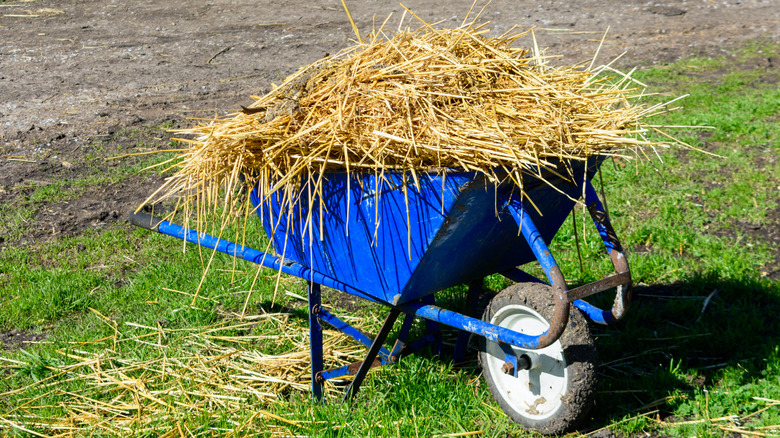
Applying mulch in your garden is one of the simplest things you can do to provide a healthy boost. It may not look like much, but once this helpful top layer is spread across the soil, mulch serves multiple purposes quietly gets to work blocking weeds, retaining moisture, shielding roots from destructive heat, and acting as a cozy, protective blanket for your plants when temperatures drop. Out of the many options available when choosing the best mulch, it may seem as if hay and straw are similarly beneficial. While both are great as mulch, straw edges out as the winner.
Both straw and hay are popular mulch options: They're plant-based, have a natural appearance, and can blend seamlessly into your outdoor space without accidentally smothering wanted plants like heavier mulches can. At first glance, the two might seem interchangeable, but they're not. And the distinction matters more than you might think. Straw tends to be coarse and golden yellow in color, while hay may be green or brown and is softer and heavier. More importantly, hay can introduce weed seeds much more easily to your garden. If you're considering using either in your yard or garden, it's worth learning more so you can make the best choice and avoid making an all-too-common mulch mistake that could ruin your garden.
How to choose between hay or straw
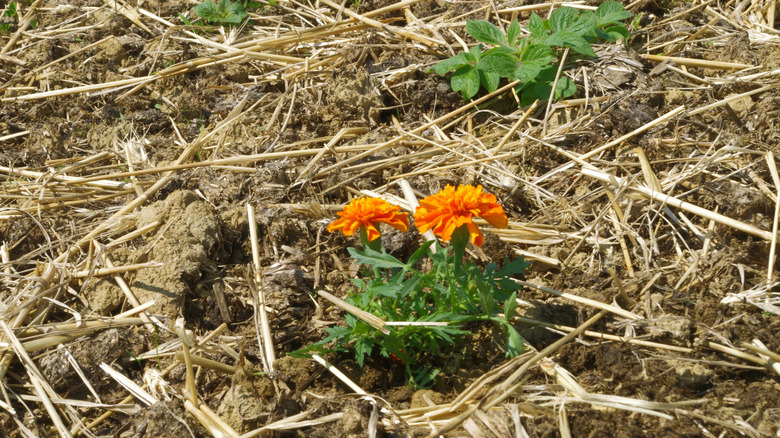
Hay, which is primarily harvested as nutritious animal feed, is cut whil plants are still green, then dried and collected into bales. It often consists of a mixture of grasses and legumes like alfalfa and clover. Because of this, hay can be loaded with seeds. When you add it to your garden, those seeds can germinate, leading to a frustrating invasion of weeds — the very problem you were trying to prevent. One way to avoid this is to look for NAISMA-certified weed-free hay, monitored through the North American Invasive Species Management Association.
In contrast, straw consists of the leftover, hollow stalks that remain after grain plants like oats or wheat have been harvested; the stalks are later cut and formed into bales. Since the grain, which is the seed, is removed from the straw, it contains very few, if any, seeds. In general, this makes it the clear winner for garden beds, as it provides all the benefits of organic mulch and a much lower risk of introducing new weeds.
However, straw can still contain some seeds, so for the best results, look for straw that has been certified to be seed-free. Certification programs may conform to NAISMA standards, or you can look for state and regional certifications like the Washington Wilderness Hay & Mulch Management Program.
Straw has other advantages as a mulch: It's fluffier and lighter than hay, making it easier to spread across your garden, compacts less, and retains moisture, while better allowing it to reach the soil. It's also less prone to mold or mildew than hay, which can harm your plants. Another reason to choose straw? It's easier on your wallet: As a byproduct, it usually costs about half as much as hay!