

This One Plant May Be Luring Snakes To Your Yard
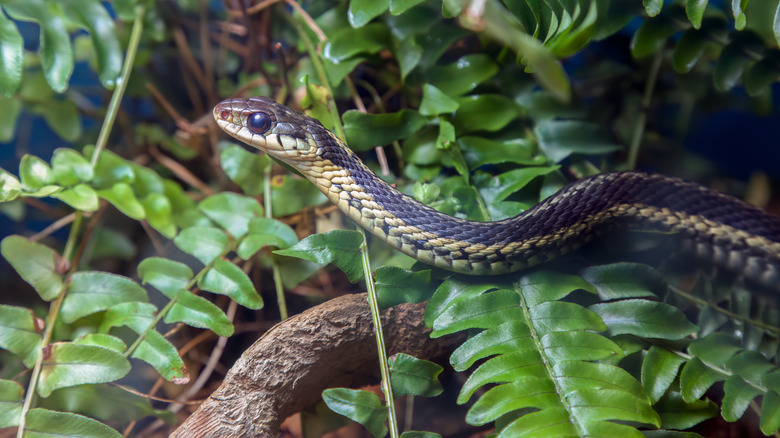
If it seems your yard hosts more snakes than your neighbors', it could be that certain things are attracting snakes, such as water, food sources, and great hiding places. One plant that seems harmless enough might actually be a major snake-luring culprit: Honeysuckle. Some honeysuckle varieties, such as amur honeysuckle (Lonicera maackii), provide an an attractive environment for snakes, offering both potential food and places to lurk, undetected by prey.
Honeysuckle's fragrance attracts a number of insects, and insects are on the menu for many snakes, such as rat snakes, milk snakes, and even garter snakes. They'll eat anything from crickets to caterpillars, and even earthworms and termites. If they're eating garden pests, it's not necessarily a bad thing to have snakes in your yard. On the other hand, it's not so fun when Fido brings a slithering serpent into the house. In either case, it's a good idea to identify the snakes in your yard to determine whether they're harmless or potentially harmful.
Why snakes may lurk near honeysuckle
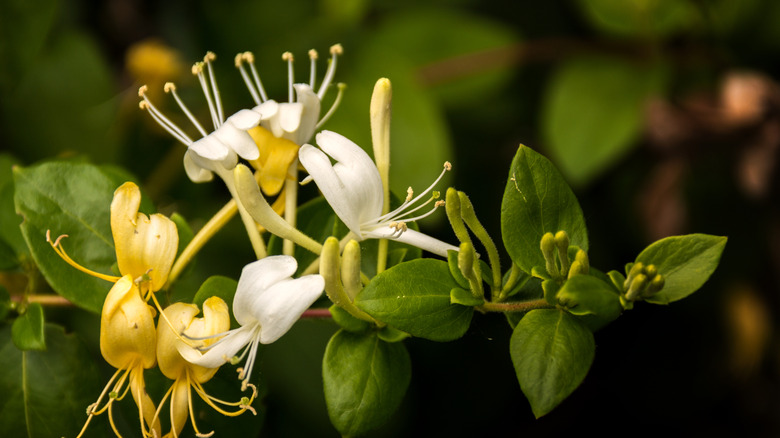
Amur honeysuckle, an invasive honeysuckle species in much of the U.S., is sometimes used by nesting birds to raise their young. Snakes can be drawn to the honeysuckle if for no other reason than to seek out snacks within those nests. In the Midwest, robins' nests within the honeysuckle were notably visited by snakes and possibly other predators, perhaps the plant provides easy access. People have shared images on social media of snakes hanging out in the branches of honeysuckle bushes from central Kentucky to Washington D.C., while researchers in Virginia have found a higher rate of predators (including snakes) in Amur honeysuckle compared to native vegetation. Amur honeysuckle is also very competitive: It grows 15 to 20 feet high in dense, bush-like structures, and can grow into thickets that crowd out native plants if it's not cut back or removed.
Snakes may hang around several varieties of honeysuckle, for a number reasons. Vines and creeping plants make it easy for snakes to climb trellises, trees, or other surfaces the vines are clinging to. If you're concerned, it might be wise to reconsider your landscaping: It's possible the plants are providing access to more concentrated food sources. For instance, if ornamental grasses close to your home are attracting snakes, transplanting them to a more open area that mice don't frequent could help. The same can hold true for amur honeysuckle.
When it comes to this genus, the highly invasive amur isn't the only honeysuckle you don't want to find in your garden. Some, such as Japanese honeysuckle, are considered invasive in some states but not others. Regardless, if you see snakes coiled up in the branches, it may be time to dig up the honeysuckle and replace it. You might consider planting Leyland cypress trees to add privacy to your yard instead.