

Why Your Camp Coffee Tastes Bad (And How To Fix It)
We may receive a commission on purchases made from links.
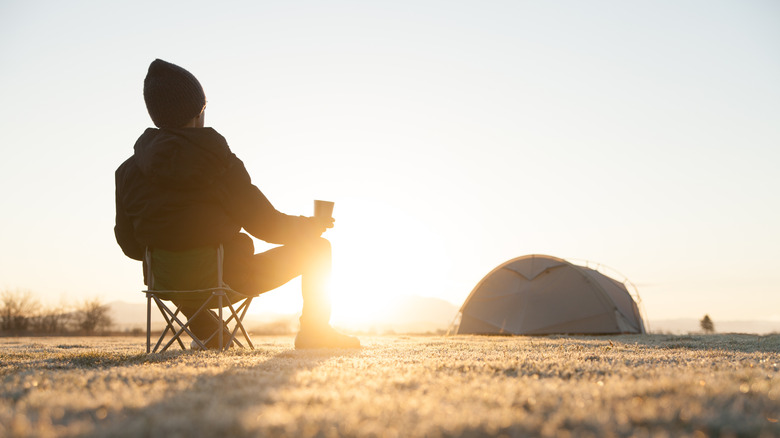
When camping, there is no better way to start the day than sitting out and watching the sunrise while sipping a cup of steaming, hot coffee. That is, of course, unless your coffee doesn't taste good. Then, admittedly, the day could be better. If you are wondering why your camp coffee keeps tasting bad, it typically comes down to a handful of issues — ingredients, ratio, temperature, or cleanliness. These common issues and mistakes can plague your coffee-making game whether you're wild camping or sitting in the comfort of a fully decked-out RV. Fortunately, there are some simple solutions to ensure you get a delicious cup of coffee every time.
One of the most common reasons coffee tastes bad is poor-quality water. After all, a pot of coffee is mostly water. So it stands to reason if the water you use is subpar, so, too, will be your cup of Joe. Luckily, this is also one of the easiest issues to correct. Basically, you need to use better water, so your coffee doesn't wind up with a metallic, astringent, or sulfury taste. If you have the room and means to bring fresh filtered or bottled water from home, that's the best bet. Another solution is to utilize a filter or portable filtration system such as the WaterDrop gravity water filter straw. However, while good, clean, aroma-free water is ideal, you don't want get rid of all the minerals in water: Distilled water actually results in poor-quality coffee that's basically boring, with little flavor.
The wrong ratio can destroy your coffee
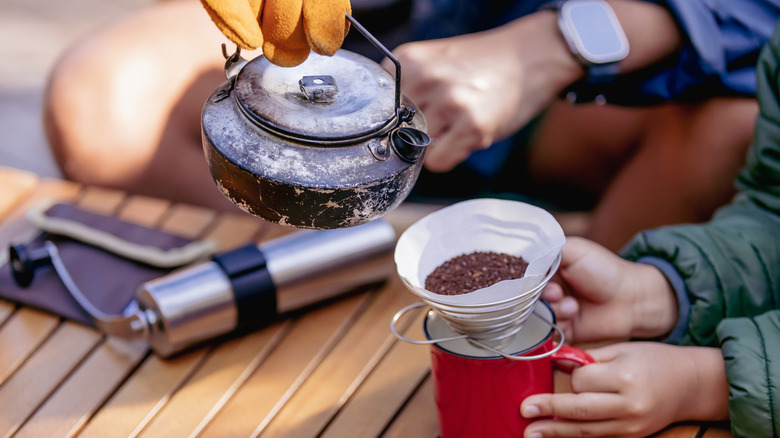
Another easily corrected mistake is using the wrong ratio of coffee and water. While this sounds like common sense, using too much or too little coffee does more than just make strong or weak coffee. During the brewing process, water is extracting flavor chemicals from the ground coffee in a specific order: oils and acids first, then sugars, then tannins and plant fibers. Each adds or detracts from a great cup of coffee depending on the extraction process.
An excessive amount of water — overextraction — will pull out not just the desirable flavors, but the undesirables as well. The end result will be a cup of coffee that is as bitter as it is weak. On the other hand, not enough water — underextraction — means you're not gleaning all the best flavors from the coffee. So the final product will not only be strong, but the flavor will be on the acidic, sour side, and the aromatics will be off. The easiest fix is to bring measuring equipment with you, rather than eyeballing the grounds and hot water you're combining.
The ratios to make delicious campsite coffee are really no different whether you are at home or in the field. It is different, however, based on how you are brewing your coffee. For drip coffee, popular with RV campers, a 1:16 – 1:18 ratio (coffee to water) is recommended. When using a French press, keep your ratio between 1:12 and 1:16. Pour over coffee should be in the 1:14 to 1:16 ratio range. An old-school percolator over a campfire or cookstove should use a 1:16 ratio and be allowed to brew for about 10 minutes. Of course you can customize any of these ratios to personal tastes, the elevation, grind size, how the beans are roasted, and other factors.
Temperature and equipment issues
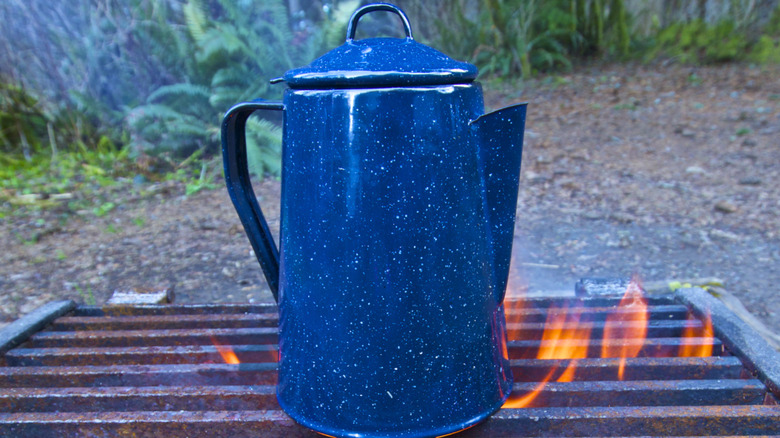
Hot coffee is supposed to be just that — hot. However, excessively hot water can be a classic case of "too much of a good thing." In fact, boiling water can burn or scorch coffee, resulting in a harsh, bitter-tasting brew. Ideally, you want to brew your coffee at around 200 degrees Fahrenheit, just under boiling. If you notice the water beginning to boil, remove it from the heat source and let it sit for several seconds before resuming brewing. The same thing goes if you are heating water for a pour over: Once the water begins to boil, remove it from the heat and let it sit for 30 seconds before pouring it slowly over your coffee. On the flip side, if the water temperature is too low, the coffee will not brew properly and you'll end up with a sour cup of Joe. Essentially, water that's too hot overextracts. Too cold, and it underextracts. The best fix is to pay attention, maintaining the right temperature throughout the brewing process.
One final issue that can negatively impact your cup of coffee is your equipment. More specifically, the cleanliness of that equipment. Just as it's important to clean your grill regularly, you should keep your coffee maker, percolator, pour over filter, or French press free of residue. That is because the oils and residues that remain are organic and quickly turn putrid. As a result, subsequent pots of coffee pick up these rancid flavors, resulting in poor quality, bitter coffee with a noticeable aftertaste.