

Can You Plant A Peace Lily Outdoors? Here's What Gardeners Say
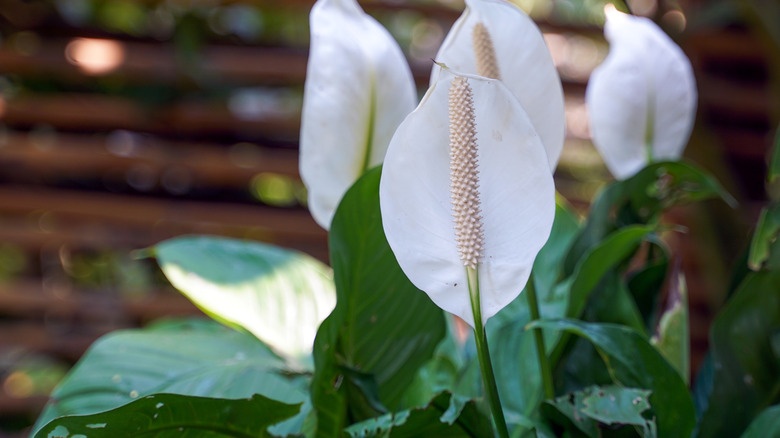
Peace lilies (Spathiphyllum spp.) are often sold as potted plants, and are popular indoor plants for the home or office. They're also rather easy on the eyes, with large green leaves and white spathes, so it makes sense to want to add one (or several) to your garden. But can you? The answer is yes, if you live in the right place. Native to Central and South America, peace lilies are tropical plants from rain forest areas with high humidity, so they'll only thrive outdoors in warm climates. They'll do best as outdoor plants in USDA plant hardiness zones 11 and 12, so it's worth determining what hardiness zone you live in.
Some people enjoy peace lilies because these plants live around five years on average, and more than a decade in some cases. They're also one of those fuss-free, beginner-friendly plants that are generally low-maintenance, provided they're given the right conditions. This doesn't just include temperature and humidity — you'll need to provide the right combination of sun and shade exposure to mimic a jungle canopy cover.
Peace lilies love heat, humidity, and dappled sunlight
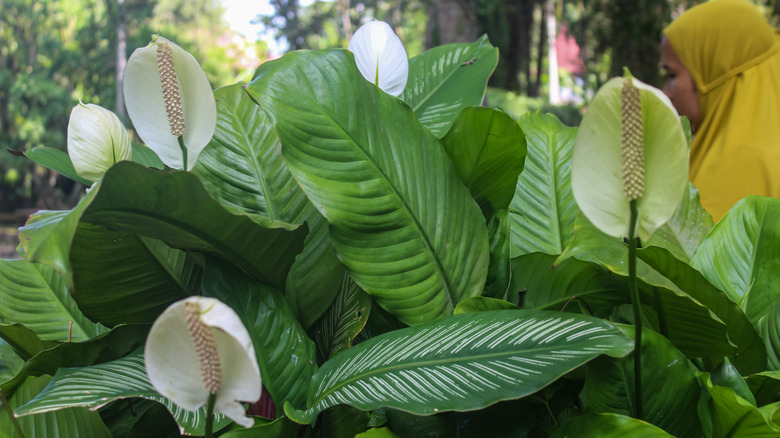
If you live in a warm, humid part of the U.S. — such as areas of Hawaii or Puerto Rico — the climate may be well-suited to growing peace lilies in the garden. In their native environment, they are protected from a full day of direct sunlight by a rainforest canopy, so look for areas with partial shade in your own yard or garden, particularly during the hottest parts of the day.
Peace lilies prefer temperatures of around 65 to 80 degrees Fahrenheit as well, without the harsh temperature fluctuations common in much of the United States. They also don't like rapid changes in environment: If you've kept your potted peace lily inside, transition it outdoors slowly before planting it in a permanent location. An area such as your porch, out of direct sunlight, could be a good starter location. Gradually expose it to more daylight over the course of several weeks. If you notice any unhealthy changes in its leaves, such as curling or yellowing, return it in a shadier area.
Once acclimated to the outdoors, plant your lily in well-draining, neutral to slightly acidic soil. Feel free to add some houseplant potting mix into the hole when planting it. Water the plant when the top inch of soil feels dry, avoiding overwatering. Mist it as needed in summer to emulate a humid environment. Unfortunately, a peace lily is one of those plants that dog owners should keep out of the garden. All parts of a peace lily contain calcium oxalate crystals that are toxic to pets, neighborhood cats, and people.