

What Are Tree Tomatoes And How To Grow Them In Your Own Garden
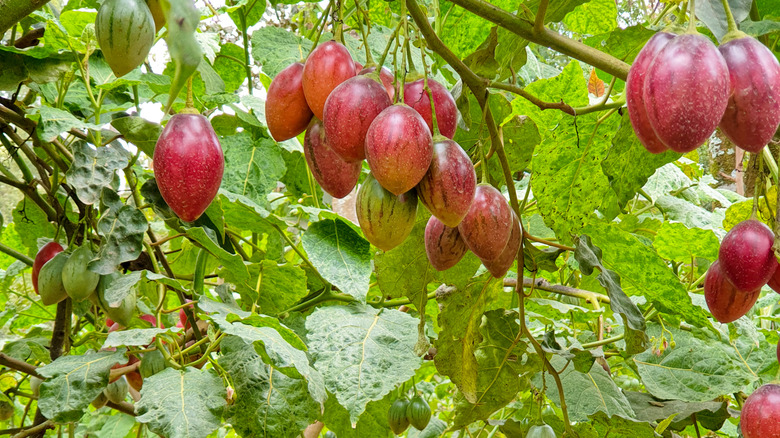
It may seem there are nearly as many varieties of tomatoes as there are recipes calling for them. Then there's the tree tomato, also known as a tamarillo. In fact, it isn't a tomato at all, though they now share the Solanum genus and it's part of the nightshade family, like tomatoes. The tamarillo has two botanical names (Solanum betaceum and Cyphomandra betacea), and fans say its tangy-sweet flavor is something of a mashup between a tomato and a tropical fruit like passion fruit or guava. Usually, the fruit is eaten raw, scooped out of its fairly tough skin. It can also be used in salads, desserts, jams, and chutneys.
This egg-shaped fruit grows best in USDA plant hardiness zones 10 and 11. Though mature plants can handle a brief frost, seedlings and young plants will likely die in such conditions. The plant grows as a shrub or small tree. The tamarillo is believed to be from the Andes and grows well in South America and New Zealand (where the fruit picked up the name tamarillo in 1967). The USDA acquired tamarillo seeds from Argentina in 1913, and it has been grown as a hobby plant in parts of Florida and northern California ever since.
Growing a tamarillo plant in your garden
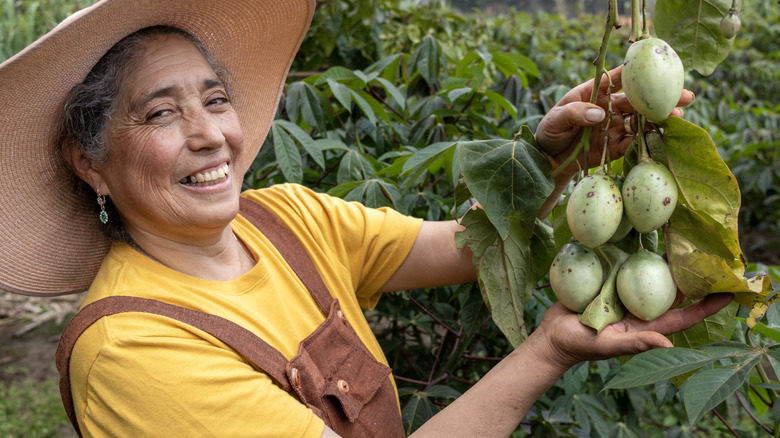
The leaves on tree tomato plants resemble narrow hearts, growing about a foot long, while the fruit — bright red or bright orange — is 3 to 4 inches long. They thrive best in full sun or partial shade, in hot and dry climates. Tamarillo must be planted in areas with well-draining, nutrient-rich soil that's protected from strong winds, since its shallow roots put it at risk of falling over. These roots also mean tree tomatoes need frequent watering. Keep the soil moist but not waterlogged as standing water may kill it.
If you live in the right environment, tamarillos can be low-maintenance, fuss-free plants that are great for beginners. They can also be grown in pots, particularly if you live in an area that experiences below-freezing temperatures. The tree prefers temperatures above 50 degrees Fahrenheit, but is tolerant down to about 28 degrees F for short periods. Though it is a fruit tree that can be grown in pots, be aware that it can reach heights of 10 to 20 feet in some cases, sometimes even taller.
The tamarillo takes a little while to mature, producing its first pink or white star-shaped flowers in the second or third year. After that, clusters of fruit grow, starting out green like tomatoes, before ripening to deep orange, red, even purple. Tree tomatoes can be susceptible to aphids, but you can banish aphids from your plants using a soap and water solution.