

How To Care For Your Lawn After Dethatching Your Yard
We may receive a commission on purchases made from links.
Dethatching your lawn is one of the best ways to help your yard drain properly and prevent grass from growing in patchy. However, whether you have seen signs that it's time to dethatch your yard or are simply doing so as regular maintenance, you also need to consider how to care for your lawn after dethatching it. While dethatching can help solve some issues in your yard, it can also stress your lawn. Proper post-dethatching care is necessary to reduce that stress on your grass and help it quickly recover and grow. This involves a number of processes, including cleaning up the thatch, aerating, applying fertilizer, watering, overseeding, and adjusting your mowing height.
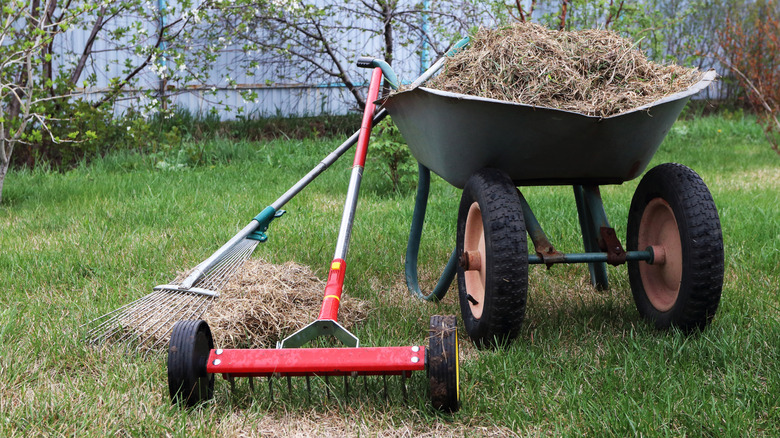
The first and most obvious step to take after dethatching is to clean up and remove the thatch and any other debris from your yard. If it is not removed, this dead material can prevent the remaining healthy grass from getting enough sun and air. Depending on the amount of thatch you have removed, this can be done with either a leaf blower or rake; you can also use a lawn sweeper if you have a very large area to clean up. If using a rake to collect the thatch, be sure to use a soft-tined leaf rake and not one with rigid tines used for dethatching, which would harm the remaining grass.
Aerating, watering, fertilizing, and overseeding after dethatching your yard
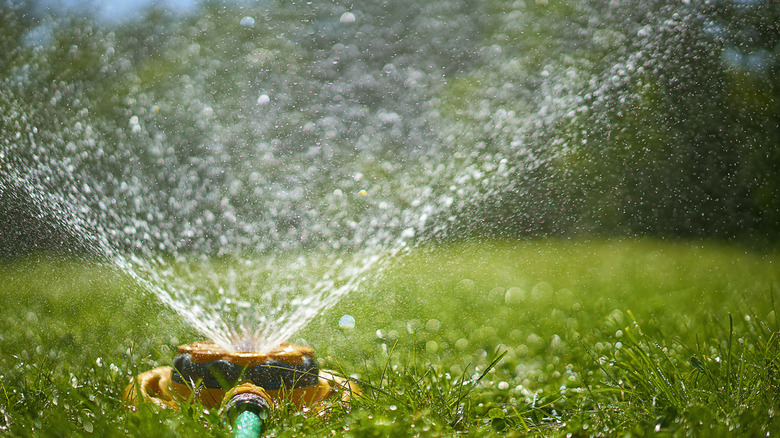
The post-dethatching process doesn't end with just cleaning up the thatch. Once that is done, you should consider aerating your lawn to loosen the compacted soil and allow water and nutrients to more efficiently enter the root structure of your lawn. Next, give your lawn a good drink of water. Adequate hydration is key to helping your lawn recover. With the thatch removed and the yard aerated, the water will be able to reach the roots more easily, so be careful not to overwater. If you do not have a watering system, using a device like a RAINPOINT Sprinkler Timer can help ensure you don't overdo it.
This is a great point to fertilize your lawn. Be sure to choose the right kind of fertilizer based on the type of grass you have in your yard. Use a broadcast spreader to make sure it is distributed evenly and water following the fertilizer application. Since soil is exposed after dethatching, it is a perfect time to overseed as well, as there will be much better seed-soil contact, which will help ensure proper germination.
While each of those steps should be done directly after dethatching, there are a few other precautions that should be taken throughout the month following dethatching. One is to limit the amount of foot traffic, which can add to the stress level of your grass. The same goes for setting heavy objects in the yard. Additionally, when it comes to mowing your newly dethatched lawn, the best practice is to allow the grass to grow taller for a few weeks, so set your mower height up a notch or two above where you typically have it. After a few mowings, you can progressively lower back to your customary setting.