

The Vibrant Flower You'll Wish You Planted Next To Your Birdbath Sooner
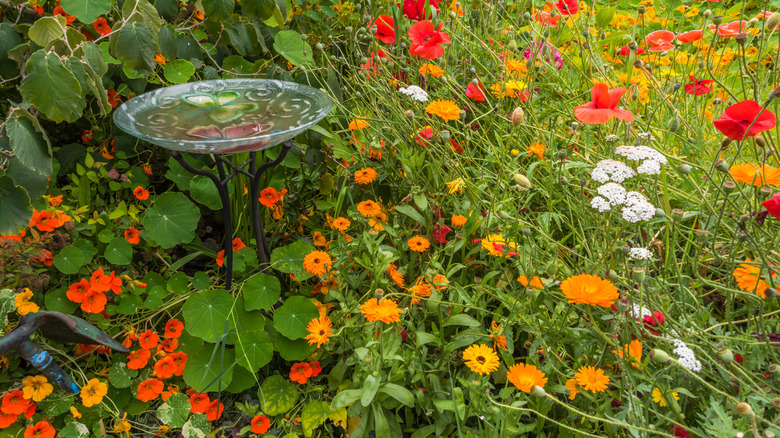
Adding a birdbath to your yard is not just about adding a beautiful water feature, it's a valuable resource for birds, bees, and butterflies too. You will want to banish pesky mosquitos from your birdbath and plant some pollinator-attracting flowers close to the bath to provide a little cover for bees while they are drinking and bathing. Bee balm, also referred to as Monarda, is a perennial that produces stunning, explosive-looking blooms in shades of pink, red, or lavender, which are a huge favorite of butterflies, hummingbirds, moths, and bees alike.
There are several benefits that bee balm adds to your garden. Placement next to your birdbath provides your favorite pollinators with energizing nectar that they can enjoy before and after taking a dip or drinking at the birdbath. Placing bee balm next to your birdbath can also draw more traffic to your bath, so it might need to be refreshed and cleaned more often. Just be sure avoid harmful household cleaning staples and opt for vinegar and water instead. This lovely, eye-catching plant provides important nutrition to your yard's pollinators that result in healthier birds, butterflies, and bees, which in turn increases their pollinating productivity. Bee balm also has a long blooming season that ensures a stable food source, which results in enhanced plant reproduction for your entire garden.
How to plant and care for bee balm
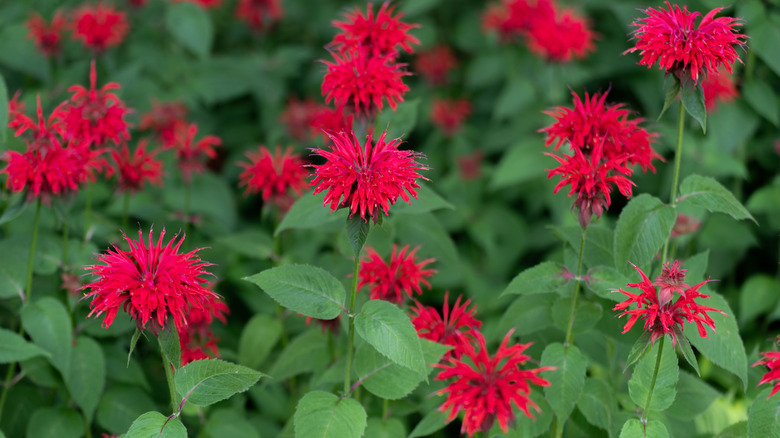
Well-draining soil is the best soil type for your bee balm plants. Add some compost to it for the best growing results. Bee balm does the best when it can get six hours of direct sunlight each day, but it can handle partial shade if that is all you have. Since birdbaths are often placed in partial shade, plant the bee balm in the sunny spots close to the birdbath. The best planting time is in early spring or even in the fall. Space the plants anywhere from 18 inches to 24 inches apart to reduce the risk of mildew developing by providing plenty of air circulation between the plants.
Watering your bee balm is important in helping it to get established and thrive. Having a good watering routine will produce more blooms, but the plants won't do well in soggy conditions, so take care not to overwater. Allow the soil to dry just slightly between watering times. Adding a slow-release, balanced fertilizer will help ensure your bee balm gets the nutrients it needs without over fertilizing. You can add organic matter and compost around the base of the bee balm plants to act as a natural fertilizer — just don't smother the stem.