

A Wolf Was Just Spotted In This California City For 'The First Time In A Century'
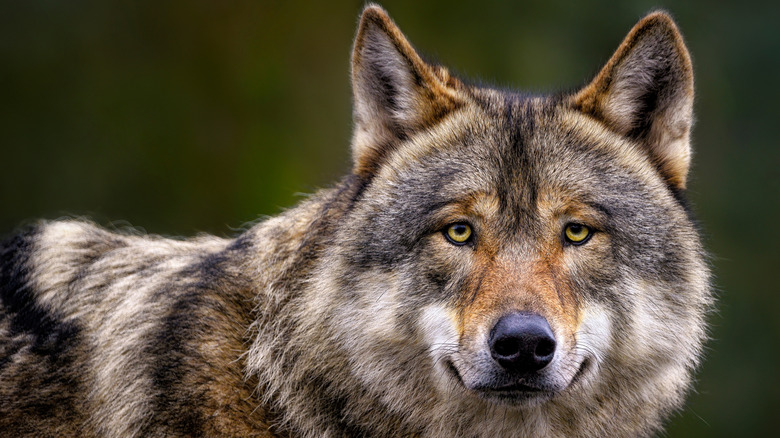
Who's afraid of the big, bad wolf? Well, likely no one in southern California — at least not for the past hundred years or so. However, that all changed in February 2026 when a gray wolf was spotted in Los Angeles County for the first time in more than a century. Although this event may have many in Southern California wondering if they need to worry about running into a wolf in their backyard, the sighting actually marks progress in a remarkable conservation comeback story. The fact one of these endangered animals showed up in California's most populous county is even more amazing.
The LA County sighting occurred early morning at the beginning of February in the mountains a short distance north of the city of San Clarita, near Pyramid Lake. This particularly wolf — a 3-year-old female identified as BEY03F — wears a tracking collar attached the previous year when she was with a pack of wolves known as the Yowlumni Pack, in Tulare County. This area, known for wolf pack activity in California, is close to 200 miles north of LA County and includes Sequoia National Park, Sequoia National Forest, and a large portion of Kings Canyon National Park.
Although BEY03F was given her collar in Tulare County, she is thought to have begun life with a pack in Plumas County, north of Sacramento, some 500 miles north of LA County. Data from the tracking collar indicated she had only left the Yowlumni Pack in Tulare County about a week before being spotted in LA County (wolves can travel about 30 miles a day). Her sighting is significant not just because the amount of mileage covered, but also because it is the furthest south a wolf has been definitively spotted in California since the 1920s.
Gray wolves making comeback in California
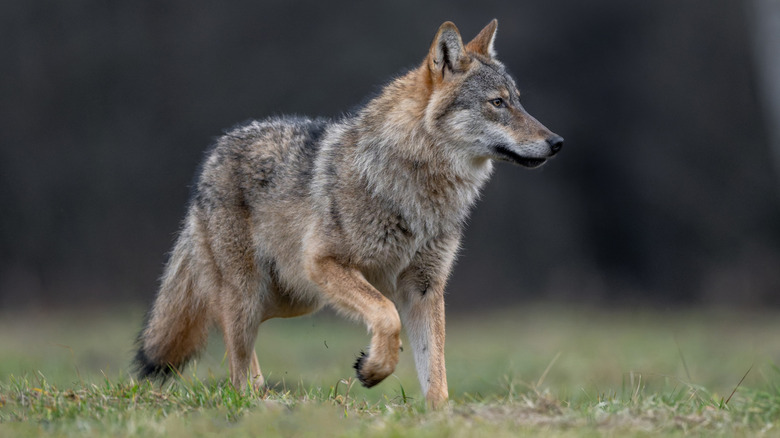
The story of gray wolves in California in a story of both destruction and renewal. Historically, gray wolves lived throughout the Lower 48, with the exception of the Southeastern U.S. In California, they occupied the entire state, save for coastal ranges along the Pacific Ocean and Baja. However, what was once one of the most common predatory mammals in the U.S. saw a rapid decrease in population due to overhunting and habitat destruction.
In California, gray wolves are believed to have been extirpated in the 1920s. The last known wolf in the state was killed in 1924 in Lassen County, in northeastern California. For nine decades that seemed as if that was the end of the story for gray wolves in the Golden State. By the time U.S. Fish & Wildlife put them on the national endangered species list in 1974, no gray wolf had been seen in California in 50 years.
Incredibly, gray wolves would once again appear in California. However, they were not reintroduced there by people, as was the case in Colorado, Yellowstone National Park, and other areas across the country. While those efforts have proven quite successful in reestablishing gray wolves over portions of their natural range, in the case of California, it was literally the case of a lone wolf striking out on its own that kick-started the process. In 2011, an individual wolf from Oregon fitted with tracking number OR-7 dispersed from his pack and crossed state lines. Just as biologists believe BEY03F made her way to Southern California looking for a mate and/or suitable habitat, it's likely that's why OR-7 made the move. Since then, more dispersed wolves from other states and natural births in California have bolstered the state's wolf population to at least 70 animals.