

What To Do If A Bear Approaches Your Car (And The One Thing To Never Do)
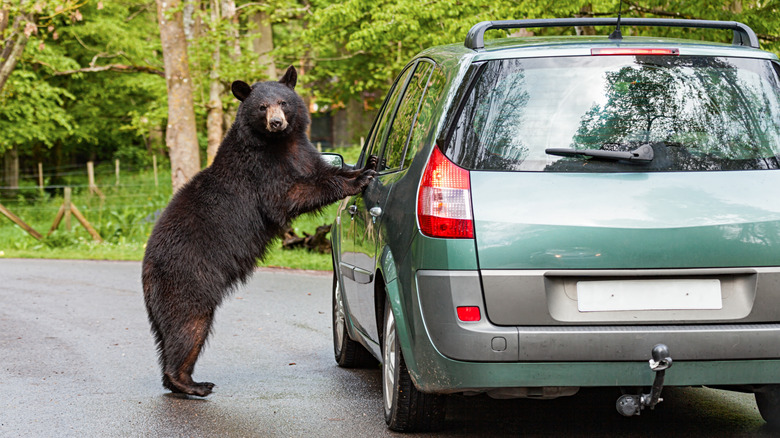
It's bear season, and if you're in one of the best spots for bear watching, a close-up sighting could easily happen while driving or car camping. If a bear approaches your car, stay in your vehicle and keep windows up and doors locked. And never attempt to feed it or try to get closer to the bear. Make sure your windows are up, doors are locked, and honk! Loud sounds, like honking, generally work well, startling bears and teaching them to fear human interactions and avoid loitering on roadways.
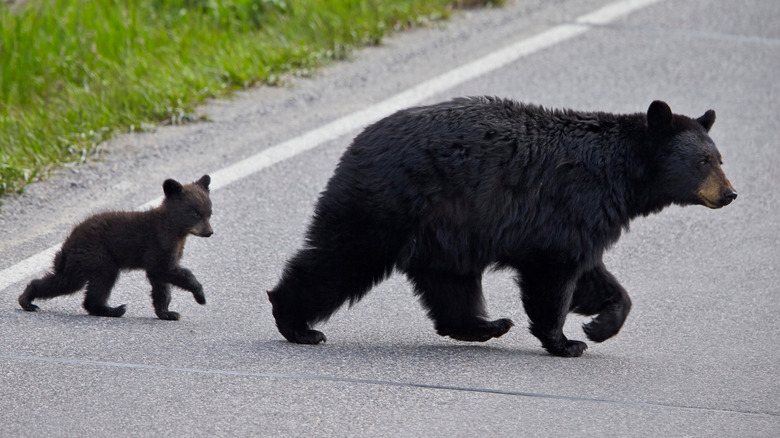
While there are safe ways to view bears, it's critical to deter bears from getting close to humans and vehicles. After giving the bear a spook with a friendly "toot-toot", slowly drive away. A good rule of thumb is that 100 yards is a good distance to safely view a bear, and it's recommended you don't pull up beside a bear on the road for this reason. Drive slowly in bear country, especially at dawn and dusk when bears are most active. Sadly, vehicle-bear collisions aren't uncommon and are one of the leading causes of black bear mortality in Yosemite.
While extremely rare, bears are strong enough to break car glass to enter a vehicle. But they usually don't have to. Bears have proven over and over they possess the dexterity to open unlocked car doors, as if they have their own driver's licenses. Once in, a bear's sharp claws and teeth can tear through car interiors and upholstery like butter. In general though, it's not you they care about — it's your food, or the potential for food.
Keep your car clean and your food in bear-proof containers
The best way to prevent bears from approaching your car in the first place is to keep your car clean and your food secure. Essentially, what you never want to do is feed a bear, either on purpose or accidentally. When in bear country, make a point of emptying trash regularly. Sweep or vacuum crumbs, and keep scented products like baby wipes, lip balms and toothpaste organized in a tightly-lidded bin. Bears can follow scents from many miles away.
If you're visiting national parks or wilderness areas where bears are common, learn how to properly carry and use bear spray. Also check the governing agency's food storage rules. Yellowstone National Park has an estimated 300-500 black bears roaming the park, and nearly as many grizzlies. The park requires food (and food trash) be secured at all times, whether that's in a vehicle, cabin, or backcountry campsite. Yosemite National Park reminds visitors that food and scented products, like cosmetics, must be stored in special food lockers (not in vehicles) at night, outside the vehicle. Black bears, which are generally shy around humans, are significantly bolder at night. The park provides these lockers at campsites, parking lots, and elsewhere. Failing to follow these storage laws can result in vehicle impoundments and fines up to $5,000.
These rules are not just for your safety, but theirs as well. Bears habituated to human food sources are more likely to be struck by cars and can damage vehicles by breaking in to get their paws on human food and scents that cars contain. Bears that have lost their natural instinct to fear humans can become aggressive and destructive as they become habituated to human food. Sadly, these bears will be euthanized because of the threat they pose to humans and personal property.