

The Flowering Ground Cover That'll Fill Your Yard With Hummingbirds
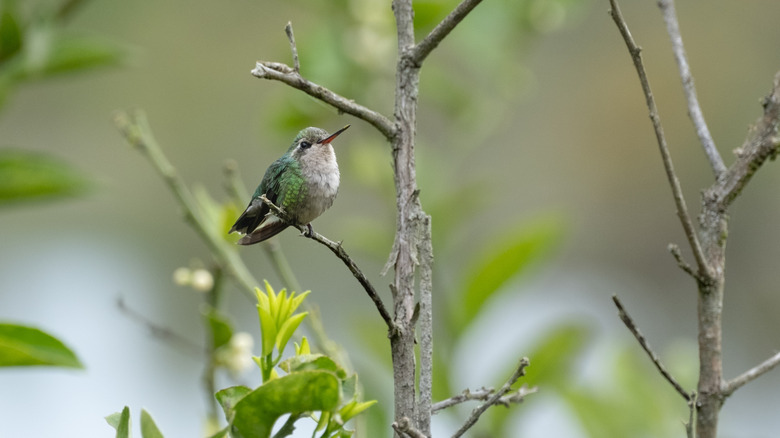
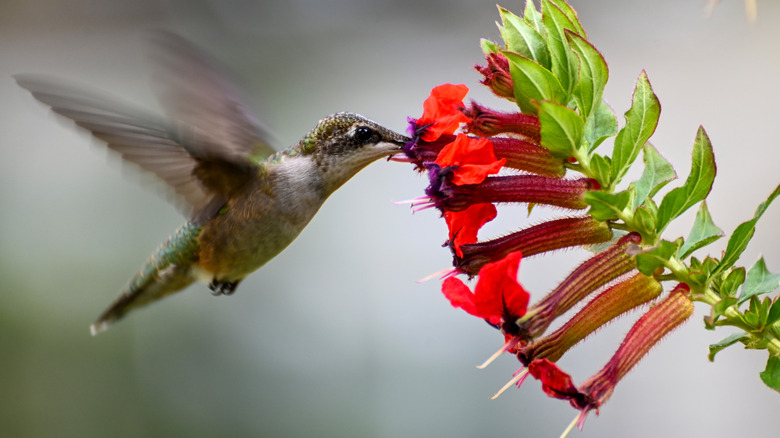
Hummingbirds are a welcome addition to any yard or garden and there are tons of clever ways to DIY the perfect hummingbird haven for your yard. One of the most popular ways is to choose the right plants, flowers, and ground covers. An ideal choice loved by hummingbirds, butterflies, and bees alike is the bat-faced cuphea (Cuphea llavea), a bright, red-and-purple flowering ground cover that is a perennial in warmer USDA plant hardiness zones 10 and above, and an annual in cooler zones 9 and below.
This hummingbird favorite starts blooming in late spring and will continue to produce flowers for the pollinators to enjoy until first frost. Although bat-faced cuphea can reach 2 ½ feet tall in warmer regions, when grown as an annual they typically only reach 12 to 18 inches in height and spread about that wide. There are many places where you can plant bat-faced cuphea where hummingbirds and other pollinators can enjoy their blooms, including along walkways, as a border along paths, in annual flower beds, as a ground cover on hills and slopes, and in containers and hanging baskets. It is an easy plant to care for making it one of those fuss-free plants that are great for gardening beginners.
Planting and caring for bat-faced cuphea in your garden
If you want to grow bat-faced cuphea from seed, start them indoors about 10 to 12 weeks before the average final frost in your area. These seeds need light to germinate so make sure to press them very lightly into the soil surface and don't cover them over. Your seeds will germinate in about eight to 10 days if you keep the soil temperature at 70 degrees Fahrenheit. Once the seedlings are ready for the great outdoors, plant your bat-faced cuphea in an area where it can get full sunlight, especially in cooler climates. If you live in a hot, humid region, an ideal spot will have full morning sun and afternoon shade when the sun is hottest.
Because bat-faced cuphea produces tubular, nectar-rich flowers throughout the growing season, getting it established in the right conditions helps ensure you have a reliable food source for hummingbirds once blooming begins.
While the plants are getting established, regular watering is essential. Once your cuphea is established, you can cut back on how much you're watering. It can handle drought conditions occasionally. You will have the best growing results if planted in well-draining soil with lots of organic matter in it. Watch out for infestations of aphids, whiteflies, or mealybugs. While rare, this plant can be prone to them. You can fertilize cuphea more often than most plants, including monthly during the growing season with an all-purpose fertilizer and with a slow-release fertilizer in spring.