

Don't Have Room For A Full Fruit Garden? These Two Lemon Trees Can Grow In Containers
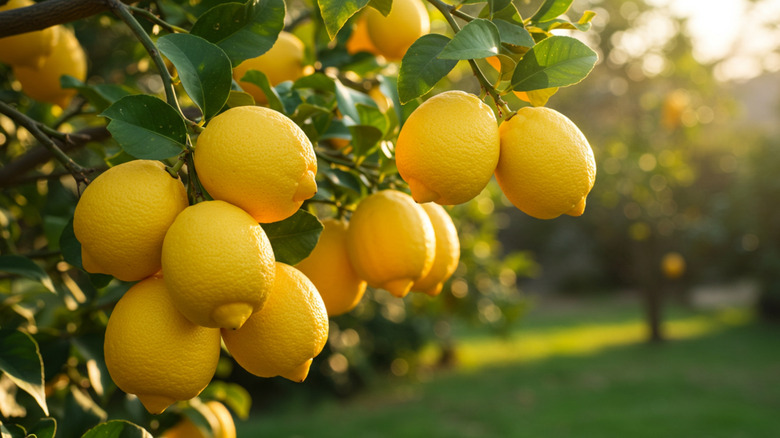
When life gives you lemons, make lemonade. When life gives you no garden space, grow in containers. Two of the best varieties to bring a little citrus grove magic to your home are the dwarf improved Meyer lemon and the pink variegated lemon trees. They will only reach about 3 to 6 feet high in containers and can be pruned to fit your space. Both are self-pollinating, but they might need some assistance without the help of wind and pollinators if they flower indoors. In cooler zones (4-8), container lemon trees should be moved outdoors to maximize seasonal sunshine and be brought indoors or into a greenhouse to avoid freezing temperatures. Lemon trees in zones 9 and up can stay out year-round. Lemons are just one type of fruit tree to grow in containers as you cultivate your own mini-orchard.
The most compact of the two, the dwarf improved Meyer lemon tree, likes a well-draining container (to avoid root rot) with a slightly acidic potting mix. Choose a container wider than the nursery pot, so long as it fits your space. In containers, water more frequently, after the top 1 to 2 inches of soil have dried. Dwarf Meyers will reach about 6 feet in height, are best suited for zones 8-11, but can be brought indoors in containers in zones 4-7, avoiding frosts.
Dwarf Meyers need 6 to 12 hours of direct sun a day and respond well to a citrus fertilizer applied a few times a year to keep nutrient levels balanced and encourage flowering. If your tree is isn't flowering, there are a few common culprits to rule out, like improper fertilizing. Note that they can't be shipped to certain states, including Florida, Texas, Alabama, or Arizona, but they can be purchased and grown there.
A little TLC goes a long way with container-grown lemon trees
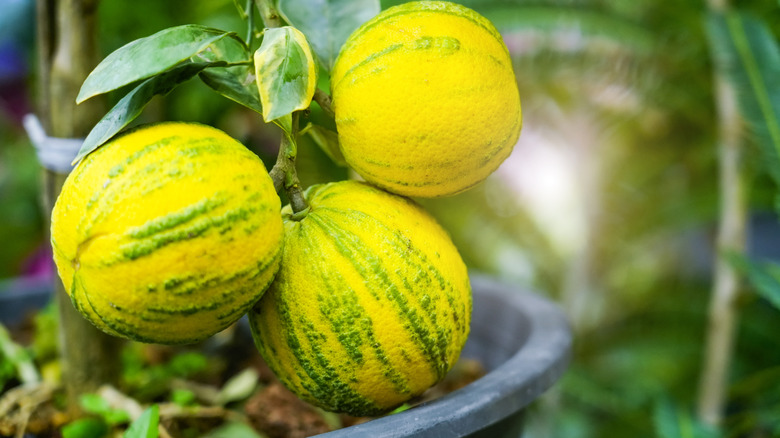
Pink variegated lemon trees are a stunning twist on the typical lemon. A U.S.-native, natural mutation of the Eureka lemon tree, it has creamy yellow-edged leaves, fuchsia buds, striped immature fruit, and delightfully pink flesh. Like the dwarf improved Meyer, it prefers well-draining soil and a similar watering schedule (usually one to two times a week, depending on the weather). Choose a pot that's wider than the root ball to start, then size up gradually as the tree grows. Pink variegated also need that sunny vitamin D, so place them where they get 6 to 8 hours of direct light each day. In zones 8-11, you can plant the trees in the ground or in containers. For zones 4-7, use containers, and bring them indoors when it gets close to freezing.
Regular pruning of limbs and shoots keeps both varieties tidy and productive in containers. The tree sets fruit on new limbs, and a trimmed root mass stimulates new growth. In early spring, remove rubbing, dead, or old branches, but avoid over-pruning. Root prune by tipping the tree out of the container and removing 1 to 2 inches of the outer root mass.
If you notice flowers dropping or fruit failing to develop, think through basic care before considering tricks like the rusty nail myth. Container fruit trees can be a little challenging, and it can take two to seven years of maturing before a tree can bear fruit. Set your lemon trees up for success with the proper steps: Pay attention to sun exposure; provide moderate watering; ensure sufficient drainage; add citrus soil amendments; and practice gentle pruning. After a few seasons, you'll have your very own container-grown lemons.