

Why March Could Be The Worst Time To Hike In These Parts Of The US
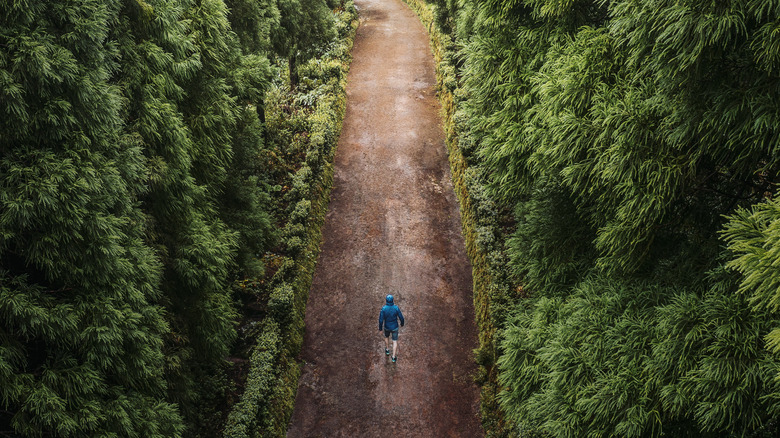
The spring season officially begins in March: Astronomical spring starts with the vernal equinox in the third week and meteorological spring begins on the first day of the month. Regardless of the date, March's temptation of longer days and warmer weather has many hikers anxious to hit the trail. However, it is important to remember that spring flowers are the result of spring showers and snow melt. Those are just two of the reasons March could be the worst time to hike in some parts of the United States.
Throughout the vast majority of the U.S., March is one of the most unpredictable months for weather. With that in mind, forgetting to check the weather forecast is a massive hiking mistake to avoid. However, this atmospheric unpredictability can be even more pronounced, as well as more dangerous, at higher altitudes. Sudden changes in wind velocity, temperature, or precipitation in the mountains can leave hikers vulnerable and needing to make their way back down along slippery, steeply inclined trails. It can also leave them open to the dangers of flash flooding while hiking through rugged terrain, and even facing avalanches. This makes conditions less than ideal for hiking during March in areas such as the Cascades, Rocky Mountains, and Adirondacks. Essentially, the very thing that makes hiking in March so enticing — warming air temperatures and sunny days — can have a detrimental effect in mountainous areas, as well as almost anywhere in the northern U.S., from the Pacific Northwest to the Northeast.
Warming temperatures can make a mess of trails
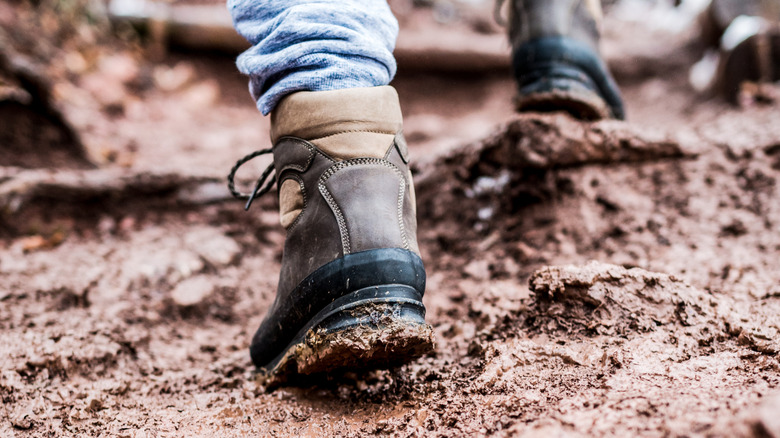
One way warmer weather impacts hiking conditions is melting the snowpack that has accumulated throughout the winter. Mountainous regions are particularly prone to this, as snow melt at high elevations will become runoff, flooding rivers and muddying trails even at lower levels. Just because there's no snow where you're hiking doesn't mean it's not on the mountain peaks above you. As a result, hikers need to exercise caution around creeks, rivers, and streams. Avoid crossing these water bodies if at all possible in order to avoid being trapped by rapidly rising and rushing waters. Additionally, wear the best hiking shoes for a wet hike, even if rain isn't expected, as snow melt runoff can cause wet, slippery trail conditions. Timing and proper planning of your hike will be key, as the effects of snow melt runoff are more significant in the afternoon hours.
Even where there is no snowpack, warmer temperatures and spring rains can turn trails into a muddy mess. Across most of the norther tier of the U.S., March is known as the start of mud season. Areas throughout the Pacific Northwest, Upper Midwest, and Northeast see winter's frozen ground begin to thaw, becoming wet, mucky, and muddy. Thaws tend to be most noticeable during warmer afternoon hours, as lower overnight temperatures often firm up the ground each morning. So, while chilly, sunrise hikes are often the best option, especially in early March.
In addition to weather forecasts, check on-the-ground reporting from apps like AllTrails or regional sites like Washington Trails Association. If a trail seems too risky, save it for another day and choose one that will be much more pleasant for a March hike.