

With Its Scarlet Blooms, This Flower Is A Vibrant Way To Attract Hummingbirds
We may receive a commission on purchases made from links.
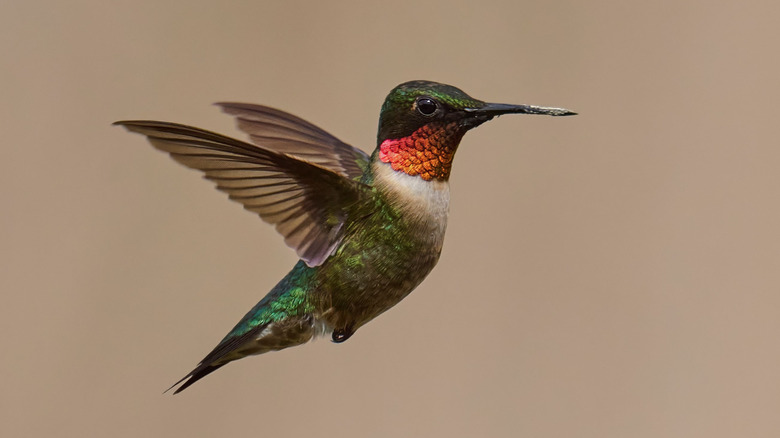
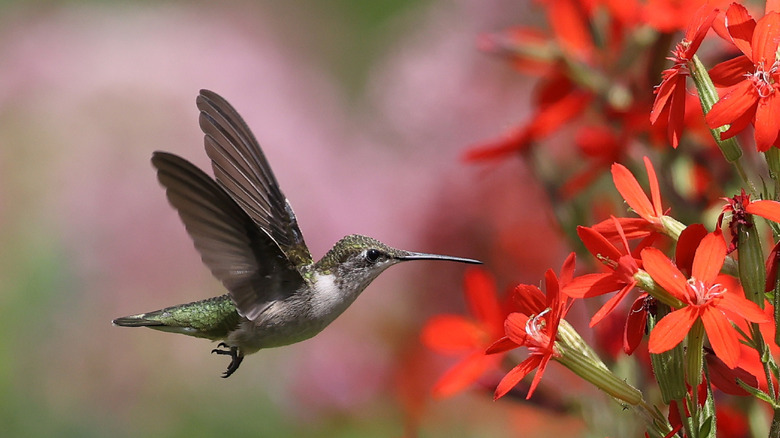
There is certainly no shortage of stunning plants that will attract hummingbirds. Additionally, adding the color red to your garden will attract hummingbirds and the royal catchfly (Silene virginica) certainly fits these categories. With its scarlet blooms, this flower is a vibrant way to bring these small friends to your yard. In fact, their combination of color and shape, growing height, and function as a food source make them an almost ideal addition for anyone attempting to attract hummers and other pollinators.
Although today it is fairly rare in the wild throughout its native range (it's classified as endangered in Florida, Michigan, and Wisconsin), royal catchfly can be grown in USDA hardiness zones 4–8. Given the fact it blooms in late summer, it is an especially ideal food source for ruby-throated hummingbirds preparing for migration. A stand of royal catchfly actually functions as a dual-purpose food source: It provides a rich source of nectar and its sticky stems trap small insects, both of which hummingbirds love. Its tube-shaped flowers and height combine to make royal catchfly an ideal feeding platform for hummingbirds.
Growing royal catchfly to attract hummingbirds
The first step to creating the perfect hummingbird haven in your yard is selecting a suitable site to grow your royal catchfly. They fare best in sandy- or clay-loam soil that is moderately moist to dry. They can do well with either full sun or partial shade. The plants will grow to about 4 feet tall and will need a foot or two of spacing between each plant. In addition to choosing a site, you will also need to plan ahead before planting, as royal catchfly seeds should be cold stratified for about 60 days.
Using the cold stratified method, it is best to germinate the seeds in a container after the stratification process is complete. To do so, fill a container with potting soil and press seeds slightly into the soil without covering them. Leave the container in a spot that gets sunshine throughout the morning, followed by shade in the afternoon. Once the air temperatures warm to around the mid-60s, the seeds should begin germinating. After the seedlings are a couple inches tall, they can be transplanted. When established, the plant can live a few years.
Alternately, should you choose to direct sow the seeds, you can do so either in late fall or in early spring about three weeks prior to final frost. The simplest method is to broadcast sow the seeds, then lightly tamp them. You can broadcast them by hand or using a device like the Chapin shaker spreader. Royal catchfly grows slowly and can take a few years to become fully mature. However, once established they are very prolific, so, it is necessary to deadhead the blooms as soon as they start to wither to keep them from overpopulating.