

A Delicious Herb That May Be The Key To Keeping Chiggers Out Of Your Yard
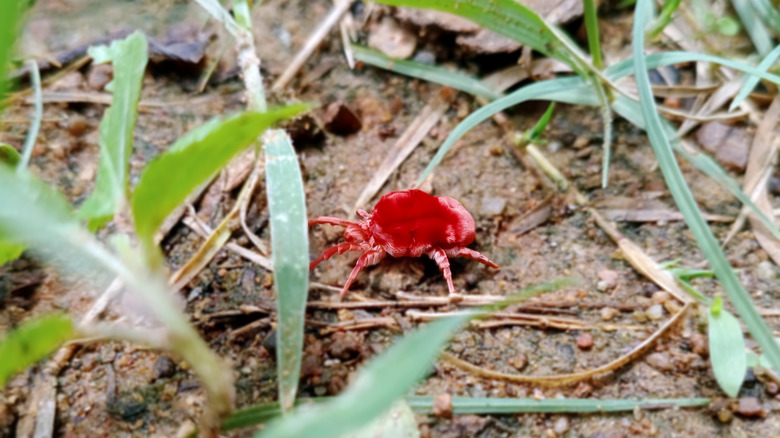
Chiggers, which are larvae of mites, are minuscule creatures that can raid your yard and terrorize your skin with their bites. These larvae, more closely related to arachnids than insects, are often shades of reds and yellows and have six legs (they get an extra two legs when they become adults). Chiggers don't actually bite you, instead they pierce and liquify your skin with a digestive enzyme, drinking the liquid with straw-like mouthparts. What is left is an itchy red spot on your skin that's incredibly bothersome and hard to ignore. Since chiggers, sometimes called berry bugs, are common in warm, grassy areas, they often make themselves right at home in the average lawn. Luckily, basil, a common — and delicious — herb helps deter the little pests, acting as a natural repellent and protector.
Basil repels chiggers, and several other pests like mosquitoes, flies, fleas, and ticks, with its aroma. The herb's smell, while delightful to humans and other animals, comes from the oils in the leaves, which are unpleasant to many critters. Not only is basil the fragrant herb that'll help keep pests off your citrus trees, you can also crush the leaves and rub them on your skin (or use essential oil) to soothe the itching sensation left by chiggers.
How to strategically plant basil to help deter chiggers
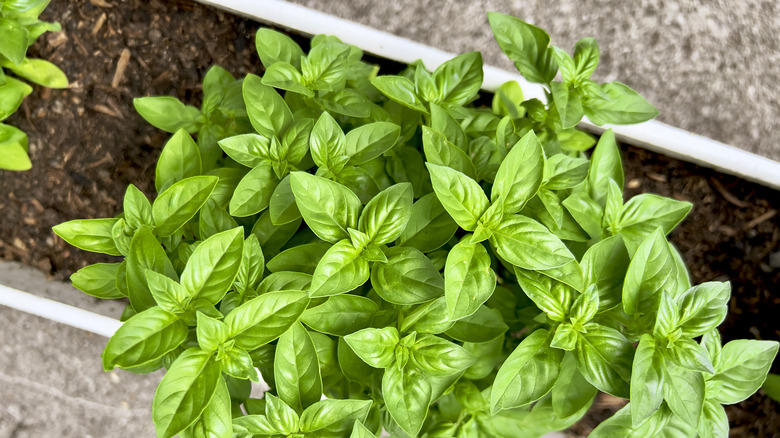
Chiggers are most active in tall grass and shaded lawn edges. While basil's strong aroma can help deter these pests anywhere, it's most effective when planted where people are likely to encounter them: borders of grassy lawns, near walkways, patios, and seating areas. Basil is best used as part of a broader preventative approach that includes mowing regularly and clearing any debris where chiggers could be hiding.
To best grow basil, plant it in full sun in moist soil. Basil seedlings should be planted about 1 foot apart from each other. Basil is also one plant that does well starting indoors before taking it outside. You may as well keep the plant in a pot, as you will want to bring it back inside once winter arrives. To keep basil healthy enough to function as a deterrent throughout the growing season, proper harvesting techniques and routine care are important. Since basil can be temperamental in outdoor conditions, understanding why basil plants wilt and how to revive them can help maintain their strength and scent, producing the oils chiggers hate.
When incorporating basil into your garden layout, remember that it is also an excellent companion plant for several other herbs and vegetables, though your placement should still prioritize areas where chiggers are most active. Be careful, as certain herbs, including basil, do not belong alongside cucumbers in the garden.