

What To Know About Intercropping And How It'll Help Your Vegetable Garden Thrive
Establishing a vegetable garden takes a lot of work. Whether you're thinking of putting in raised beds or tilling the soil for in-ground beds, a lot of decisions go into creating a thriving vegetable garden. One thing that gardeners are always told is the importance of spacing their vegetables. The teaching goes that a lot of veggies grown in close proximity will compete for nutrients and won't grow properly. While there is a lot of truth to this, there are some plants that, when sown close together, mutually benefit each other. The practice known as intercropping proves that some plants do perfectly well when grown closely together.
Also known as companion planting, intercropping is a permaculture gardening principle that is meant to mimic a more natural ecosystem. This is based on ancient ecology: the understanding that plants adapt to environmental stressors and grow regardless of how close they are to one another. Intercropping allows plants to thrive via symbiotic relationships, where the natural aspects of each plant directly benefit each other.
Don't get us wrong — there are absolutely some plants that you should never grow anywhere near each other. However, with a little bit of research and careful planning, you can create an intercropped garden that will thrive with produce.
How (and why) to intercrop your next vegetable garden
When intercropping your garden, you want to create a polyculture, which the Permaculture Association defines as an area where "two or more useful plants [are] grown on the same plot, usually at the same time." The key term here is "useful." Companion planting in a garden allows your plants to symbiotically benefit each other in some way. This could be through additional nutrients, pest resistance, or providing things like shade.
As a more detailed example of this, we'll take the Three Sisters, a style of gardening pioneered by early Native Americans. Three plants sown together — beans, squash, and corn — utilize their natural characteristics to mutually benefit one another. The beans imbue nitrogen into the soil, which helps the squash and corn to grow. In turn, the shade provided by the foliage of the squash and corn helps the beans (which are no fans of direct sun) to keep cool and grow better.
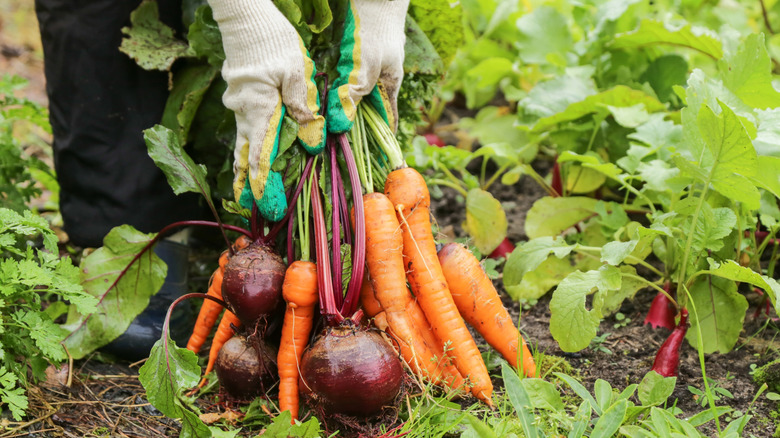
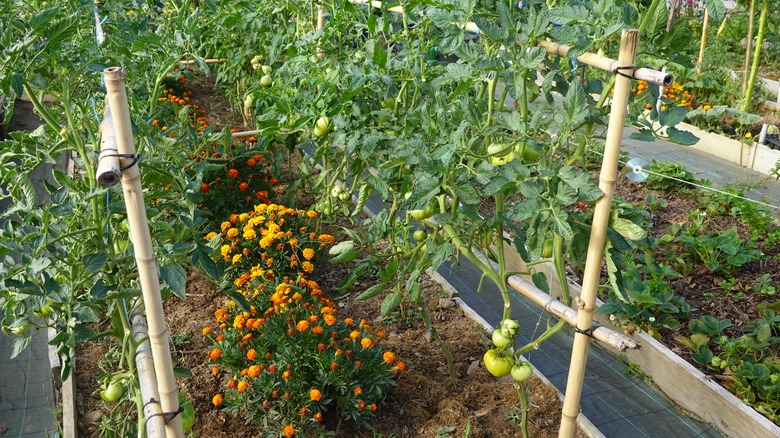
Other excellent intercropping pairings include tomatoes and marigolds, root vegetables and lettuces, beets and garlic, broccoli and dill, onion and strawberry, and zucchini and buckwheat. Intercropping is a great way to embrace more plant diversity and maximize your garden, providing you with more produce and extending your harvest season. It's a win-win all around.