

Keep Your Garden Blooming With This Colorful, Frost-Tolerant Flower
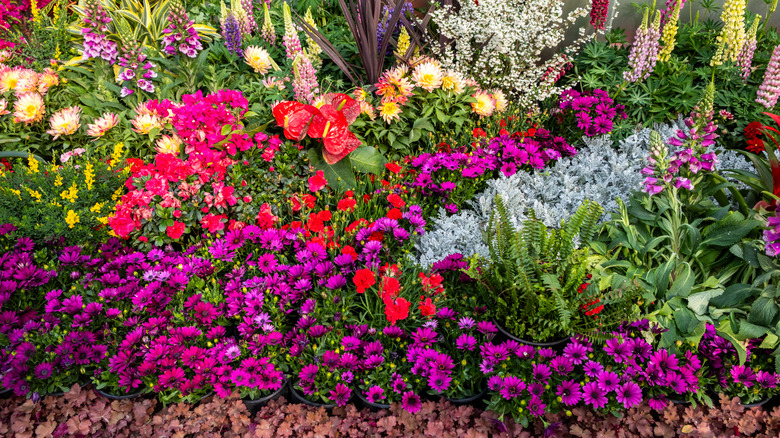
If you're an avid home gardener, you may be willing to go to great lengths to make your garden beds pop, even during the dog days of winter. Overwintering plants like geraniums means bringing them indoors when it gets coldest outside. If you're looking for a flower that will not only survive the winter, but possibly thrive, invest in snapdragons, AKA antirrhinum majus. These tall, gorgeous blossoms come in rich shades, soft pastels, and dramatic contrasting colors, providing a splash of life to an otherwise barren early spring or late autumn garden. Beauty aside, snapdragons have developed a reputation for being quite hardy, with some gardeners reporting that their snapdragons have survived multiple frosts per season.
Snapdragons are native to Mediterranean regions such as Italy, Spain, and Turkey. So it makes sense that they do well in USDA zones 7 through 11. But cold-season varieties have been bred that are surprisingly hardy, with many home gardeners highlighting their ability to handle swift drops in temperature. This makes snapdragons a favorite for planters in regions like zone 5/6, where unpredictable frosts can be the norm from late fall to early spring. Of course, snapdragons can still suffer when exposed to prolonged freezes, causing them to die off for the season like any other plant. Where snapdragons thrive, however, is in their ability to return and continue blooming once quick frosts have subsided. Likewise, these perennials are known to self-seed and return in the spring even after facing harsh winters, especially when they're provided with full sun, well-drained soil, and plenty of nutrients.
How to maximize your snapdragons' frost tolerance
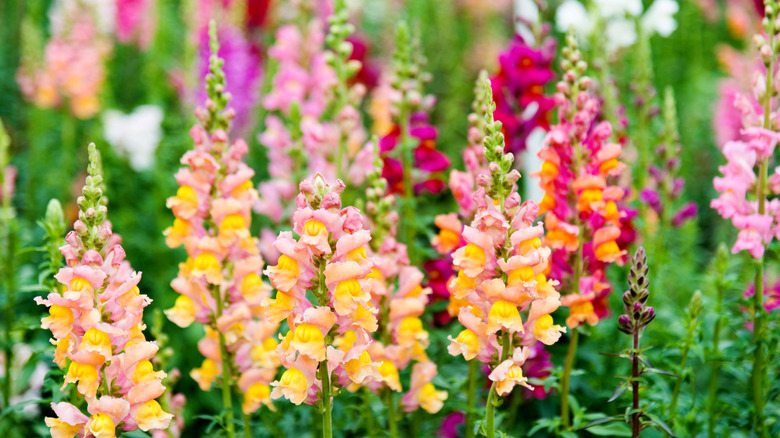
If you're considering planting snapdragons, there are a few measures that can be taken to ensure that they live up to their frost-tolerant reputation. For starters, their resilience depends largely on how and when they are planted, as well as what "group" you're planting. Varieties are placed into one of four groups (1-4) based on their blooming seasons. Group 1 is particularly cold-hardy, blooming in winter in moderate climates. Cultivars include 'Legend,' 'Chantilly,' and 'Maryland.' Group 2 can survive winters, with blooms starting before the final frost in spring, and lasting into late fall. Here, look for cultivars like 'Animation' and 'Overture.'
Snapdragons tend to perform better with a cooler start, meaning it's best to plant fresh seedlings in the early spring, before the last expected frost, or during the late summer, when temperatures are no longer scorching. On the other hand, if you're starting snapdragons indoors before spring begins, give them a proper hardening by gradually acclimating them to the outdoors.
Location also plays an important role in snapdragons' ability to survive. Despite their aversion to heat, snapdragons prefer a full sun environment. Planting them in shade helps in very hot environments, but makes them more susceptible to freezing, which in turn prevents them from surviving subsequent frosts. If you're facing a major freeze, insulate your snapdragons with a layer of organic mulch, but be sure and mulch at the right time, and not too early, so plants can acclimate. Covering snapdragons with a breathable fabric overnight also helps prevent damage to their blooms if you're expecting major weather.