

What To Do Immediately If Your Car Breaks Down On A Road Trip

If you're an adventurous person trying to visit every stop on your United States road trip bucket list, the last thing you want is for your car to break down. Not only does it bring the fun to a screeching halt, but it can be scary and even dangerous. Knowing what to do in an emergency before it happens can help you stay calm and focused. The absolute first thing you should do if your car breaks down on a road trip is turn on your hazard lights to let other vehicles know there's an issue.
Once your hazards are on, slow your car down and steer it to the side of the road. If possible, you want the entire car off the road and out of the way of traffic. This is especially important if your car breaks down at night, as other drivers may not be able to see your car on the road. Unless there's a clear emergency, such as a fire, stay in your car with your seatbelt buckled. If the car is on fire or someone was injured, call 911 or the appropriate emergency number. Most of the year, you don't need to be quite as stocked as if your car gets stuck in winter, but you should still have a basic emergency kit.
If everyone is safe, call for assistance. Roadside assistance is helpful for minor fixes like flat tires, but if the problem is more serious you'll need to be towed to a mechanic. When traveling, you may not know where you are. Look for signs or landmarks that the company can use to find you. Stay put and wait for help to arrive. This may be intimidating in an unfamiliar location, but these services are to help!
What to do if you don't have cell service
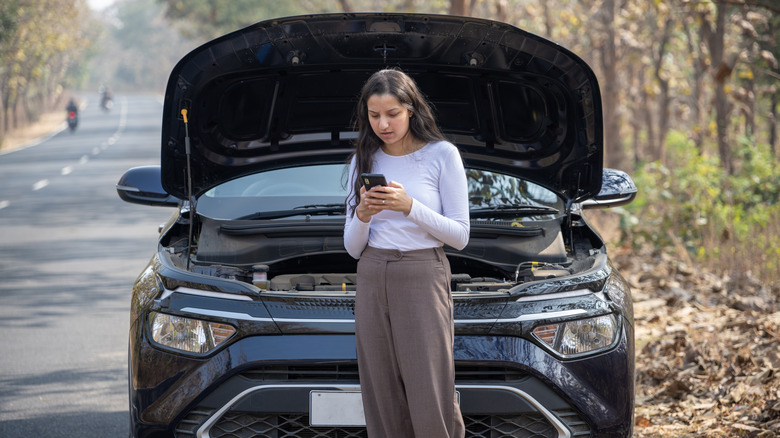
If you're road tripping through a remote area, you may encounter a dead zone where your phone has no signal. You may also experience problems if you're traveling abroad and don't have an international phone plan. While it may make the situation feel scarier, the initial steps stay the same. Put on your hazard lights and pull off the road. If it's safe, try searching for a signal just outside your car.
It may seem like a good idea to get out and walk, but you should only do that if the destination is within sight of your car. Not only is walking along a roadside dangerous, but distances that seem small in a car are longer on foot. You may end up walking more than you anticipated or get turned around. If another driver stops, ask them to call for help rather than letting them drive you somewhere, just to be safe.
Even if your cell phone doesn't have a strong signal, there are ways to call for help when you have no service. Your phone should allow you to call 911 if it can connect to any nearby towers, even ones not normally used by your service provider. However, the operators may not be able to see your location. Describe where you are to the best of your ability and stay in your car to wait for help to arrive. If you cannot stay in your car for any reason, stay within sight of it to watch for help. If you can't even reach 911, don't panic: Someone will pass by eventually.
What to do if your RV breaks down
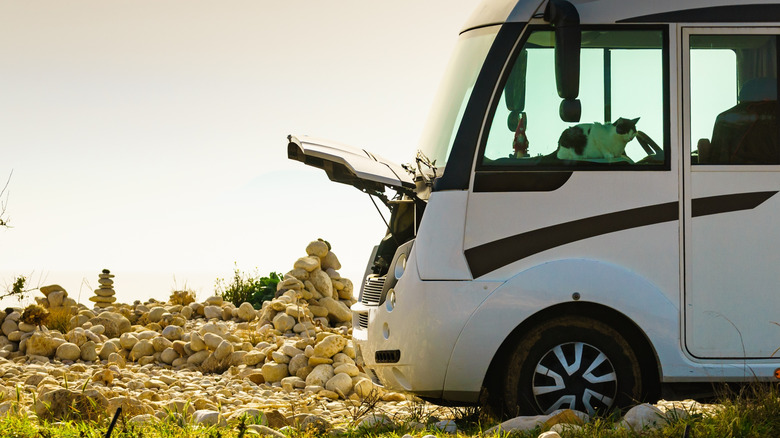
If you're on a long road trip, you may not be in a car. Luckily, the basic steps to handling an RV break down are the same. Start by hitting the hazard lights and moving your RV off of the road. Your RV may have a manual that explains common problems and how to fix them, so check that first. Only get out of the RV to attempt to fix the problem if you are clear of traffic. If the problem isn't easily solved or it isn't safe to exit your vehicle, call for roadside assistance or towing. Make sure that the towing company and mechanics have experience working with RVs. Otherwise, they could cause additional damage. Depending on the area, there may be mobile technicians who can work on your RV onsite rather than towing it.
Depending on where you broke down and how severe the problem is, you may need to find somewhere else to stay last-minute. Take a few moments to gather all your essentials, so you aren't scrambling to find everything when it's time to go. If you're at a campsite and cannot move the RV, contact the camp director immediately to let them know. They may agree to let you stay past your check-out date or offer other forms of assistance. They may also have contact information for local mechanics. You likely aren't the first person to break down at the site, and the campgroud may have policies or procedures in place for this situation.