

What You Need To Know Before Transplanting The Hydrangeas In Your Garden

Hydrangeas are a popular addition to any garden, producing vibrantly colored blooms that add tons of visual beauty to your outdoor space and attract lots of health pollinators. You can definitely make a statement in your garden by planting hydrangeas with a stunning ground cover, but they need the right balance of moisture and sunlight to thrive. If your hydrangeas aren't doing well, they may be planted in the wrong spot. The optimal spot in your garden to plant hydrangeas will offer dappled sun and moist, well-draining soil. If they are getting too much sun or too much shade, you should considering moving them to a better spot.
Moving established plants is a delicate job, however, and needs to be done with care. Hydrangeas can develop transplant shock if they aren't moved carefully or at the wrong time of year. Transplant shock occurs when the plant doesn't root well and fails to get properly established. This leaves the plants weak and much more susceptible to plant diseases and insect infestations.
Symptoms of transplant shock include leaf drop (or shedding leaves from stress), stunted or halted growth, wilting in even properly watered soil, and leaf discoloration, which is a sign that nutrients aren't getting absorbed properly. Fortunately, transplant shock is treatable by keeping the soil moist (but not overwatered), pruning off damaged leaves and stems, and keeping the hydrangeas out of direct sunlight for several days after they are replanted. If you are careful when transplanting your hydrangeas, the likelihood of developing transplant shock will be greatly reduced.
How to safely move hydrangeas to avoid transplant shock
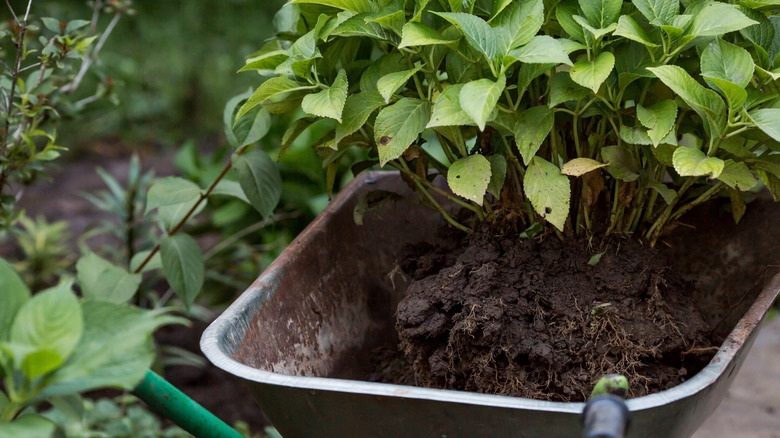
The process of transplanting your hydrangeas is not particularly difficult, so long as you are careful and have things planned out ahead of time. The time of year that you move the hydrangea makes a huge difference when it comes to avoiding transport shock. The best time to transplant is when your hydrangea is dormant. The blooms on the plant will have died and the leaves will have dropped off as well. Normally the weather will be cooler during the dormant stage.
Make sure you know exactly where you are moving your hydrangea plants to in the garden and have that soil and a hole ready to go; this way, your plants are not out of the ground any longer than necessary. Your new hole for each transported plant should be at least 1 to 1½ feet deep and twice as wide as its depth. Dig your hole before you lift the hydrangea out of its existing spot.
Be careful digging your hydrangea out of the ground and take your time. You want to get as much of the root ball as you can. Depending on how big the shrub is that you're moving, it could be very heavy and require two people to move it to its new home. Place the hydrangea into its new hole so the top of the root ball is level with the ground and then fill in the hole. Lightly tamp down the soil and water it deeply. Watering is very important to a successful transplant. Here's how often you should water your hydrangeas for optimal growth, but take care not to overwater.