

If Your Tomato Plants Are Struggling, This Flower Might Be The Culprit
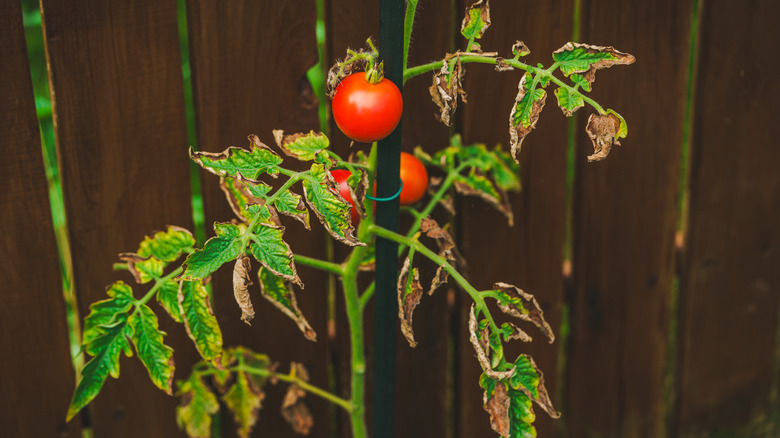
It's the end of the season, and your tomato plants are looking like scrawny sprouts. Sadly, there were no big bushels of ripe fruit, even though you diligently watered and fed your tomatoes. Don't blame yourself; the true culprit could be hiding in plain sight. Believe it or not, that bright, cheerful sunflower plant that's stealing all the glory may be doing more than blocking sunlight and hoarding resources. Sunflowers are phytotoxic to tomato plants, inhibiting their growth by leaching toxins into the soil.
While the toxins present in all parts of the sunflower won't hurt people or pets, they can do a number on your tomato patch. Like other nemesis plants that could be wreaking havoc in your garden, sunflowers compete with neighboring plants by poisoning them. With their bright, cheerful faces, you wouldn't suspect sunflowers of being this cunning and sneaky, but all summer long, they've been quietly releasing allelopathic compounds into the soil that stunt the growth of nearby vegetables.
Allelopathy is something for gardeners to watch out for, and there's an entire list of plants you should never grow together. In fact, tomatoes may release their own phytotoxins, which could be the reason your nearby lettuce isn't growing the way it should. Sunflowers shouldn't be grown near potatoes for the same reason. You can avoid these problems by focusing on companion planting and avoiding nemesis pairings. Keep tomatoes and other vegetable plants at least three feet away from sunflowers, and if you have a sunflower seedling volunteer in your garden, move it away from plants that are susceptible to its phytotoxins.
When sunflowers affect tomato plants — and when they don't
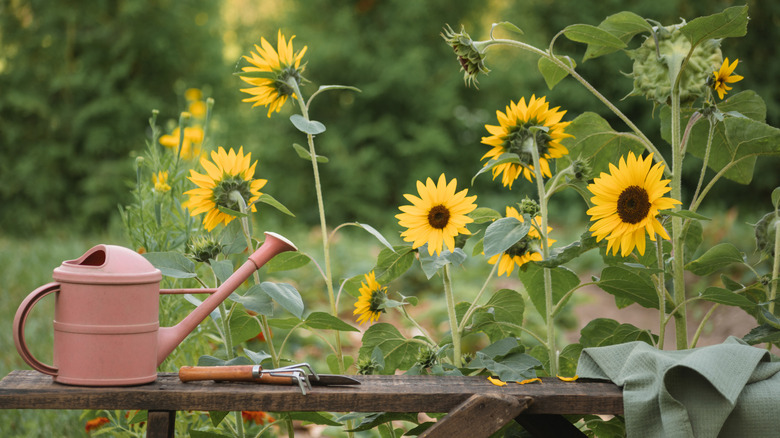
It should be noted many gardeners report having no problem at all with planting sunflowers in their gardens. Some even consider the sunflower a companion plant for tomatoes because sunflowers attract pollinators. And some plants, like beans and corn, can handle the sunflower's allelopathic properties just fine. One trick is to make sure you remove the stalks and flowers completely from your garden when they're done for the season, and don't add them to compost. Consider using sunflowers as a border plant, away from tomatoes and other susceptible plants. And remember to keep other allelopathic plants,
In addition to avoiding nemesis plant pairings, basic care for tomatoes includes regular watering, adequate fertilization, and proper plant spacing. Keeping an eye out for pests and diseases so you can act before it's too late is also a good idea. You can even try mulching to prevent your tomatoes from splitting and cracking. At the end of the day, growing tomatoes is a combination of art, science, and green thumb magic. By focusing on what you can control, you give your plants the best shot at thriving.