

The Last Winter Frost Date: What It Means For Your Planting Calendar
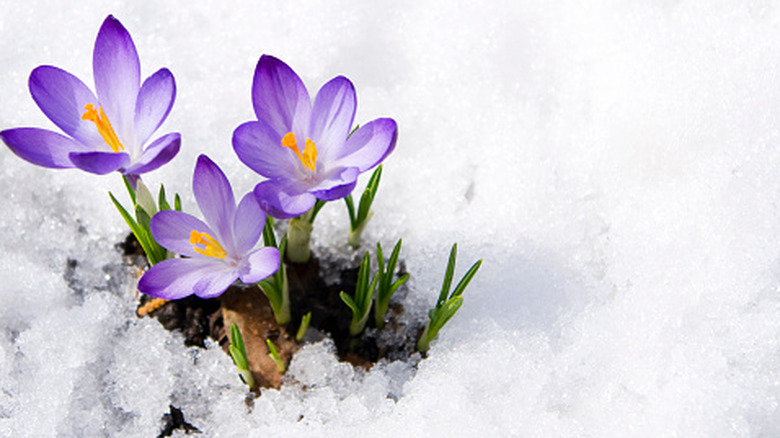
As winter winds down and most days are spent well above freezing, gardeners are penciling out their planting calendars around one date: the last frost. The last frost date is an estimate of an area's final wintery nip of below-freezing temperatures (32 degrees Fahrenheit). A sudden frost, and the corresponding temperatures, can damage, stunt, or even destroy tender spring transplants or germinating seeds. So, the last frost date for your area signals when it's safe to transplant or sow most seeds outdoors. It also helps determine what plants to choose, so they reach maturity within the length of your growing season (the period between the last frost and the first fall frost). Knowing the average last frost date for your area makes selecting plants, timing nursery starts, sowing outdoors, and transplanting all less challenging.
There are several online resources to find your last frost date. NOAA (the national weather service) has an interactive map providing the chances of freezing drop below 50 percent in your area. The Old Farmer's Almanac and The National Gardener's Association each use your ZIP code to generate a frost date chart. Searching online by your USDA Hardiness Zone also works. For gardeners starting from scratch, seed companies generally note when to sow seeds indoors or directly outdoors based on your date and location.
Generally speaking, mild climates in the southern U.S. often have their last freeze as early as February, but northerners need to wait closer to the end of April or May. Keep in mind that these dates are based on averaging historical weather data, and are also impacted by microclimates, urban landscapes, and other vagaries, so treat it as an estimate, keeping an eye on your local forecasts each season before transplanting.
Knowing the last frost date can maximize your abundance
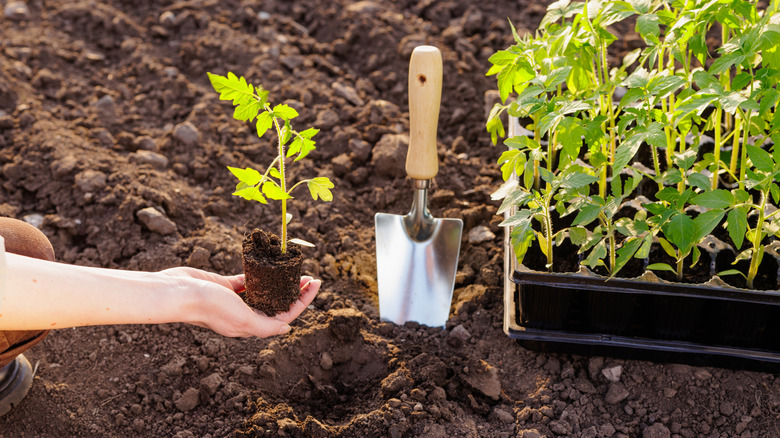
The simplest use of the last frost date in a planting calendar is marking when it's safe to buy many perennials, annual flowers, and tender vegetable seedlings for your garden. To serve them even better, buy them one or two weeks before the last frost date, and begin hardening off your starts at home before planting them. When it comes to cold-hardy plants, flowers like pansies and veggies like spinach, peas, and carrots tolerate light frosts and prefer mild temperatures, so schedule them a few weeks before the frost date. In contrast, some plants need warmer nighttime temperatures and soil (around 60 degrees F) to thrive. Schedule warm-season plants, like tomatoes, peppers, and marigolds, for transplanting a few weeks after your last frost.
Meanwhile, some plants simply have a longer life-cycle and will take more days to reach maturity than your region's frost date bookends. For these long-game plants, start them indoors several months before the last frost date. Check seed packets and nursery tags for specific timing tips.
Timing and attentiveness are keys to a healthy garden, and weather is notoriously unpredictable. Last frost dates vary widely for reasons beyond just your latitude. Proximity to water, structures, trees, your elevation, and whether you live in a rural or urban area (which may include concrete or asphalt heat islands) can potentially shift the start of your growing season by a few days up to a week. For that reason, keep track your microclimate's last frost dates or ask your neighbors. Be prepared for unscheduled cold snaps, and use these tricks to prevent frost on your maturing vegetables.