

The Once-Popular Landscaping Trend That Pros Are Calling Unmanageable
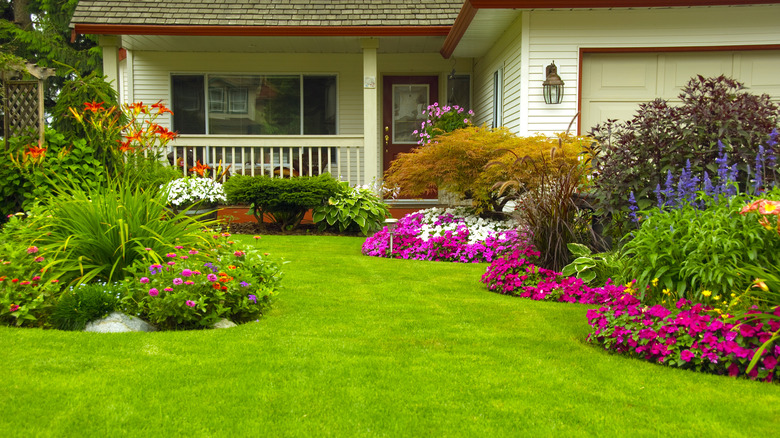
Whether you've just moved into a home or are deciding whether to redo the front yard, curb appeal is a definite factor. It involves more than how the lawn and house look from the street, as plants also shape the overall view. One outdated trend that seems logical on the surface is actually not such a good idea: Overcrowding plants. It's also one of those mistakes beginning gardeners make way too often. Overcrowding happens when virtually every inch of plantable space is filled with flowers, shrubs, ground cover plants, you name it. It may look appealing right after planting, but that rarely lasts.
Like pets and people, young plants continue grow over time. Those plants take up more space as time goes on, and those that are the most prolific growers will soon crowd out those that grow slowly. Shrubs in front of a porch become a living wall of sorts, obstructing your view. Other plants that look and smell wonderful, such as lavender (Lavandula angustafolia), can crowd one another out, leading to plant health problems.
Why overcrowding plants is a bad idea
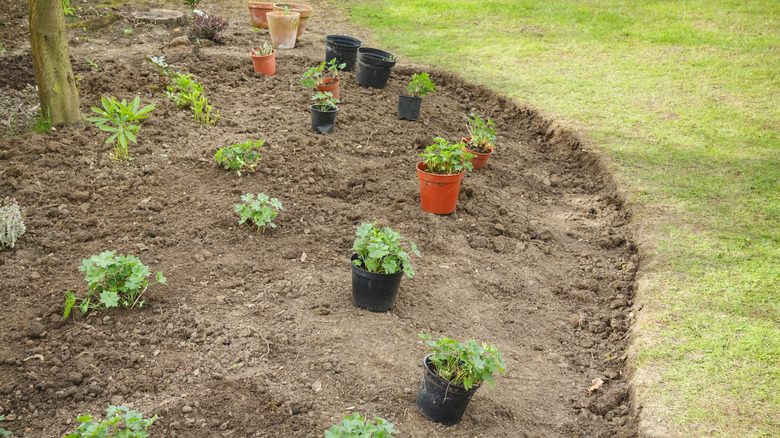
Overcrowded plants can become too tall or wide to manage, especially if youve ever had to prune or remove overgrown bushes. Instead of the beautiful, well-groomed landscape you created one year ago, you're left with what looks like an unkempt, overgrown space that just gets more unwieldy as time goes on.
The best way to avoid overcrowding is to familiarize yourself with each plant's needs and its mature size. For instance, lavender needs air circulation to thrive, otherwise it's prone to fungal diseases. That means allowing enough space at planting time and as the plant matures. When planting trees, shrubs, and bushes, including roses and other flowering plants, be sure the area has plenty of space for a mature plant, and don't plant other things too close to it where they may become overshadowed in a year or two.
The same principle applies to vegetable gardens. Certain plants really need lots of space, and planting extras close to one another won't necessarily yield more food. Instead, overcrowding can cause plants to compete for water, sunlight, and space. Overcrowding could even happen when you're planting seeds in the garden. This approach helps prevent seed overcrowding and makes it easier for the garden to thrive.