

The Type Of Fruit Tree That'll Thrive Even In Colder Climates
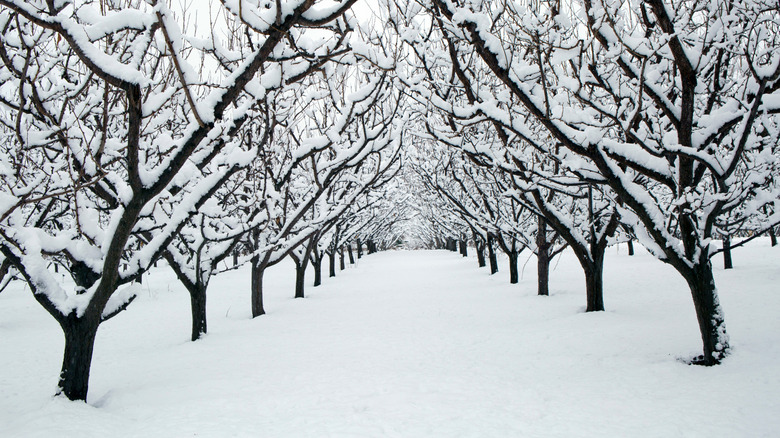
Apples are an American agricultural icon throughout much of the country, but apple trees don't grow in every American climate. In fact, most varieties, called "high chill" apples, depend on long periods of cool weather (usually around 800 hours between 32 and 45 degrees Fahrenheit) to trigger growth cycles that initiate strong spring buds and healthy fruit sets. While most varieties thrive in USDA hardiness zones 4-7 (roughly the upper-middle band of the country), where the lowest temperature limits are -30 to 10 Fahrenheit, fewer can handle even more severe winter temperatures. One fantastic option for growers in USDA Hardiness Zones 3-6 is the Hazen apple. The annual fruit bearer is particularly suited to brief, warm summers and brutally cold winters, which is perfect if you live up near Canada.
The Hazen apple variety was developed by Neal Holland in the harsh climate of Mandan, North Dakota. It's a cross of a disease-resistant Russian variety called Duchess and the flavorful, crispy Starking Double Red Delicious. The combination makes the resulting Hazen a delicious, low-maintenance, hardy option that can handle winter temperatures all the way down to -40 F. It's also productive with great returns: Hazen trees fruit early in the life cycle (around year three) whereas most apple varieties take twice as long. It can be harvested each year in late-summer, which is nice for the person picking the apples!
Plant the right kind, in the right place, and at the right time
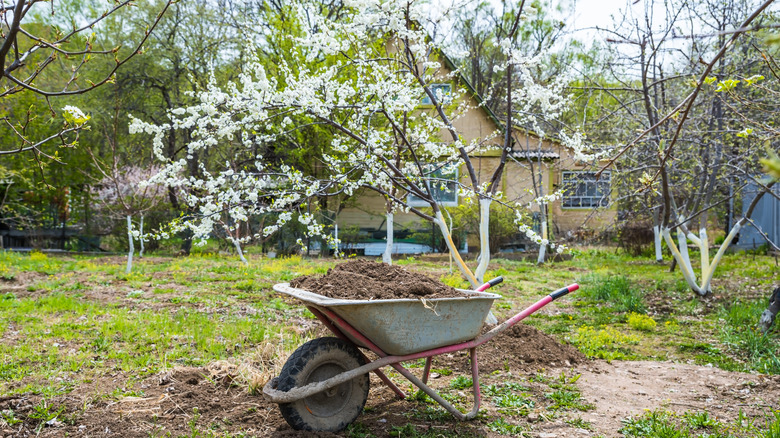
To ensure a Hazen apple tree is right for your orchard, make sure your space works as the tree matures. Hazens are semi-dwarf trees, reaching about 10 feet tall and 16 feet wide, thriving in full sun and moist, well-draining soil. While it can withstand very cold temperatures as we mentioned, its upper limit of zone 6 means that Hazens don't tolerate particularly mild winters or very hot summers. The tree blooms in early spring, sporting white to blush-pink flowers. It produces ample fruit each year and sports yellow fall leaves. Hazens also need another apple variety nearby (ideally within 50-100 ft) to ensure cross-pollination.
While late fall works to plant some apple trees, a good time to plant a Hazen tree is late winter/early spring while the tree is dormant. This provides almost a full year to establish its roots before a deep freeze. Sunshine is the secret to beautiful blushing and maximum sugar and flavor. This is what allows the tree to set fruit. Because Hazens bloom in early spring, make sure your pollen source also blooms near that time. Crabapples are a favorite because they usually have a long blooming period with numerous flowers for pollinators to visit. If your apple trees aren't fruiting, consider issues like overpruning, poor soil nutrition, or disease (though this is less of an issue for Hazens than some apple varieties).
Once you're getting fruit, you'll find it's crisp, yellow, and very sweet. It's perfect for snacking and pies. One thing to note is that its apples are best for immediate snacking or baking. Hazens aren't designed for long-term storage: The fruit will keep about 4 weeks in the fridge, but will go mealy not long after harvesting.