

Bear Won't Leave Your Yard? There's Someone You Can Call To Help
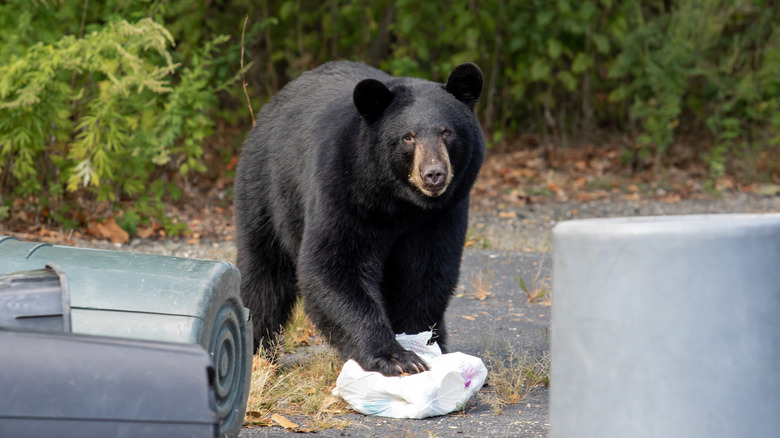
If a bear decides your yard is its new hangout, never approach it. In a case where the bear is threatening a person's immediate safety, call 911. Dispatchers will know who is best to respond and will take measures to remove the bear. Potentially dangerous bear behavior could include breaking into interior spaces or structures, guarding food sources, knocking over smoldering grills, or lingering and stalking that prevents a person from reaching a safe location.
If there is no immediate threat, but the bear doesn't move or respond to fear tactics like banging pots or yelling, call your state's wildlife agency or fish and game department for assistance. These departments will help you keep your family, pets, livestock, and the bear safe — and reduce the chances of future visits. Responders will usually want to know what drew the bear there in the first place. It's also helpful to let them know if your backyard guest is a grizzly or black bear. Grizzly bears are protected and managed by the U.S. Fish & Wildlife Service under the Endangered Species Act. In either case, these officials understand bear behavior and have policies in place to determine the appropriate measures for your unwanted guest.
Why you should reach out to the right professionals
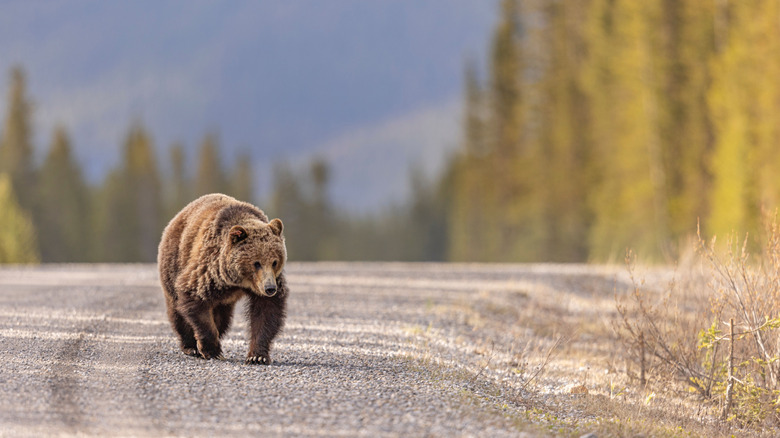
In some cases, "problem bears" already have a track record and are collared, tagged, or photographed for monitoring. Bear experts will often ask you detailed questions about the bear's behavior and what might be attracting it, and they may also request photos for identification. In some cases, they may tell you it is normal bear behavior. They are natural solitary wanderers and need to move across large tracts of private and public land to eat, mate, den, and hibernate.
But if a bear won't leave your yard, chances are your property has something it needs: shelter, water, or food. Bears have an incredible memory and sense of smell (grizzlies can catch a whiff from over a mile away). They are known to travel hundreds and sometimes thousands of miles to return to a previous food source. It's also why your region's wildlife agency will stress prevention and eliminating attractants rather than relying on relocation strategies.
Sadly, spending extended time in developed areas like your yard is a sign that the bear is habituated to human food sources and has lost its innate fear of humans. The chances of this bear's survival drop because it might have to be euthanized, and it is more likely to be struck by cars, killed by humans, or fall victim to other predators. Even more heartbreaking, cubs taught by their mother to source human food are also euthanized. Before a bear finds a reason to post up in your yard and a tragedy occurs, follow these steps to keep bears away from your home.