

How To Determine If A Groundhog Is Damaging Your Yard (And What To Do)
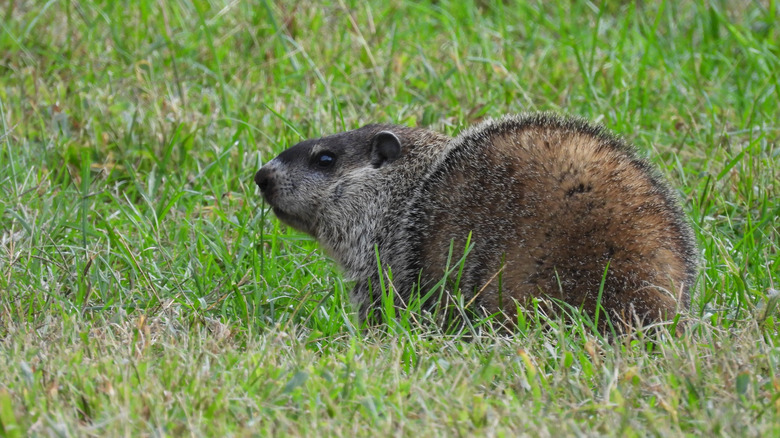
Unless you've visually caught a critter in the act of adding holes to your yard, it could be hard to know what's making them. Small holes are made by smaller creatures such as chipmunks, but if the holes are large enough for a makeshift game of golf, a groundhog could be the culprit. These hefty dirt diggers create a tunnel system underground that connects separate areas. Unlike pocket gophers, which weigh about a pound, groundhogs can weigh up to 14 pounds and are about the size of a cat. The main entrance to a groundhog's tunnel network can be up to 12 inches wide, and if you've found one hole, there are likely more, since their tunnel system has more than one entrance. By comparison, gophers make holes with foot-high mounds surrounding them, but the holes themselves are much narrower.
Besides holes, it's easy to know if your yard has groundhogs if you see the animal. They roam around munching on clover, grasses, dandelions, and strawberries. They'll sometimes chew on or claw the bark of trees, leaving visible damage. In the garden, they eat beans, peas, fruits, and some flowers, such as pansies and impatiens. If you see signs of plant damage as well as large holes in your yard, it's likely a groundhog. They sometimes chew on underground cables, too.
Though skunks sometimes burrow, they're more likely to dig to get beneath a shed or structure or to hunt for grubs, so skunk damage and groundhog damage look different. Use coffee grounds to repel skunks from your yard, as they don't like the aroma. Strong scents can keep cats out of your garden, too.
What to do about groundhogs in your yard
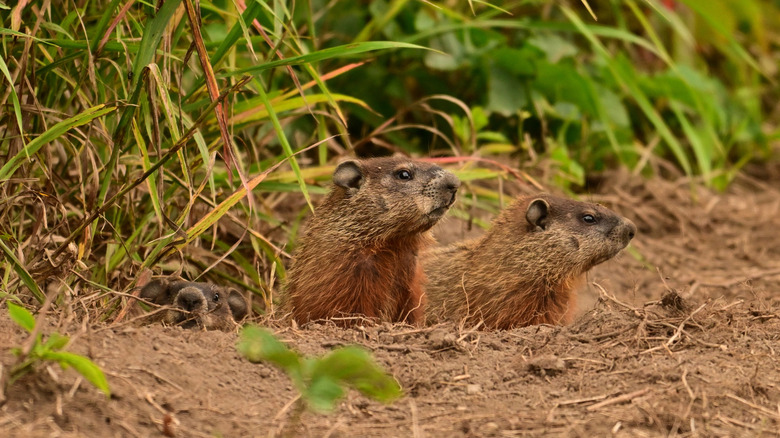
If groundhogs are damaging plants in an area you can enclose, exclusion is the best way to prevent further damage. Groundhogs can climb fences, so you'll need a crafty fence design that keeps them from both climbing over the top and from burrowing underneath. The top of a 4-foot fence should be angled outward at a 45-degree angle. To keep them from burrowing underneath, the fence should extend at least a foot beneath the surface, and then extend outward like a flap for about the same distance parallel with the ground. Hardware cloth can be installed in a similar manner below ground and around sheds.
Habitat modification helps, too. Remove brush piles or wood piles and mow down any tall grasses that may serve as cover. A motion-activated sprinkler placed in the areas of the greatest groundhog activity could also encourage them to move somewhere else. Since groundhogs eat their food above ground, putting small cages around their favorite snacks in your garden could keep your plants safe by encouraging the critters to seek snacks elsewhere.
If the groundhogs keep their burrow entrances away from where you or your pets may trip on them, leaving them alone could benefit other wildlife. In winter, other animals such as cottontail rabbits use portions of the tunnels as shelter while the groundhog hibernates in its chamber. If you have to trap a groundhog for relocation, apple scraps can help lure them inside. Check wildlife trapping and relocation regulations in your area, as these vary by region. In some areas, you'll need special permits to remove and relocate wildlife.