

Protect Your Rosemary During Winter With These Must-Know Tips
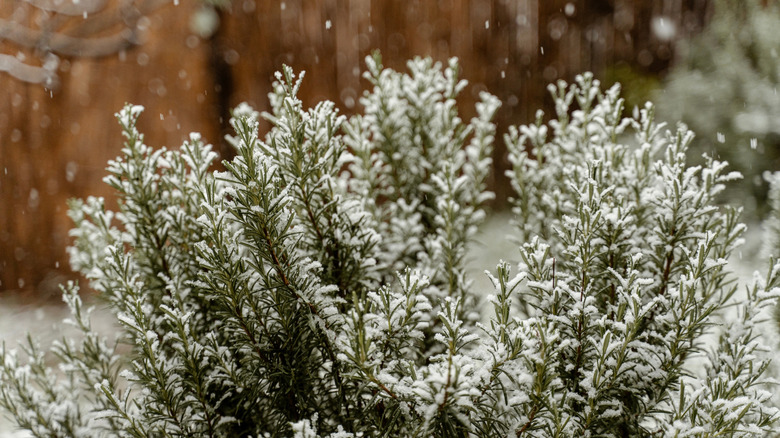
On a chilly January day, the delicately needled leaves of rosemary (Salvia rosmarinus) represents the memory of late July. It is a staple kitchen herb that transforms a boring potato; it's one of the 20 best medicinal plants you can grow in your garden; and it's a garden warden, keeping away harmful pests. So it makes sense to properly protect this multi-purpose plant during its winter respite so it can begin the growing season strong. If you're in an area (USDA zones 8-11) similar to rosemary's native Mediterranean climate, with its mild winters and well-draining soils, then all you need is a sunny location protected from strong winds for it to thrive.
If you're trying to overwinter rosemary in cooler climates or where winter can be windy and wet, good planning greatly improves the chances of surviving the winter. Cultivars like 'Arp,' 'Madeline Hill', and 'Alcalde' are among the most cold-hardy, ideal for USDA Zones 6-7. Select locations where rosemary plants receive residual heat from building foundations or sunlight reflected off walls. The area around structures and foundations usually drains well, which is good for rosemary's roots since they don't like sitting in water. Once your rosemary is rooted in a good spot, additional coverage and insulation are the best ways to help it not just survive the winter but thrive when the growing season finally arrives.
Another option in cooler climates is to transfer rosemary to container pots (or grow them in containers in the first place). Prune a plant down by about half before fully digging up the roots and replanting. Then either store them in an unheated garage (so they can still go dormant), or cluster containers together in a spot protected from predominant winter winds, then cover loosely on extra frosty days.
Try adding mulch and covers

Because rosemary naturally slows its growth and enters a semi-dormant state in colder weather, the goal is to shield its roots and foliage from damaging freeze–thaw cycles. Mulching with the right type of winter mulch is an effective strategy for reducing the likelihood of the root zone freezing solid. A 3- to 6- inch layer of natural mulch — wood chips or straw — around the base of the plant before the first hard frost helps insulate roots without suffocating them. Be sure to gradually pull it back in early spring to allow new growth to emerge and prevent rot.
Physical enclosures and fabric covers can shield rosemary's top growth if hard freezes and strong winds are in the forecast. Floating row covers made from landscape fabric draped over plants and secured in the soil will increase the temperature under the fabric and reduce frost accumulation. Rigid structures like rose cones or opaque gallon milk jugs are another option, particularly for smaller plants. These covers can be placed just before cold snaps and removed during milder spells to avoid overheating or trapping excessive moisture.
In colder climates, it's best to be open-minded and get experimental with more aggressive strategies. Smaller rosemary plants can be trimmed back to roughly 6 inches above the ground, then covered with 4–6 inches of chopped leaves or straw. The goal is to keep your plants just comfy enough to avoid freezing, while keeping cool enough to go dormant, storing energy for next spring's growth.