

Have Some Cracks In Your Concrete Driveway? Try This Budget-Friendly Solution
We may receive a commission on purchases made from links.
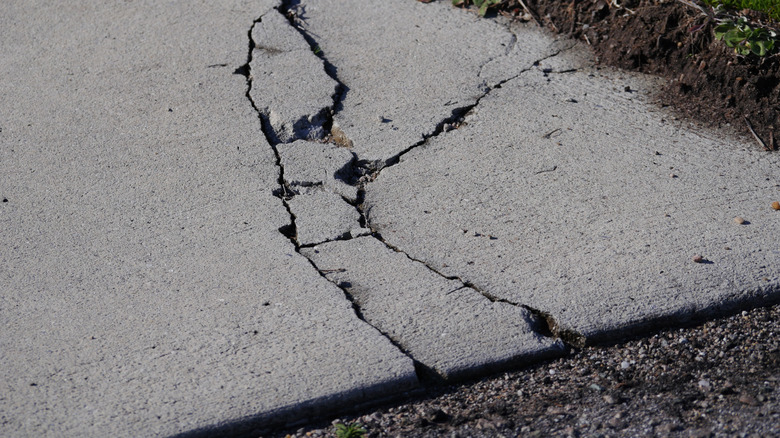
No matter how nice the concrete driveway, or how well-maintained, cracks happen. The ground might shift over time, minuscule cracks grow into larger ones, or the driveway apron gets damaged by heavy equipment. In any case, replacing a large slab or the entire driveway can get expensive, running into the thousands. For relatively minor cracks, it makes more sense to do repairs yourself using a sealant specifically designed for filling concrete cracks. The best type for a concrete driveway is something that flexes and holds up to all sorts of weather, such as Loctite's PL concrete self-leveling polyurethane sealant. With a 10-ounce tube that fits a standard caulk gun, expect nearly 31 feet of crack coverage with a ¼-inch bead of sealant. If you don't have a caulk gun, some brands offer a squeeze bottle similar to a condiment bottle, allowing you to squirt sealant directly from a narrow nozzle. The best part? This fix will only set you back about $10.
The reason you want to fix cracks ASAP is that moisture seeps into them, washing out the soil beneath the concrete. Eventually this creates gaps and uneven subsurfaces which can undermine a concrete slab, causing it to sink or buckle. Water in the cracks can also repeatedly freeze and thaw, causing more structural damage. Even weeds can expand cracks and ruin your driveway. Pressure washing your driveway helps prevent cracks, but it can't stop what's already underway.
A self-leveling sealant is ideal for filling cracks because it smooths itself out, with no tooling needed. It's designed for horizontal surfaces, while a non-sag concrete sealant, designed for both vertical and horizontal surfaces, can also work. Some brands work on multiple surface types such as masonry, so those could come in handy elsewhere around the yard (check the label or manufacturer's website).
Fixing concrete cracks with a sealant
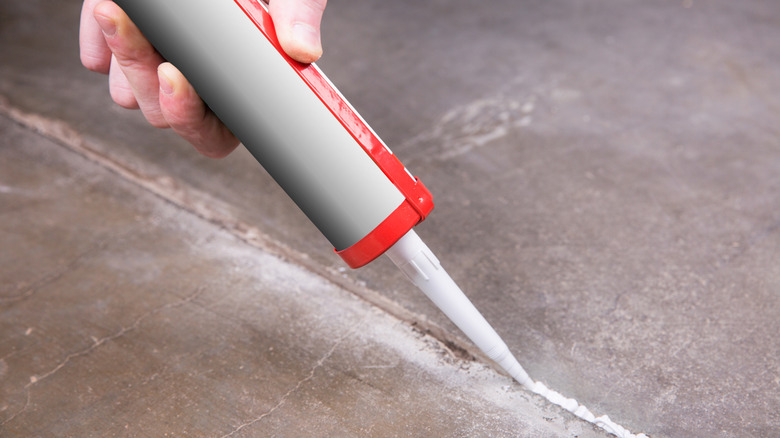
Before filling those driveway cracks with concrete sealant, clear the area of dirt, debris, and weeds. Remove those pesky weeds with a must-have tool, such as the Baraystus stainless steel crack weeder. If the area looks oily or stained, clean it thoroughly. You can even clean your driveway without a pressure washer. If you do use a moisture-based cleaning method, let the concrete dry thoroughly before using a crack sealant.
Read all instructions on the sealant tube before applying. Many have a recommended temperature range for use, so it's good to know that ahead of time. Wear gloves when working with concrete sealant because it'll be sticky and may temporarily stain your skin. If you have several areas to fill, test the concrete crack sealant in one area first to ensure it does the job as expected. There are many types of sealants, including some that work better for narrow versus larger cracks, so be sure what you're applying is the best fit for the job.
Use a steady movement and pressure as you fill a gap from one end to the other, so you get a consistent bead of sealant into the crack. Let the sealant cure as long as recommended on the tube, then, if necessary, slice away any overage sticking out beyond the cracks with a utility knife. Keep in mind that crack sealants are designed for narrow, shallow cracks. If the crack is deep, it may require a backer rod or other filler before using the sealant. Check your brand's recommendations for specific details.