

Explore Greenland's Dramatic Fjords And Glaciers At The World's Largest National Park
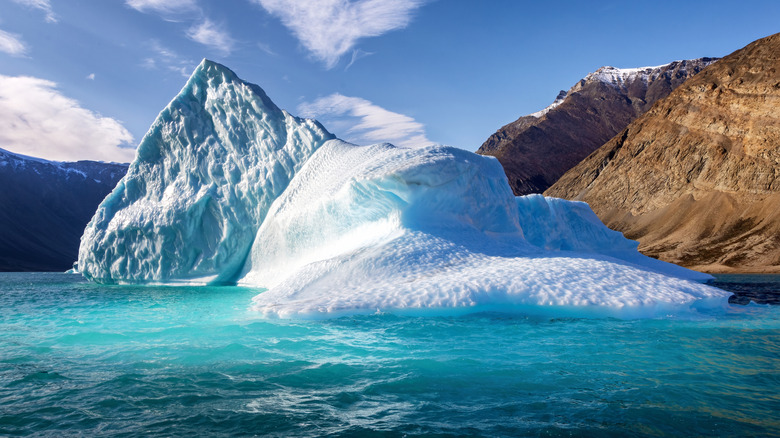
Greenland is known for its quaint villages filled with colorful houses and cabins, as well as its dramatic landscapes. In particular, fjords and glaciers scattered around the island nation lend to the breathtaking scenery. It is also known for vast amounts of open land, as barely over 50,000 people occupy the largest island in the world, a land mass larger than both Saudi Arabia and Mexico. So, it is only natural thatthe world's largest national park should be located in Greenland. Nor is it surprising that Northeast Greenland National Park is a showcase for the geographic features that are hallmarks of this massive island.
A visit to Northeast Greenland National Park is an excellent way to explore the country's extraordinary geographic features, flora, and fauna. The park itself takes in more than 375,000 square miles, covering the entire northeast quadrant of the country. Most of this landscape, from the massive glaciers to the incredibly deep fjords, is composed of (or was shaped by) ice. In fact, more than three-quarters of the park's area remains blanketed by the Greenland Ice Sheet. Additionally, visitors can see archeological remnants from Paleo- and Neo-Inuit peoples and encounter numerous species of unique wildlife adapted to living in this harsh, Arctic landscape.
While a visit to this remote park can be breathtaking, it is no simple task. The park is completely isolated, with no roadways leading to it and no landing areas for civilian aircraft. Your best option for visiting the park is to book a tour aboard a cruise ship departing from either Svalbard or Iceland. It is also possible to visit by private boat or dog sled, but you'll need to apply for a permit at least 12 weeks in advance.
Polar bears, glaciers, and Northern Lights, oh my!
Should you make the journey to Northeast Greenland National Park, you'll be greeted by a variety of natural wonders. For starters, the dramatic landscape is dominated by towering mountains lining the deep fjords. The crystalline waters of these fjords are filled with massive icebergs. Colorfully banded, ancient rock layers exposed at Segelsallskappet are another striking geographic feature worth exploring. In other sections of the park, you can view in-situ archeological treasures such as ancient tent rings and tools from the Paleo period, along with a variety of fossils predating the dinosaurs by almost 250 million years. In what is known as the Trapper Area, hundreds of huts utilized by Danish and Norwegian hunters and trappers in the early 1900s are still maintained and can be toured.
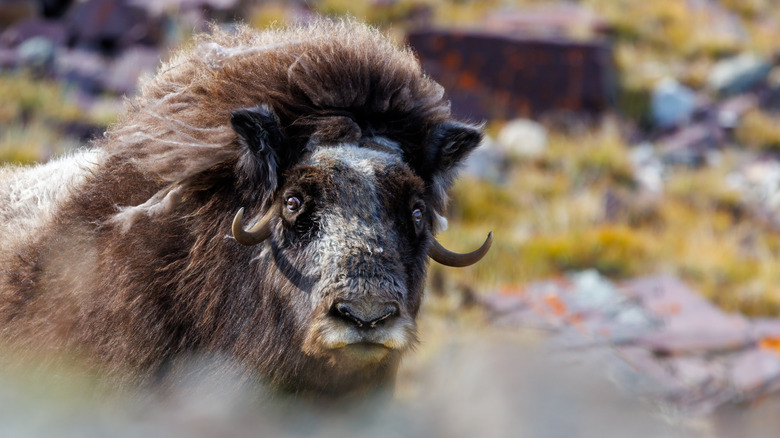
Although the landscape is the reason most people visit, Northeast Greenland National Park is also an outstanding destination for a trendy wildlife getaway. Lemmings, muskoxen, walrus, and narwhales are among the Arctic creatures inhabiting or visiting the park. Polar bears are common here. Remember that although they look playful, polar bears are among the most dangerous types of bears in the world. It is also possible, though uncommon, to run into a rare Arctic wolf while exploring Northeast Greenland National Park. A wide variety of birds, including several species of rare gulls and geese, can also be observed.
The best time to visit Northeast Greenland National Park is late summer, as the fjords are not frozen and you can access most of the park. This is also the best time to sight walruses in Dove Bay, and an ideal time to view and get photos of the Northern Lights.