

Thinking Of Taking Natural Souvenirs From A National Park? You Might Be Breaking Some Rules
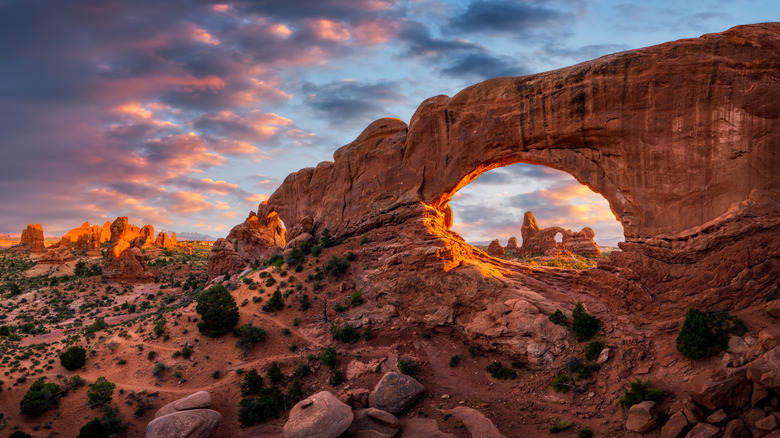
Whether you're hiking the Grand Canyon, camping at Yosemite, or fishing for Arctic Grayling in Denali, you may decide you want something tangible to remember your national park experience, pocketing a smooth river stone, a pinecone from a towering redwood, or a discarded feather along a hiking trail. While it may seem harmless to snag one of these natural souvenirs, in fact, removing objects is largely discouraged and in fact is against several laws you might not know about, covering national parks. This extends to any natural or cultural resource, from plants to arrowheads.
The National Park Service enforces strict regulations about taking things such as rocks, as outlined in the permits section of NPS.gov. According to the site, "Collecting, rockhounding, and gold panning of rocks, minerals, and paleontological specimens, for either recreational or educational purposes is generally prohibited in all units of the National Park System (36 C.F.R. § 2.1(a) and § 2.5(a)). Violators of this prohibition are subject to criminal penalties."
This isn't an arbitrary rule. Even though rocks, feathers, and fossils are abundant, national parks are delicate ecosystems requiring cooperation from mankind to continue to exist unencumbered. Natural items can serve as food and shelter for smaller animals, maintain landscapes, and contribute much-needed nutrients to their surroundings. This is especially true of high-traffic areas, where small acts of human intervention can quickly add up. Just imagine, if you're allowed to pocket a few rocks following a train ride at the Grand Canyon, then millions of other annual visitors are as well. The result could be devastating to the gorgeous view we love and admire. Or put it another way: Over 330 million people visited America's national parks in 2025. If each one took a feather, that's the equivalent of over 50,000 bald eagles.
What souvenirs can you take from a national park?
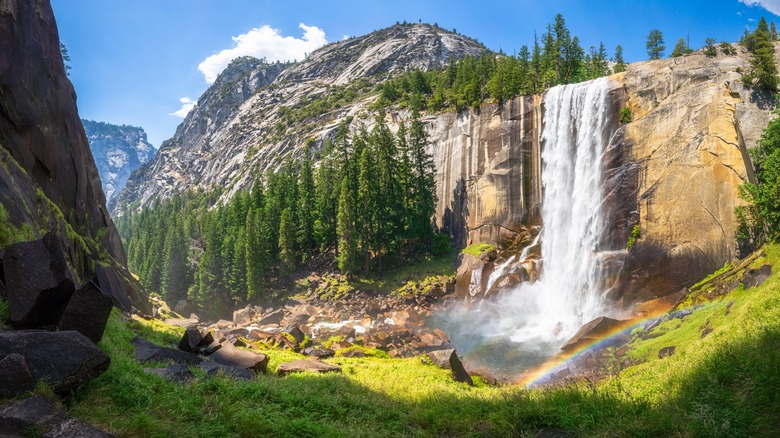
While it may be discouraging to learn that natural resources are off-limits in our nation's national parks, that doesn't mean you need to head home empty-handed. For starters, nearly every national park has a visitors center or nearby gift shop, offering a wide variety of souvenirs. These items are designed with tourists in mind, and a portion of the sales at some locations go toward conservation efforts. Plus, you can head back to the office sporting a Yosemite hat, hoodie, or coffee mug, which is sure to turn a lot more heads than a random feather. Once you've begun to cross national parks off your bucket list, you can even mark your progress with the national parks passport and sticker book.
If money is a concern, you can take photographs and videos to your heart's content while traipsing through your favorite national park. For wedding photos or large groups, you'll need written permission from the specific park's offices, but otherwise, feel free to make yourself look gigantic while squeezing a tiny El Capitan in the distance.
Finally, if you're just itching to grab a natural item from a park, it should be noted that there are a few exceptions to the rules. You can get special permits to take rocks and things if you have a legitimate reason to do so. You can also pan for gold, and keep the gold you find, if you visit the Whiskeytown unit of the Whiskeytown-Shasta-Trinity National Recreation Area in California. Certain Alaska parks also have designated areas for hobbyist collecting of surface rocks and minerals, with some restrictions. And if you're looking for park-related signage, furniture, or office items, keep an eye on government auctions at gsaauctions.gov.