

Don't Forget To Clear Snow Off Your Car! You May Get Into Legal Trouble If You Live In These States
We may receive a commission on purchases made from links.
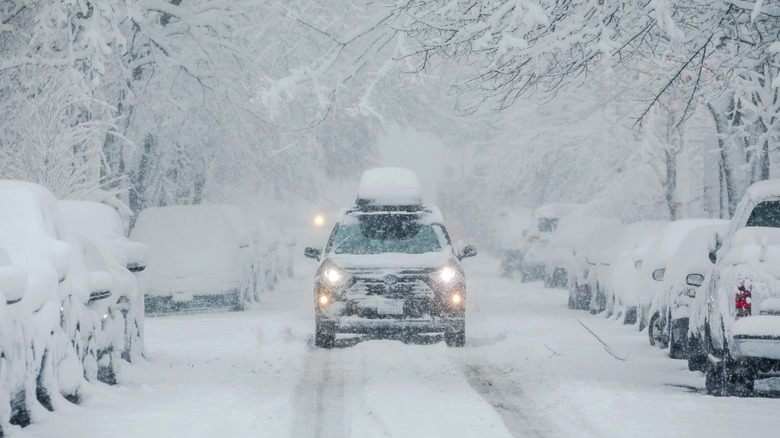
Waking to a layer of fresh snow can be peaceful. Unless you need to clear it off your car. You may be tempted to brush off just the windows and head out with snow piled on the rest of the car, but don't. While it can be useful to leave an inch or two of snow on your pea gravel driveway, it's actually illegal to drive with significant snow or ice on your car in 11 states. Even in Alaska, you must clear snow and ice from your car before driving or you may be fined. The same holds true in Wisconsin, Michigan, Pennsylvania, Tennessee, Connecticut. Massachusetts, Rhode Island, New Jersey, New Hampshire, and Georgia. Fines and penalties vary. In Connecticut, for instance, there's a $75 fine for not clearing snow from the hood, trunk, and roof. If that snow flies off and causes damage or injury, the fine ranges from $200 to $1,000.
Even if your state doesn't have a specific law addressing snow and ice on your vehicle, you could be fined for reckless operation, or cited due to driving with an obstructed view. According to The Columbus Dispatch, all states have laws requiring snow and ice be sufficiently cleared from windows before operating the vehicle.
While it may seem harsh to fine drivers over something as simple as snow, there's good reason: Snow and ice flying off of a moving vehicle can impair other drivers, damage vehicles, and even injure passengers if ice smashes the windshield. If snow slides off your roof and over your windshield, you're at risk as well. Pedestrians are also in danger. Clearing your car is not just better for you, it's good snow removal etiquette, making driving safer for others, too.
Get all the snow off to avoid fines or even jail
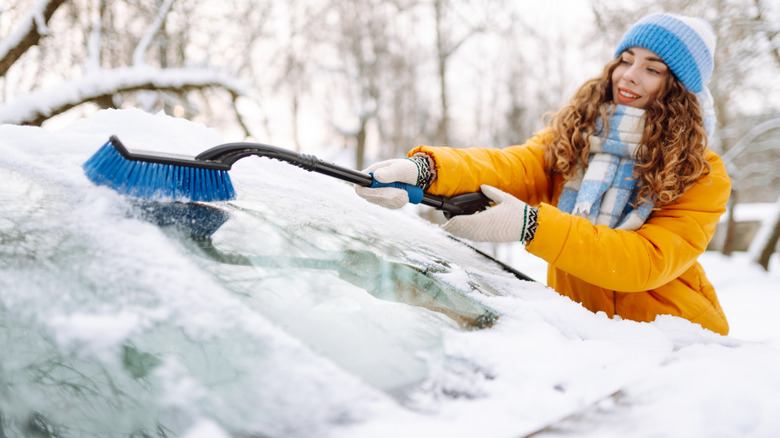
No matter where you live and drive, you must have an unobstructed view through your vehicle's windows as you drive. This means clearing snow, ice, and frost before going anywhere. In states such as Ohio, you must clear a bit more than the windows. Ohio requires the license plate and registration sticker to be visible, and headlights must be unobstructed by any material. Keeping tools that make snow removal easier than ever, like a quality ice scraper and a snow brush, will help. Or go high-tech, with a tool like Snow Joe's 3-in-1 telescoping snow broom and ice scraper.
If you're wondering what happens when you get pulled over for a snow-related offense, there's a good chance of being fined. In New York State, you could be charged with a reckless driving misdemeanor, or fined up to $850 just for snow obstructing your windows. Some instances may result in points on your license or even jail time. In New Jersey, snow-related fines start at $25, while in New Hampshire, if law enforcement decides your driving is likely to endanger other people, fines start at $250 for a first offense and go up to $1,000 for repeat offenses.
It's important to check your local community or HOA's rules regarding parked cars as well. There may not be one specifically about snow piling up on a car parked on the street, but there may be a snow ban in effect on specific streets. Essentially, drivers need to park elsewhere any time there's enough snow to plow. For instance, Lakewood, OH has an emergency snow parking ban prohibiting parking on specific streets whenever 4 inches of snow falls within one full day. Vehicles in violation could be impounded.