

The Best Method For Removing Stains From An Artificial Turf Lawn
We may receive a commission on purchases made from links.
With everyday life being so busy for people, artificial turf lawns are growing in popularity. There are many clever alternatives to grass for a no-mow garden, but some homeowners still want a lush green lawn. Artificial turf has seen dramatic improvements in texture and quality in the past decade, and has become a popular choice to create a low-maintenance, evergreen yard. But it's not without some responsibility. One task you will have to deal with is removing stains and blemishes on the turf to keep it clean. The good news is that most artificial grass stains come out easily with soap and warm water or white vinegar and water. If you have oil-based stains, you may need a degreaser if vinegar-and-water don't work, but caustic chemicals should never be used, as they can damage the color and texture of the lawn.
Artificial grass is meant to be hardy and long-lasting, and most quality artificial turf is resistant to stains. Still, debris, dust, and leaves can weigh it down, making it look dirty and flat. Food and drink spills and pet waste can also stain and smell if left unattended, and the turf can attract bugs. Cleaning your artificial grass on a regular basis is not complicated, and will help keep your turf looking beautiful for years to come, so you can create a low-maintenance oasis in your backyard.
How to remove stains from artificial grass
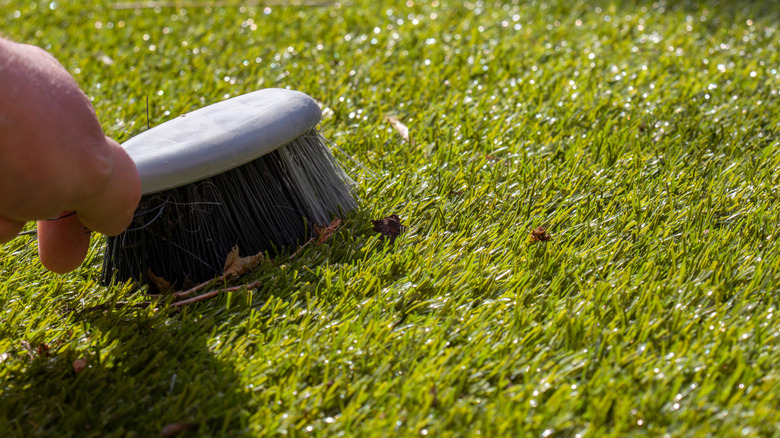
Before getting started on any stains on your artificial turf, make sure all loose debris and surface dirt is cleaned up first. Use an electric spin scrubber or an artificial turf broom or brush — like the Roll & Comb artificial turf sweeper broom — to get the debris and dirt out of the way. You can even use a push broom or leaf blower where they work. Once surface debris is clear, rinse the turf with your hose. It's best to do this once a week as a part of regular maintenance.
When it's time to deal with stains, the best and most common method is to use soapy water and a soft-bristled brush. You can also use vinegar and water, another one of many unexpected uses for vinegar around your yard and garden. Sprinkle or spray soapy water or vinegar-and-water on the stain, using a soft-bristled brush to gently scrub the area where the stain is. Once the stain is gone, rinse the artificial turf thoroughly with the hose.
Quick action whenever possible is the key to preventing stains from setting or becoming a smelly problem. If you happen to be right there when the spill happens, take a paper towel or clean rag and blot the spill as much as possible. After blotting, rinse the area with water, and that should take care of it. Never use bleach to clean your artificial turf no matter what caused the stain, as bleach can damage your lawn. Make sure any specialty cleaning products you use are safe for artificial turf, such as Simple Green outdoor odor eliminator.
Regular maintenance and cleaning are key to long-lasting turf
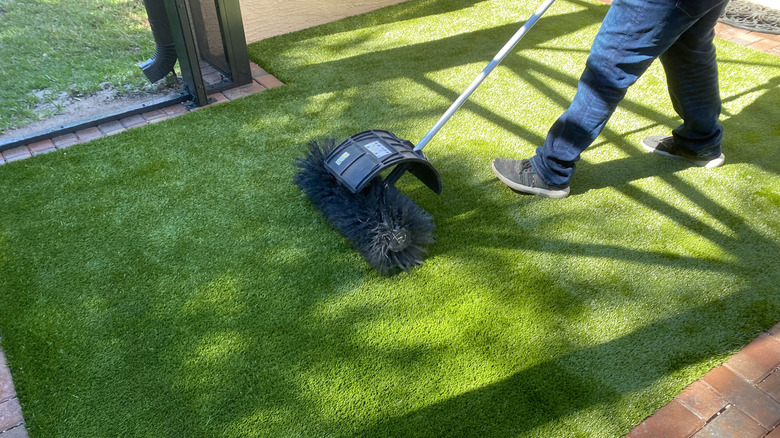
The key to keeping your artificial turf looking beautiful and new is to stay on top of regular maintenance. Hosing off the turf once a week is typically good enough to remove debris, dust, and dirt from the surface. After hosing it, use your turf brush to help the blades stand tall. Remember to brush in the opposite direction of the fibers so your turf will have a more natural, plumped-up look. Taking the time to do quick, easy maintenance will go a long way toward keeping your turf in great shape.
Making it a regular habit to clean up after your pets will also keep your turf healthy and pleasant for kids and others enjoying it. Pet owners love artificial grass because it does not absorb odors or liquid like regular lawns do, but solid waste still needs to be removed right away if possible. Alternatively, if you let it dry first, it will be easier to remove and won't be spread over a larger area. After removing the waste, rinsing the area with a hose is generally enough to keep things clean and fresh. You can use a turf deodorizer or baking soda when cleaning pet waste to help reduce odors. Rinse the whole yard (or wherever the pet goes) with a hose every couple of days to eliminate urine odors.