

Why You May Want To Think Twice Before Using No-Mow Grass Seed
Very few people would turn down the opportunity to have a beautifully maintained, lush lawn minus the frequent mowing and upkeep. Yes, there are homeowners turning to truly no-mow options, like a mossy rock garden, to create an eye-catching yard with a low-maintenance grass alternative. But for those who still want a green, grassy lawn, without the high maintenance, it may be worth considering no-mow grass seed, sometimes known by the brand name Eco-Grass, though there are several brands. The concept is appealing, not only because it involves very little mowing or care once established, but because it means less fuel and water used throughout the year. However, there are downsides as well: The same characteristics that make no-mow grass hardy make it more difficult to manicure. It's worth thinking twice about this option before you tear out your existing lawn.
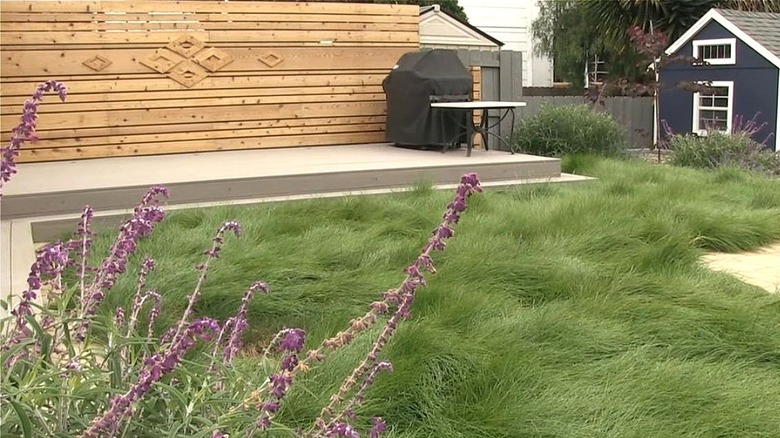
No-mow grass lawns don't look like traditional lawns. They are made up of one or more fescue grasses such as hard fescue, chewings, creeping red, and sheep fescue, all of which make dense carpets and grow much slower than traditional grass. Once it gets to a certain length, it falls over, laying down like fur. When you look at a lawn of no-mow grass, it will look long and lush, like green waves of water.
To be clear, this lawn isn't completely mower-free: You will have to mow at least a couple of times per year. If you prefer a neater look, you'll want to mow once per month. That still sounds a lot better than once a week, doesn't it? Not so fast.
No-mow grass is incredibly dense
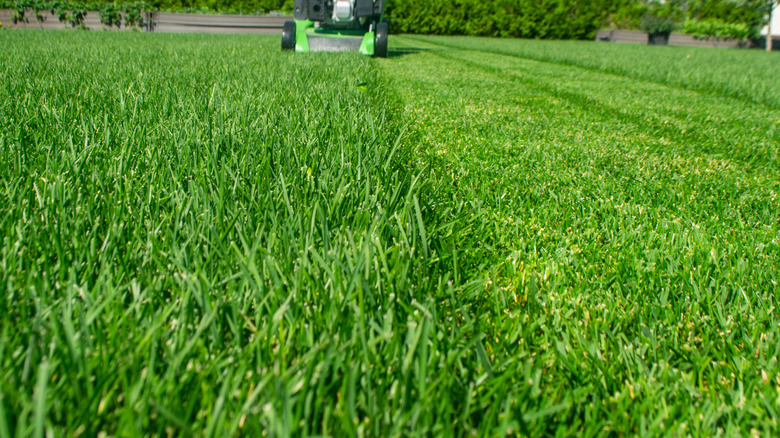
There are some disadvantages in having a no-mow grass lawn to be aware of before you make a decision. Because this grass is long and dense, it can be challenging when you do mow, and take a long time. The important thing here is to sharpen your mower blades so your machine is ready to take on the task. If you hire a company to mow for you, let them know that your lawn is no-mow grass, and to set their machines to the highest setting. Another issue is the significant amount of grass clippings you'll need to remove after mowing. Because the grass is so long and dense, clippings pile up quickly. On the flip side, grass clippings are great for protecting seedlings.
You're also subtly changing the ecosystem of your lawn with no-mow fescues. Such long, thick grasses may be one of those things that are attracting snakes to your yard, not to mention the rodents they like to eat. You may also see an increase in ticks, fleas, and other lawn-loving critters.
Finally, even if you're only mowing the main lawn twice per year, you will still need to maintain your walkways, flagstones, and flowerbeds so the hardy fescue grasses don't overtake them. If it seems like now-mow grass is a no-go, you've got other options. Alternatives can include planting moss, a lawn of clover, ground cover like creeping thyme, or artificial grass. Or use this gardening method to create the perfect lawn, by converting your yard into a wildflower meadow.