

The Rare Succulent Ground Cover That'll Look Amazing In Your Yard
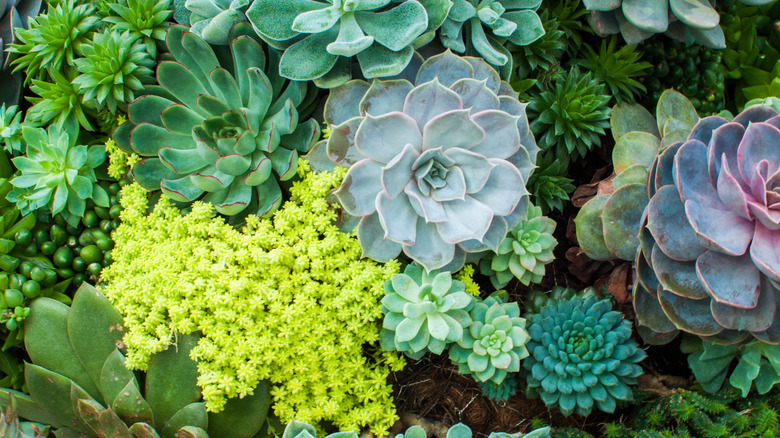
Planting ground cover plants has gotten very popular among gardeners who want to creatively deal with shaded or rockier areas of their yards. Choosing the best ground cover for your climate conditions will ensure that the plants will thrive and flourish. Knowing your plant hardiness zone will help you choose the right plants and plant them at the right times for your growing region.
Many gardeners are starting to choose succulents as a unique ground cover that adds texture and color to an otherwise complicated growing area. One rare succulent ground cover that will bring tons of visual interest to your yard is the graptopetalum (Graptopetalum superbum), which is native to Jalisco, Mexico.
This lovely, lavender-pink plant grows to a height of about 3 inches, while its flattened rosettes can get as large as 5 inches in diameter. It is a low-maintenance plant that does not require complicated care, so if you're new to succulents, you should give this one a try.
Planting and caring for your graptopetalum to achieve a thriving ground cover
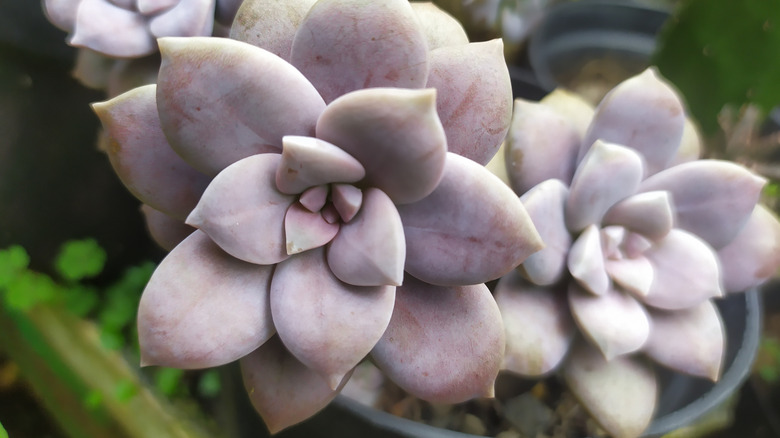
You can easily propagate graptopetalum from mature leaves or stem cuttings. Make sure to plant your graptopetalum in areas of your yard that have full sun or at most, partial shade. These plants need a lot of bright sunlight to maintain their beautiful pastel colors and compact rosette shapes. Graptopetalum thrives in warmer climates (USDA plant hardiness zone 10) and tolerates dry conditions well once it's established, but it typically won't survive a hard frost. It grows easily in well-draining, sandy soil with dry-to-medium moisture, whereas planting it in regular soil can result in root rot, compacted roots, and stunted growth. Use soil that is specifically produced for cacti and succulents for the best results, or mix perlite or sand into your existing potting soil.
Watering needs are pretty straightforward. For the best results, use the soak and dry method, which involves watering deeply and then letting the soil dry in between each watering session. You may need to water more often during the hottest part of the season, but always check the soil first. There are a few pests that can cause problems for graptopetalum, including aphids, spider mites, and mealybugs. Keep the insect problems at bay by regularly inspecting the stems and undersides of the leaves. In general, you can banish pests from your garden with two common items you already have in your home.