

Explore Rich Marine Life At This Extremely Underrated Island Nation
We may receive a commission on purchases made from links.
If you like sparse crowds, tropical climates, sandy beaches, and warm, clear waters filled with an array of marine life, there is a perfect spot for you in Micronesia, drawing fewer than 10,000 visitors per year. If you enjoy history, particular that of the World War II era, this same island nation should be on your list, as it hosted Japanese military bases before the U.S. captured the islands late in the war.
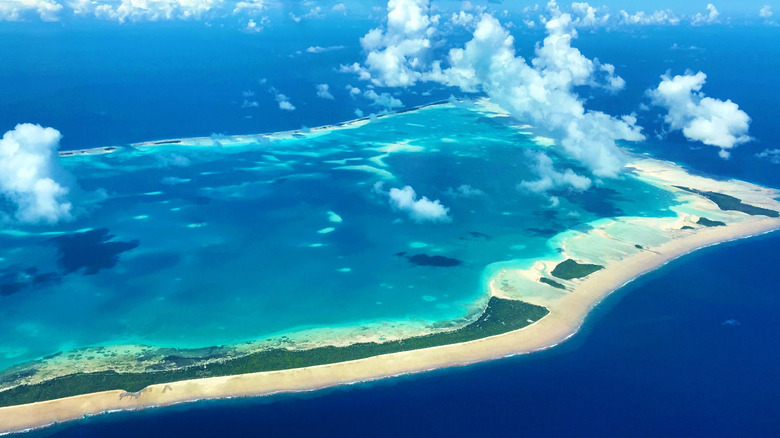
The Republic of the Marshall Islands (RMI) is comprised 29 atolls that include a total of more than 1,200 islands and islets spread across 800 miles of the Central Pacific Ocean. However, the entirety of this land mass is somewhat tiny, around 70 square miles, as is its human population, which numbers around 45,000 or 50,000. Those people are scattered across the two dozen inhabited atolls, with about half living in the nation's capital, Majuro Atoll. Ironically, despite its minuscule population as a country, the Marshall Islands are also home to the world's most densely populated island. The 80-acre island of Ebeye — which is part of the Kwajalein Atoll and is RMI's second-highest population center — is home to around 11,000 people. The numerous other islands have populations ranging from a handful of people to about 1,000.
What the RMI lacks in land mass and population, it makes up for in sea area and wildlife. It includes a massive amount of ocean — around 750,000 square miles — and a vast array of flora and fauna, both on land and in the water. This combination makes the entire island nation seem like one big marine national park worth exploring. Indeed, although the RMI is an independent country, the U.S. Fish & Wildlife Service does manage the expansive Wake Atoll National Wildlife Refuge there.
Planning a trip to the Marshall Islands
Reaching the Marshall Islands is the first hurdle when it comes to visiting. It is located about halfway between Hawaii and the Philippines. For most U.S. travelers, that means stopping first in Hawaii, then taking a 5-hour island hopper flight from Honolulu to Majuro. Kwajalein is an additional 2 hours of flight time after stopping in Majuro. The next step is finding accommodations. There are a handful of full-service hotels, as well as some smaller resorts, many of which cater to divers. Once you're in the Marshall Islands, however, it's a simple matter of filling out your days by exploring rich marine life, sampling local cuisine, and taking in historic sites.
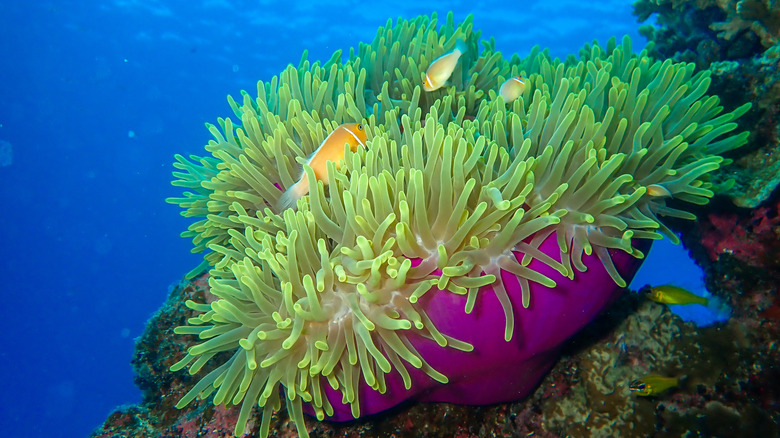
Snorkeling and scuba diving are perhaps the most popular activities among visitors. While all of the atolls offer opportunities to see a wide array of marine life, Bikini Atoll is the best-known dive spot in the Marshall Islands. This is largely due to the wide variety of WWII-era wrecks lying beneath the waters, as well as the fact it sits within an expansive shark sanctuary. Largely due to this conservation effort, divers can expect to see more than 4 dozen species of sharks, as well as over 1,000 types of fish, 700-plus varieties of crustaceans, and 40 different sponges. Whether you are a veteran diver or this is your first scuba diving adventure, prepare to be amazed and pack a book like Paul Humann's "Reef Creature Identification Tropical Pacific" guide!
Swimming and surfing are popular throughout the Marshall Islands. However, do keep in mind, as beautiful as the water is here, the Marshall Islands are sometimes cited among the most dangerous spots to swim in the world. Nonetheless, there are plenty of ways to safely enjoy the waters here.