

Growing Your Own Orange Tree From Seed Is Easier Than You Think: Here's How To Get Started
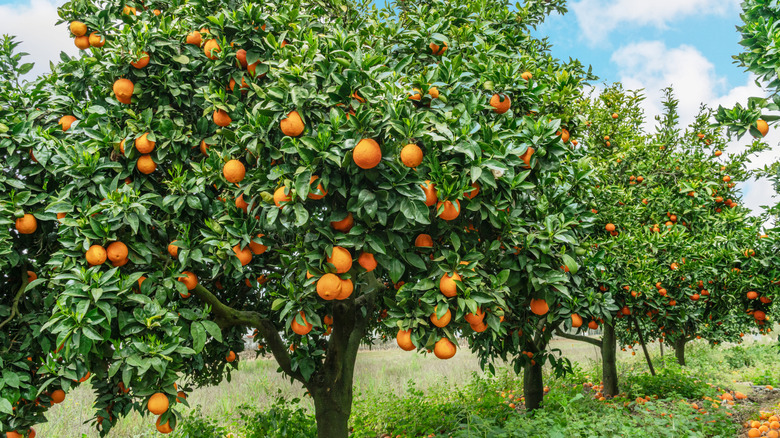
If you're a lover of all things citrus, you may toyed with the idea of growing your own citrus tree from leftover seeds. Though the thought of growing any tree from seed to bloom (rather than transplanting saplings) is quite daunting, you may be surprised to learn how easy it is with the help of a few humble oranges. Growing your own orange tree is can be a fun, long-term investment that will pay dividends in the future (citrus trees can thrive for 50 years or more). Imagine your children and grandchildren picking ripe fruits each season, and giving them out to neighbors when you've got a surplus. A well-maintained tree can also offer some serious curb appeal, and could be part of a re-landscaping plan that adds serious value to your home.
Of course, it's always good to maintain realistic expectations when entering into a project like this. For starters, some climates aren't suited for orange trees to thrive at all (orange trees are subtropical plants, after all). Plus, orange trees grown from seed tend to produce bitter, low-quality fruits. The oranges we love are hybrids, grafted on species that may not produce tasty fruit. However, grafting citrus is relatively easy, so you might consider this tactic as trees mature.
Orange trees also take a long time to mature and bear fruit, meaning it could take nearly 10 years to know for sure if your tree will bear fruit at all. Regardless, the process for growing your own tree from a single batch of seeds is rewarding and straightforward. Even if your tree isn't giving you ideal fruit, it should offer glossy evergreen leaves, and plenty of ornamental value. Plus, bitter oranges can be used to make preserves, marmalade, sauces, and essential oils, even if they aren't ideal snacks.
Clean, sprout, and plant orange seeds for saplings
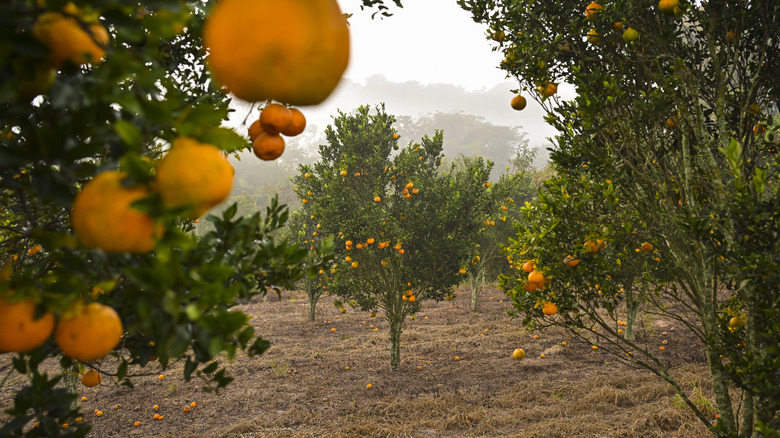
To begin growing your own orange tree, all you'll need is a handful of oranges and some basic kitchen tools. Start by extracting roughly 20 seeds from your fresh fruits, and wash thoroughly to remove any excess pulp. After washing and soaking your seeds, gently scrub the outside layer of seed coating away, and fold them into a damp paper towel. Ensure that these seeds are kept in a dark, warm and humid environment so they can sprout. This can be accomplished by placing the paper towel full of seeds into a plastic bag, and spritzing with water as needed over the course of two weeks. As they sprout, plant seedlings in a small pot, in roughly ½-inch of high-quality potting soil. Move them to a warm, sunny location (indoors), and water thoroughly over several months, ensuring the soil is well-drained and moist.
Once your budding plant has sprouted to a height of 6 to 8 inches tall, and begins displaying leaves, you're ready to transplant outdoors (if you live in USDA zones 9-11). This is best done during the spring, once the frost has cleared for the season. Choose a bright, sunny space outside where your tree will receive plenty of warmth, and dig a hole twice the depth of your current pot. From there, carefully remove the tree from its container, and place the sapling, roots and all, into the hole with some fresh soil or compost. Once your tree is outdoors, reduce watering to once or twice per week, depending on the weather. Much like the interior set up, you'll want to ensure that the base of your tree is well drained, but moist. If you live in a cooler climate, plant your citrus trees in containers, so you can move them indoors as needed.
Long-term care for your new orange trees
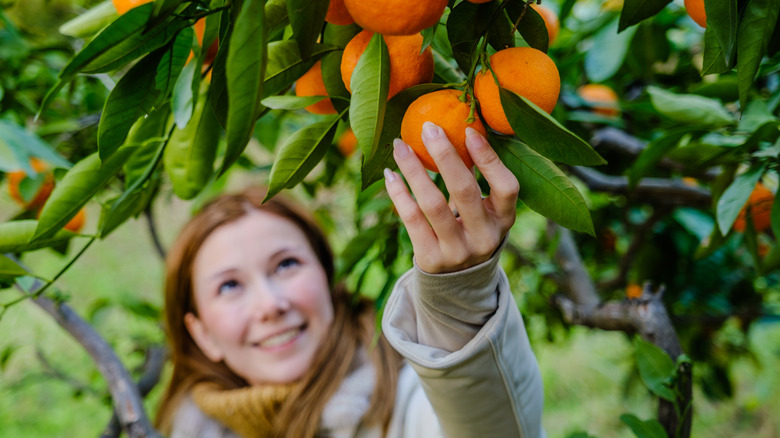
After you've transplanted your tree into its forever home, you'll want to continue caring for it for the foreseeable future. As stated, it could take a full decade for the tree to grow into maturity, so patience will be key as you proceed. It's recommended that your orange tree receive six to eight hours of sunlight daily, so avoid building or planting anything that creates excess shade nearby. The trees will go dormant once temperatures routinely drop below 50 degrees Fahrenheit (bring potted trees inside at this point), though orange trees thrive best in subtropical climates (zones 9-11) that stay between 60 and 90 degrees year-round.
Add nitrogen-rich, citrus-specific fertilizer each spring. Ideally, you'll want the surrounding soil to clock in with a mildly acidic pH of 6.0 to 7.0. During the first few years of the tree's life, add two tablespoons of a roughly 6-3-3 NPK ratio fertilizer directly to the soil to encourage growth, four times per year. Mature trees will require two to three pounds of nitrogen per year, spread out across the entire root area.
The most hands-on commitment with an orange tree is deep watering, which is required year-round as long as the plant isn't laying dormant. These trees need roughly one inch of water per week, ensuring that the soil is moist, but well drained. Soggy roots are an absolute non-starter for a healthy orange tree, so adjust your watering schedule during inclement weather. Beyond that, you'll want to take some basic weeding and pest control measures, and prune damaged branches or to shape the tree. Even if the fruit doesn't taste great, it can still come in handy: Citrus is a great way to keep snakes out of your garden.