

The Kitchen Staple That'll Help Get Rid Of Pesky Poison Ivy In Your Yard
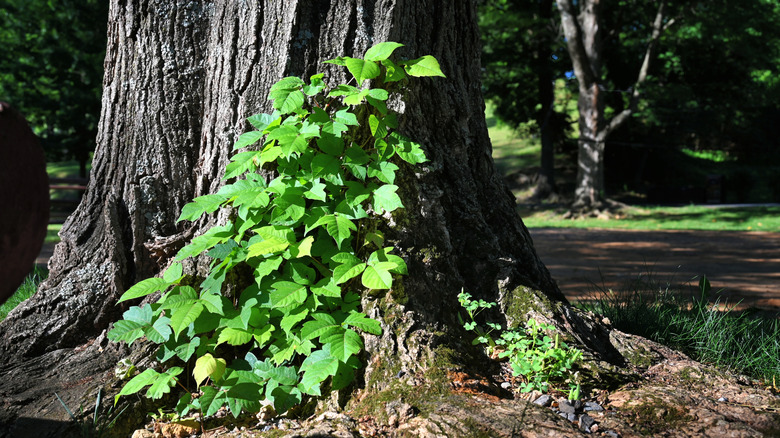
Poison ivy tends to hide in plain sight. It grows in wooded areas, climbing its way up the sides of trees. It hides in the weeds on the ground. It spreads quickly, taking over fences and flower beds. And, if you're out pruning your trees or trying to clean up weeds and deadfall, you might end up touching it. There are some simple tips for identifying poison ivy, and once you spot those leaves of three, it's time to head into the kitchen for something most of us already have on hand — white vinegar.
What makes vinegar work to kill poison ivy? It's the acidic nature of this liquid that battles the poisonous plant. You can also use vinegar on your skin and clothing to neutralize the poisonous urushiol oil in the ivy plant. Adding white vinegar to your wash not only helps remove poison ivy oil from your clothes, but it also has other benefits such as whitening them and removing stains. There are other uses for vinegar around your lawn, too. And you can carry some of this acidic liquid to treat poison ivy when camping as well.
There are a few ways you can use white vinegar to kill poison ivy in your yard. Some other ingredients you may need include salt (to help dehydrate the leaves and kill them), dish soap (to help the vinegar stick to the leaves), and a spray bottle. Additionally, if the problem is pressing enough, you can also consider investing in horticultural vinegar instead of plain white vinegar. The vinegar you use in the home is usually diluted in its acidity whereas the horticultural one is stronger. You can also use Epsom salt in place of regular table salt.
How to get rid of poison ivy with vinegar
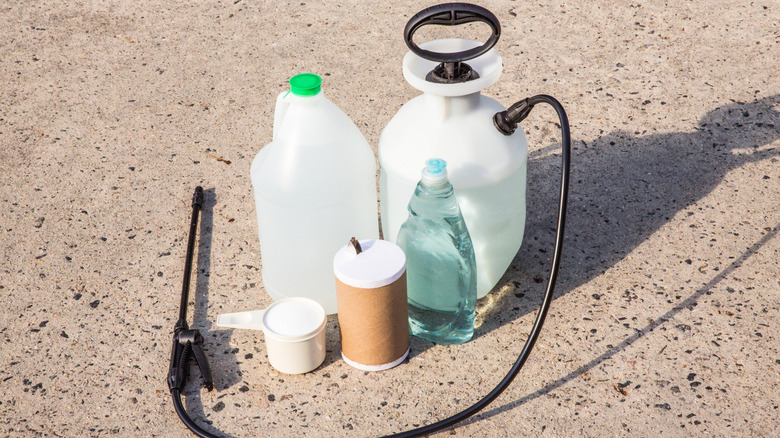
There are a bunch of different recipes out there for making poison ivy killer with vinegar. The most basic approach suggests using undiluted vinegar and spraying that straight over the poison ivy, while others offer up mixtures. Begin by filling your spray bottle with 3 cups of vinegar, ½ cup of salt or Epsom salt, and a few drops of dish detergent (such as Dawn). Mix this well before you begin your task of spraying poison ivy. If you go with the horticulture vinegar, which can be up to 30% acidic, all you need to mix in is a few drops of soap to help it stick to the poison ivy. You may want to spray the leaves every other week until you no longer see new poison ivy appearing. You also want to give it time; vinegar won't kill immediately — it may take a few applications.
When you're spraying vinegar on plants, whether you're using vinegar alone, horticultural vinegar (especially), or the recipe above, make sure you're careful about what you're spraying. The acids in vinegar can't differentiate between the plants you want to kill and those you don't, so be sure to spray directly on the poison ivy and do it on days when it isn't windy. If you get too much of the vinegar into the ground, it can have a negative impact on the pH of the soil, making it inhospitable for plants you do want to grow there.